In today’s fast-moving world, having a reliable power supply isn’t just a nice-to-have — it’s pretty much essential for both businesses and homes. That’s where the Automatic Transfer Switch (or ATS) comes in. If you’ve been reading up on the market, you might’ve seen that, according to a 2022 report by MarketsandMarkets, the global ATS market is expected to jump from around $2.2 billion in 2021 to a hefty $3.8 billion by 2026. Basically, there’s a huge demand for dependable backup power systems right now. This trend makes sense, especially as industries like healthcare, data centers, and telecoms are more reliant on continuous power than ever before.
So, what exactly does an ATS do? Well, it automatically switches the load between your main power source and a backup one, making sure your lights stay on and your systems keep running without a hitch—even if there’s a blackout. The efficiency of these little devices really determines whether your operations can keep going smoothly or not. But here’s the thing — the market isn’t perfect. Not all ATS units are created equal; some don’t meet safety standards or are super complicated to operate. That’s why it’s really important to do your homework before buying one. Interestingly, Frost & Sullivan found that about 30% of industrial power outages are caused by faulty power management. So yeah, picking the right ATS can make or break your operational reliability.
If you’re on the hunt for the right automatic transfer switch, don’t just go for the first thing you see. Take your time! Do some research on different brands and look closely at their specs. Some brands are definitely more reliable than others. By understanding the market and focusing on quality, you’ll be better equipped to choose a solution that’s trustworthy and actually fits your needs — saving you headaches down the line.

Understanding Automatic Transfer Switches: A Comprehensive Overview
Automatic transfer switches (ATS) play a crucial role in power management systems. They automatically switch power sources to ensure continuous power supply during outages. According to a recent report by MarketsandMarkets, the global automatic transfer switch market is expected to reach $2.7 billion by 2026, growing at a CAGR of 6.2%. This reflects the increasing demand for reliable power systems across various sectors.
When selecting an ATS, consider the power rating. Choose a switch that matches your load requirements. A standard practice is to select a switch with a rating slightly higher than your maximum load to accommodate surges. Additionally, examine the transfer time, as a faster switch minimizes downtime. Typical transfer times range from 0.1 to 30 seconds, depending on the application and need.
**Tips:** Regular maintenance can prevent failures. Inspect connections and perform tests twice a year. This proactive approach ensures your ATS performs optimally. Understanding local codes is critical too. Compliance can save costs and prevent legal issues in the future. Ultimately, careful selection and maintenance of automatic transfer switches will enhance your operational reliability.
Types of Automatic Transfer Switches: Which One Suits Your Needs?
When choosing an automatic transfer switch (ATS), understanding the types available is crucial. There are several options, each designed for different applications. For instance, open-transition switches transfer power without a break, making them faster. However, their sudden switch can cause disturbances in sensitive equipment. Closed-transition switches provide a smoother transition, reducing the risk of interruptions, which is beneficial for critical operations.
Market research indicates that the global automatic transfer switch market is projected to grow at a CAGR of 6.5% from 2020 to 2027. This growth reflects the increasing demand for reliable power solutions across various industries, including healthcare and data centers. A key consideration when selecting an ATS is the power rating. Choosing an inadequate rating can lead to malfunctions and operational inefficiencies.
Another factor to examine is the control features of the switch. Advanced ATS models offer remote monitoring capabilities, which promote proactive maintenance. Yet, these digital interfaces can also introduce complexities that some users may find challenging. It’s essential to weigh the benefits against potential difficulties, ensuring the chosen switch aligns with specific operational needs.
Key Features to Consider When Buying an Automatic Transfer Switch
When buying an automatic transfer switch, several key features deserve close attention. One important aspect is the switch's power rating. This determines how much load it can handle. For residential use, a rating between 30 and 200 amps is common. For commercial settings, look for switches capable of 400 amps or more. Always ensure the switch matches your specific needs. Underestimating this can lead to inefficiencies or even failures.
Another crucial feature is the type of transfer switch. There are two main types: non-automatic and automatic. An automatic transfer switch offers seamless switchover during power outages. This can be vital in critical operations, such as healthcare facilities or data centers. Think about your requirements. Does your operation mandate an automatic feature, or could a manual switch suffice?
Lastly, safety is paramount. Look for certifications that indicate compliance with safety standards. It's easy to overlook these details when purchasing equipment. Not all switches are created equal, and cheaper options may cut corners on safety. Conduct thorough research and consult professionals if needed. Balancing cost and safety ensures long-term reliability in your investment.
Top Brands of Automatic Transfer Switches for Global Buyers
When selecting an automatic transfer switch (ATS), it’s essential to explore the leading brands available in the market. Reports from industry experts indicate that the global ATS market size is projected to reach approximately $2.5 billion by 2026. This surge is driven by increased demand for reliable power solutions across sectors, from healthcare to telecommunications.
Renowned manufacturers are consistently enhancing their offerings, focusing on efficiency and durability. A recent survey noted that 75% of businesses rate reliability as their primary concern when choosing an ATS. Look for brands that provide robust options, such as weather-resistant designs, especially if your installation is outdoors.
**Tip:** Always assess the warranty and after-sales service from manufacturers. A lengthy warranty can reflect confidence in product durability.
Many global buyers are now considering both traditional mechanical and modern digital systems for seamless switching. Each has its pros and cons. Digital switches offer advanced features but may require more substantial initial investments. Understanding these factors is crucial in making an informed decision.
**Tip:** Analyze your specific power needs carefully. Miscalculating can lead to costly operational downtimes. Balancing cost with capability is key in this choice.
2026 Best Automatic Transfer Switch Buying Guide for Global Buyers
| Feature |
Specification |
Advantages |
Price Range |
| Power Rating |
50 - 2000 Amps |
Wide range for various applications |
$500 - $10,000 |
| Type |
Open Transition, Closed Transition |
Flexible options for different needs |
$600 - $8,000 |
| Control Options |
Manual, Automatic, Remote |
Enhanced operational control |
$750 - $9,500 |
| Environment Rating |
NEMA 1, NEMA 3R, NEMA 4 |
Suitable for various installations |
$800 - $7,500 |
| Warranty |
1 - 5 Years |
Peace of mind with quality assurance |
$500 - $10,000 |
Installation Considerations for Automatic Transfer Switches
When considering the installation of an automatic transfer switch (ATS), attention to detail can significantly impact overall performance. Choosing the correct location is crucial. The ATS should be installed in a dry, accessible area. Ensure that it is not exposed to extreme temperatures or moisture. This prevents potential damage and reduces maintenance needs.
Wiring and connections require meticulous attention. Correctly sized cables are essential to manage the current load. Improper connections can lead to overheating or failure. It’s also advisable to follow local electrical codes carefully. This compliance ensures safety and reliability in operation. Additionally, consider testing the ATS periodically. Regular checks can uncover hidden issues before they escalate.
Finally, while the installation process seems straightforward, factors like utility service coordination should not be overlooked. Collaboration with your utility provider can help in mitigating risks. Reflecting on common pitfalls, it’s easy to underestimate the importance of proper grounding. A grounding failure can lead to system malfunctions. Take the time to verify these elements to ensure a successful installation.
Maintenance Tips for Ensuring Longevity of Your Automatic Transfer Switch
Maintaining an automatic transfer switch (ATS) is crucial for ensuring its longevity and reliability. Regular maintenance can prevent unexpected failures, which can be costly. Industry studies indicate that up to 30% of ATS failures stem from lack of maintenance. Such issues often lead to extended downtimes and expensive repairs, emphasizing the importance of proactive care.
Inspect the ATS monthly. Check connections for any signs of corrosion or wear. Dust and debris can accumulate, impacting performance. Cleaning the enclosure helps maintain optimal airflow, which is necessary for heat dissipation. It’s advisable to engage a certified professional annually for an in-depth inspection. This can help identify any underlying issues before they escalate into major problems.
Consider the environment where your ATS operates. Extreme temperatures or moisture can degrade components. Using protective enclosures can significantly enhance durability. Remember, while it’s easy to overlook an ATS, neglect can lead to significant disruptions. Regularly review your operation logs to track performance trends, and address any anomalies immediately. Prioritize maintenance to optimize the lifespan of your ATS and ensure reliable performance.
Comparative Analysis: Automatic Transfer Switches vs. Manual Transfer Switches
When deciding between automatic transfer switches (ATS) and
manual transfer switches (MTS), it’s vital to evaluate their key differences.
ATS systems automatically switch power sources, ensuring minimal downtime during outages.
They are ideal for critical applications like hospitals
and data centers. These switches can detect power loss and activate
backup generators without human intervention. This feature enhances reliability, especially when every second
counts.
On the other hand, MTS require manual operation. Users must be present to switch between power sources.
This can lead to delays in restoring power, which may not be acceptable in emergency situations.
However, MTS are often more cost-effective and easier to install.
They allow for more control, making them suitable for less critical applications.
Users need to weigh the pros and cons based on their specific needs.
Both types have their advantages and limitations. Reflecting on your unique situation helps in making the right choice.
Each switch type serves distinct purposes, and understanding these nuances can guide better decision-making.
Balancing convenience and cost will ultimately dictate the best choice for your requirements.
Key Considerations for Choosing the Right Manual Changeover Switch: Spotlight on the YGL-100~630Z1A
When choosing the right manual changeover switch, the YGL-100~630Z1A stands out due to its robust specifications and compliance with international standards. Designed for use in alternating current systems at 50Hz, this switch can handle rated voltages below 660V, making it versatile for different applications. With a rated current range from 100A to 630A, it is well-suited for connecting and disconnecting electrical circuits that do not require frequent operation. The device is constructed in accordance with IEC60947-3, ensuring that it meets rigorous safety and performance standards.
The YGL-100~630Z1A excels in mechanical and electrical longevity, boasting a mechanical life of up to 20,000 operations and an electrical life of 1,500 cycles. This durability is vital for environments that demand reliable performance over time, as it minimizes the chances of failure and the need for frequent replacements. Additionally, it operates under the use category AC-22B, indicating its capability for switching under load conditions. These features make the YGL-100~630Z1A a compelling choice for users looking for dependable manual transfer switches in their power systems.
FAQS
: The global market size is expected to reach approximately $2.5 billion by 2026.
Reliability is rated as the primary concern by 75% of businesses.
It should be in a dry, accessible location away from extreme temperatures and moisture.
Properly sized cables prevent overheating or failure, ensuring reliable operation.
Review specific requirements carefully. Miscalculating can lead to expensive downtimes.
Periodic testing is crucial to uncover hidden issues before they escalate.
Underestimating proper grounding can lead to system malfunctions.
It helps mitigate risks and ensures smooth operation during installation.
Digital systems offer advanced features but may have higher initial costs.
A lengthy warranty usually reflects a manufacturer’s confidence in their product.
Conclusion
The "2026 Best Automatic Transfer Switch Buying Guide for Global Buyers" provides a thorough overview of Automatic Transfer Switches (ATS), explaining their essential role in managing power supply transitions between primary and backup sources. It categorizes different types of ATS and helps potential buyers determine which type best suits their specific needs based on various factors.
Key features to consider when purchasing an ATS include its switching speed, load capacity, and safety mechanisms. Additionally, the guide addresses installation considerations to ensure optimal performance and safety of the switch. Regular maintenance tips are included to help users maximize the longevity of their Automatic Transfer Switch. Finally, a comparative analysis highlights the differences between Automatic and Manual Transfer Switches, aiding buyers in making informed decisions for reliable power management solutions.

 PC ATS YECT1-2000G
 PC ATS YES2-63~250GN1
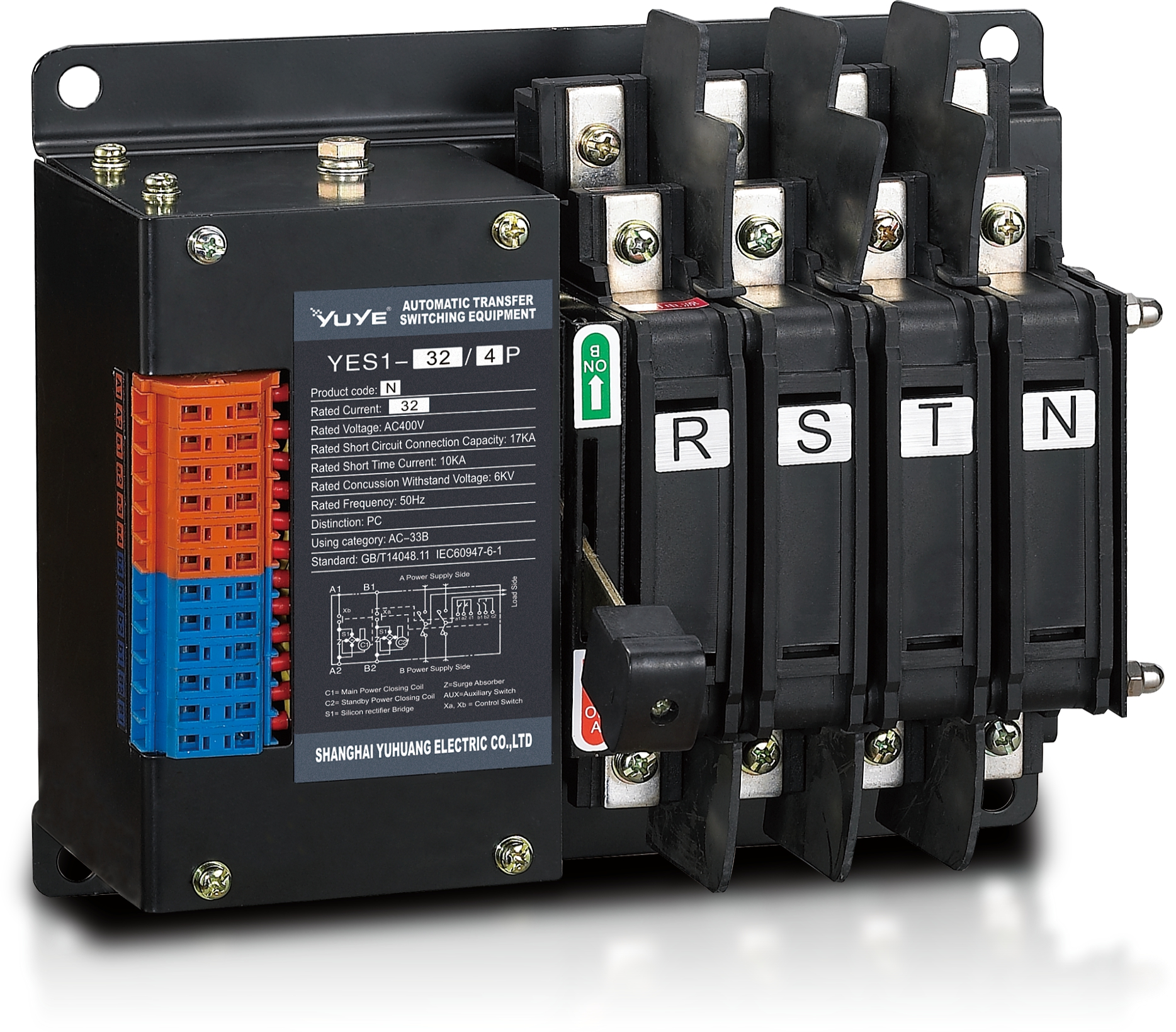 Solenoid-type ATS YES1-32~125N
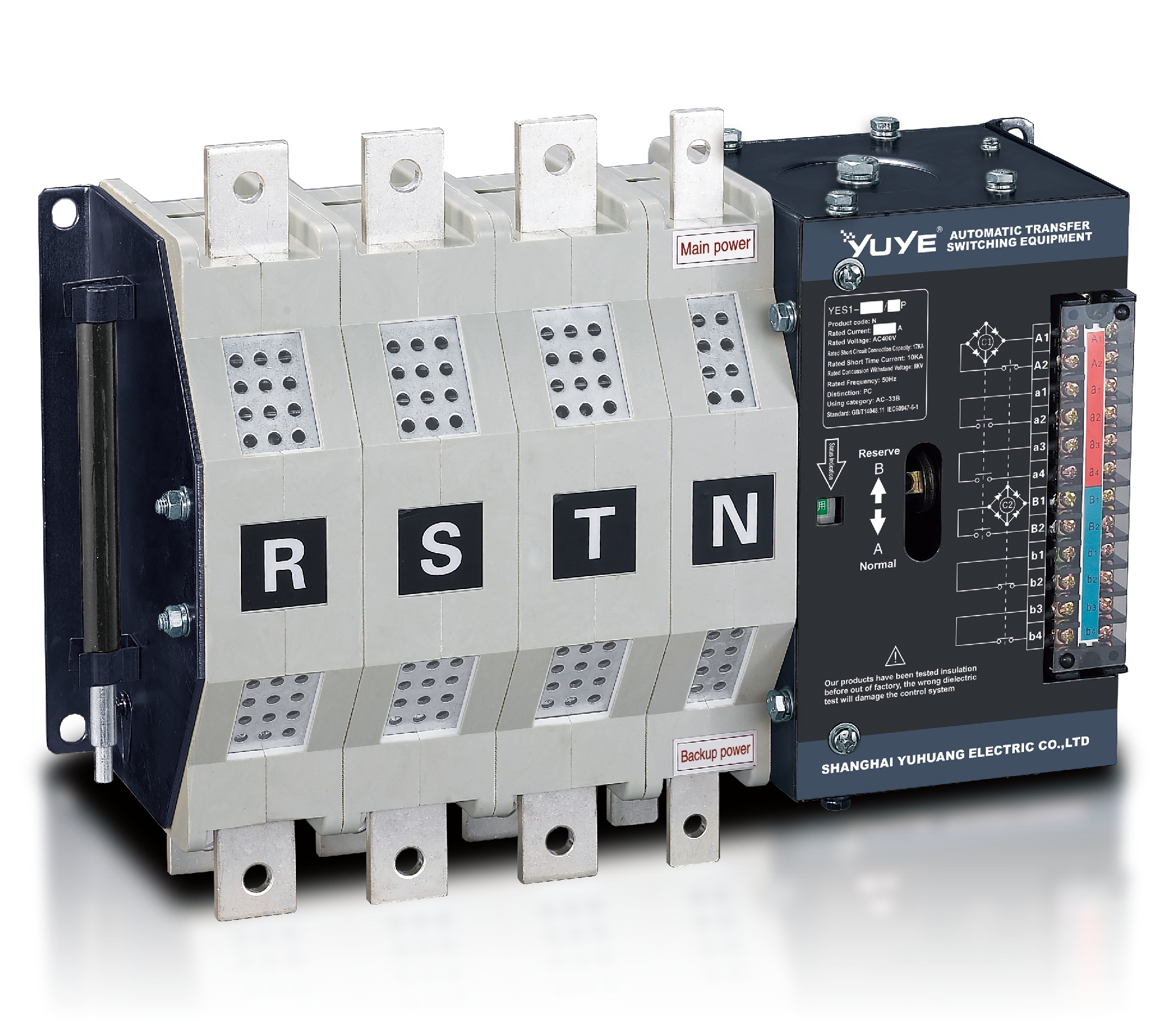 Solenoid-type ATS YES1-250~630N/NT
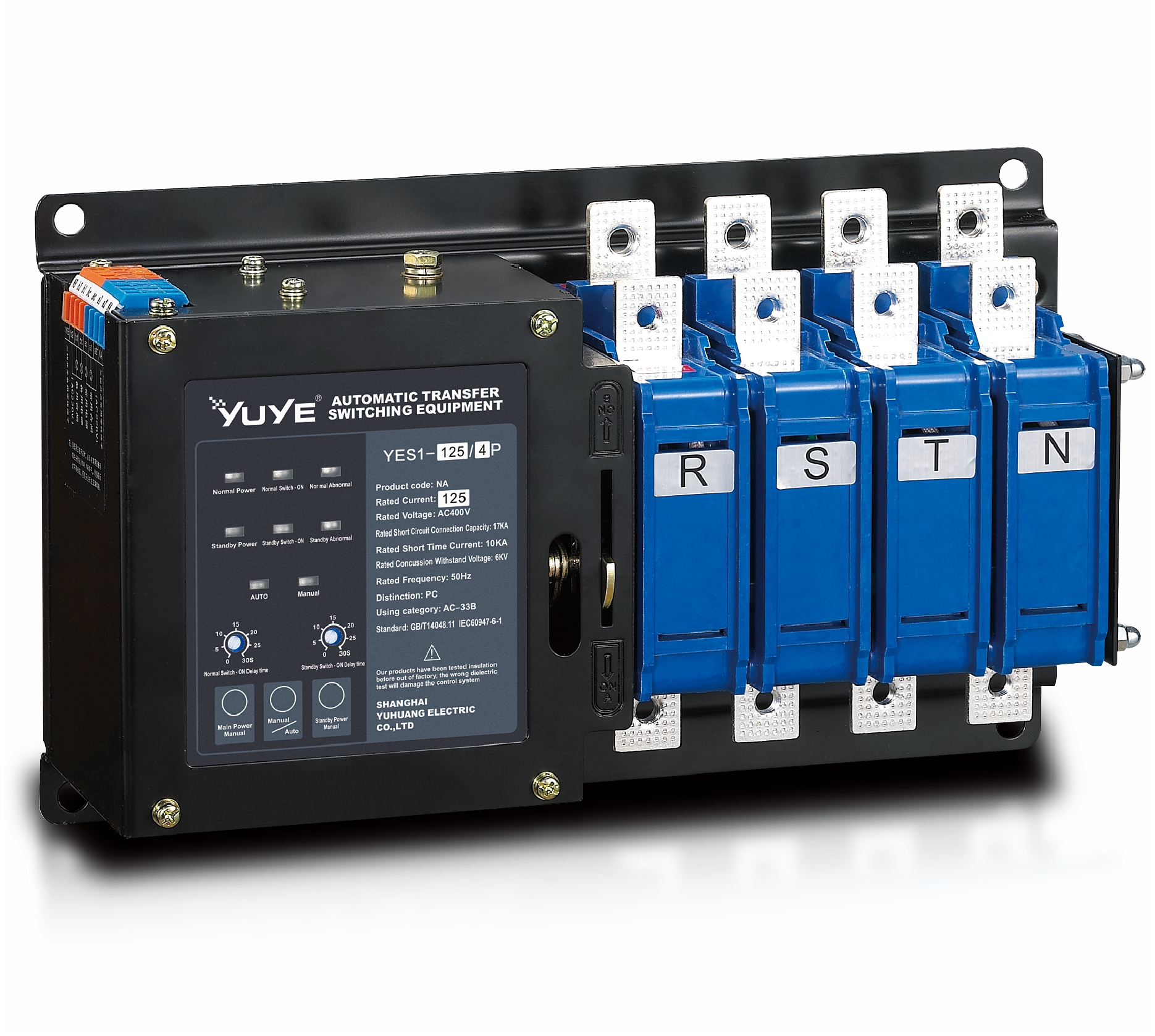 Solenoid-type ATS YES1-32~125NA
 Solenoid-type ATS YES1-63~630SN
 Solenoid-type ATS YES1-1250~4000SN
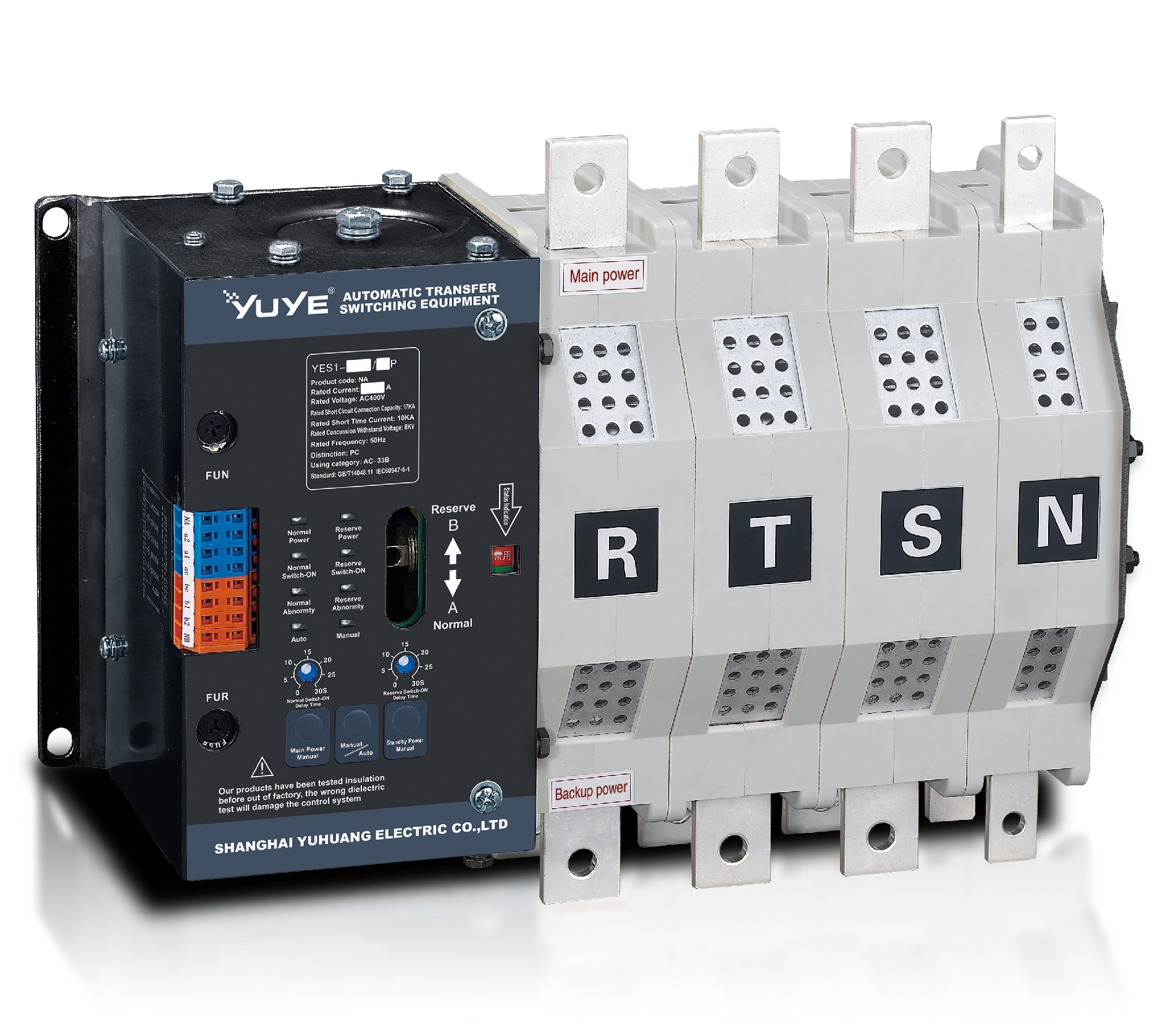 Solenoid-type ATS YES1-250~630NA/NAT
 Solenoid-type ATS YES1-63NJT
 PC ATS YES1-100~1600GN1/GN/GNF
 PC ATS YES1-2000~3200GN/GNF
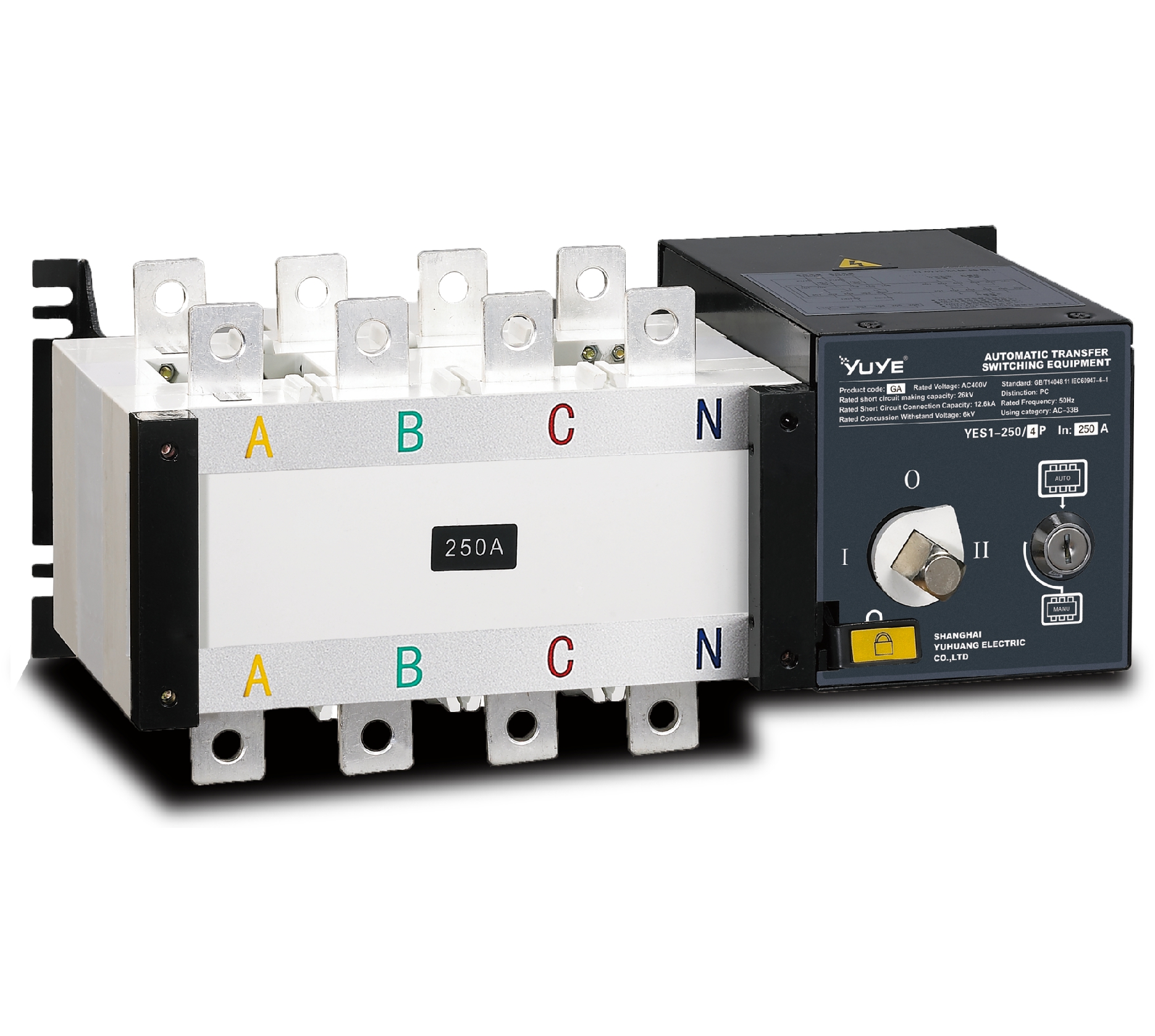 PC ATS YES1-100~3200GA1/GA
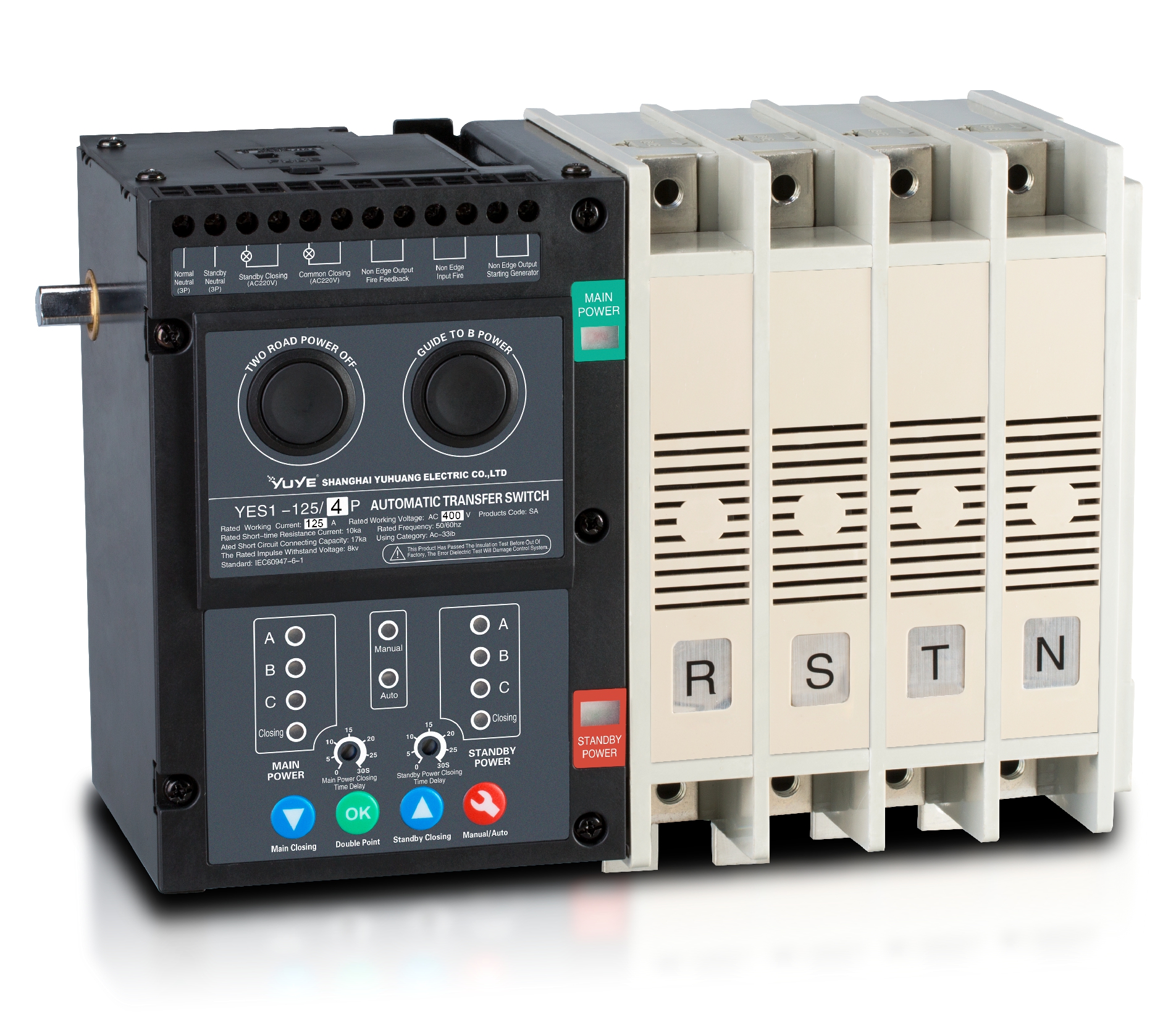 Solenoid-type ATS YES1-63~630SA
 Solenoid-type ATS YES1-63~630L/LA
 Solenoid-type ATS YES1-63~630LA3
 Solenoid-type ATS YES1-63MA
 PC ATS YES1-630~1600M
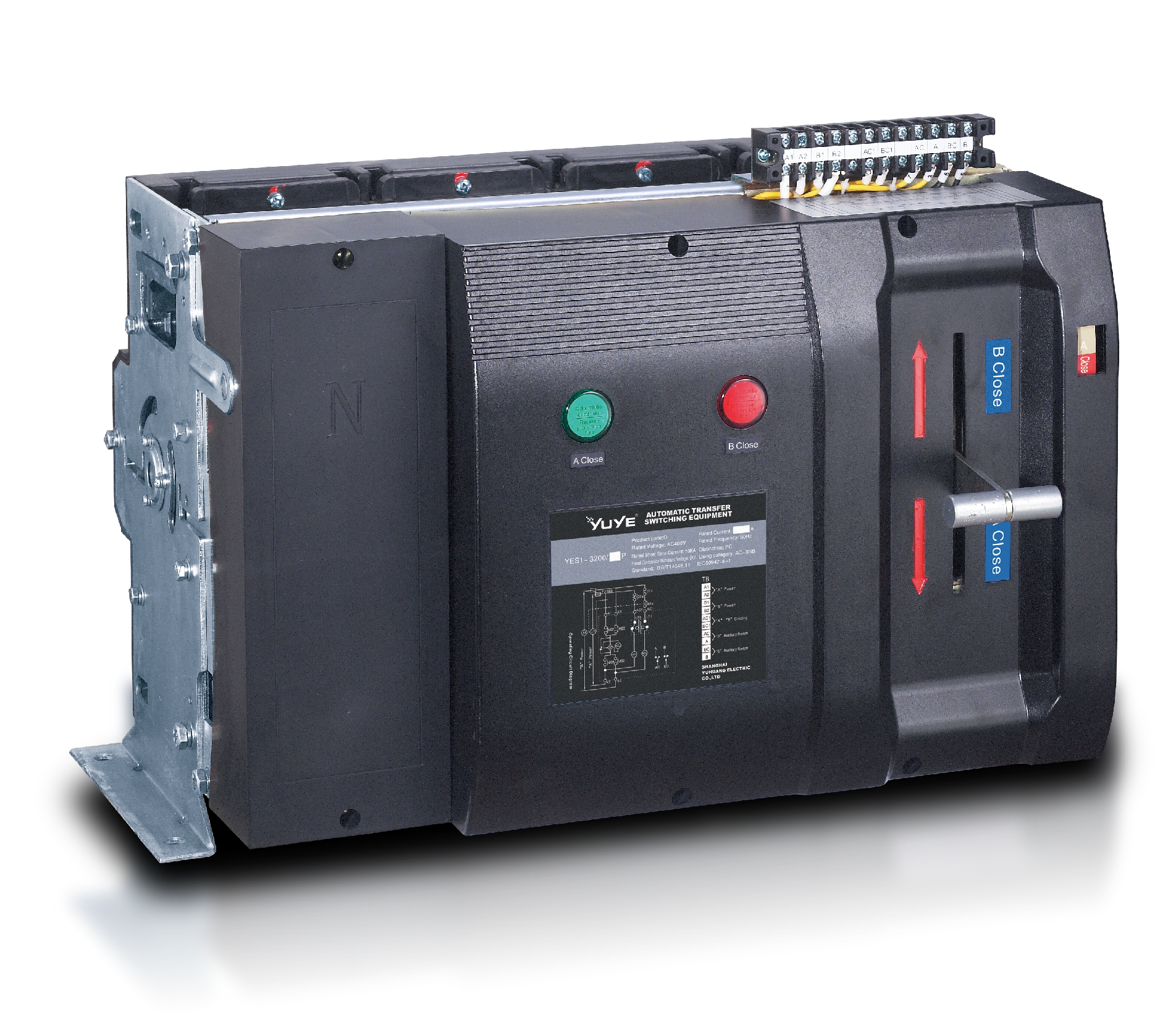 PC ATS YES1-3200Q
 Solenoid-type ATS YES1-4000~6300Q
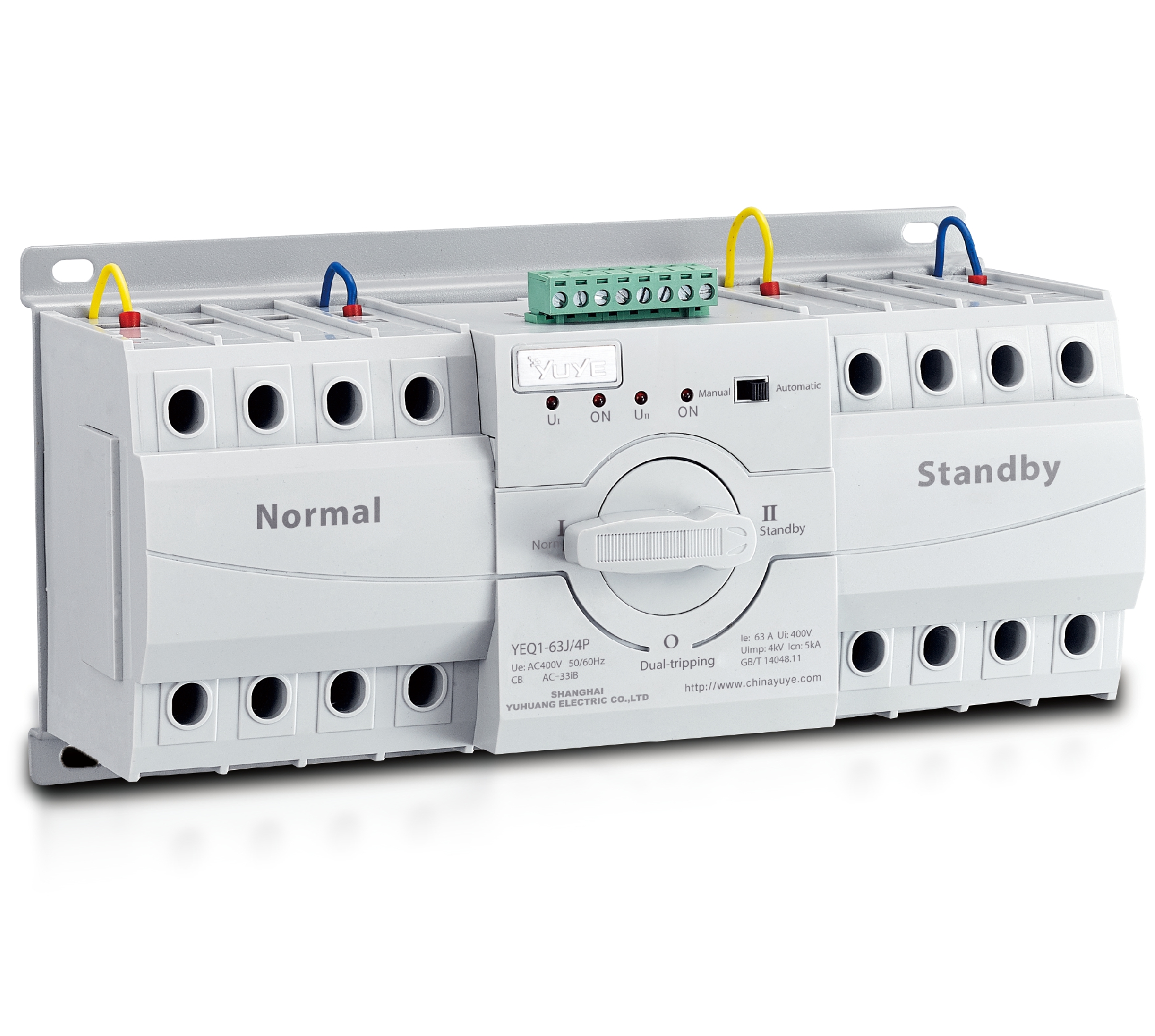 CB ATS YEQ1-63J
 CB ATS YEQ2Y-63
 CB ATS YEQ3-63W1
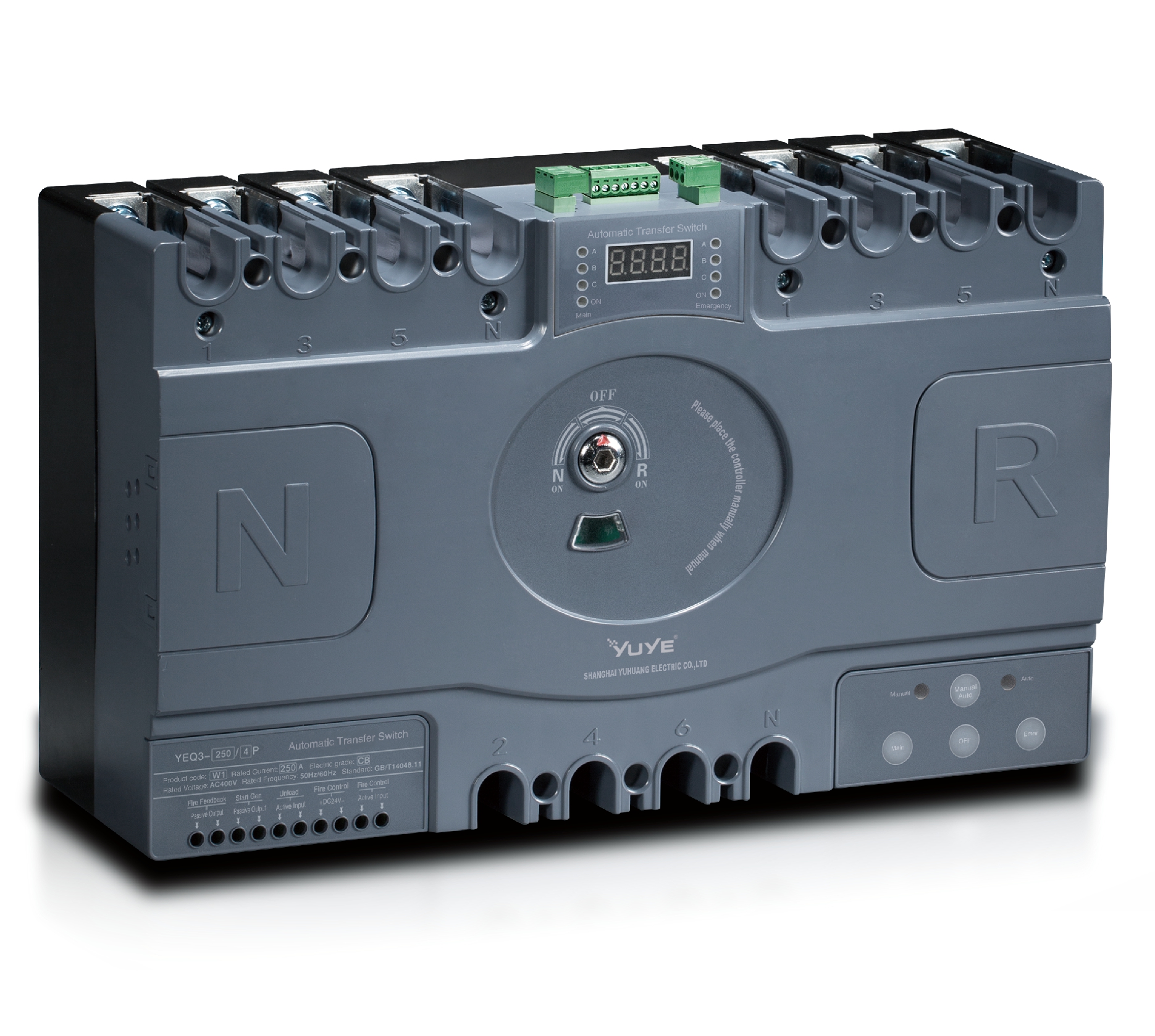 CB ATS YEQ3-125~630W1
 ATS controller Y-700
 ATS Controller Y-700N
 ATS Controller Y-701B
 ATS Controller Y-703N
 ATS Controller Y-800
 ATS Controller W2/W3 Series
 ATS switch Cabinet floor-to-ceiling
 ATS switch cabinet
 JXF-225A power Cbinet
 JXF-800A power Cbinet
 YEM3-125~800 Plastic Shell Type MCCB
 YEM3L-125~630 Leakage Type MCCB
 YEM3Z-125~800 Adjustable Type MCCB
 YEM1-63~1250 Plastic Shell Type MCCB
 YEM1E-100~800 Electronic Type MCCB
 YEM1L-100~630 Leakage Type MCCB
 Miniature circuit breaker YEMA2-6~100
 Miniature circuit breaker YEB1-3~63
 Miniature circuit breaker YEB1LE-3~63
 Miniature circuit breaker YEPN-3~32
 Miniature circuit breaker YEPNLE-3~32
 Miniature circuit breaker YENC-63~125
 Air Circuit Breaker YEW1-2000~6300
 Air Circuit Breaker YEW3-1600
 Load isolation switch YGL-63~3150
 Load Isolation Switch YGL2-63~3150
 YECPS2-45~125 LCD
 YECPS-45~125 Digital
 Manual Changeover Switch YGL-100~630Z1A
 Manual Changeover Switch YGLZ1-100~3150
 CNC Milling/Turning-OEM
 DC relay MDC-300M
 DC Isolation Switch YEGL3D-630


