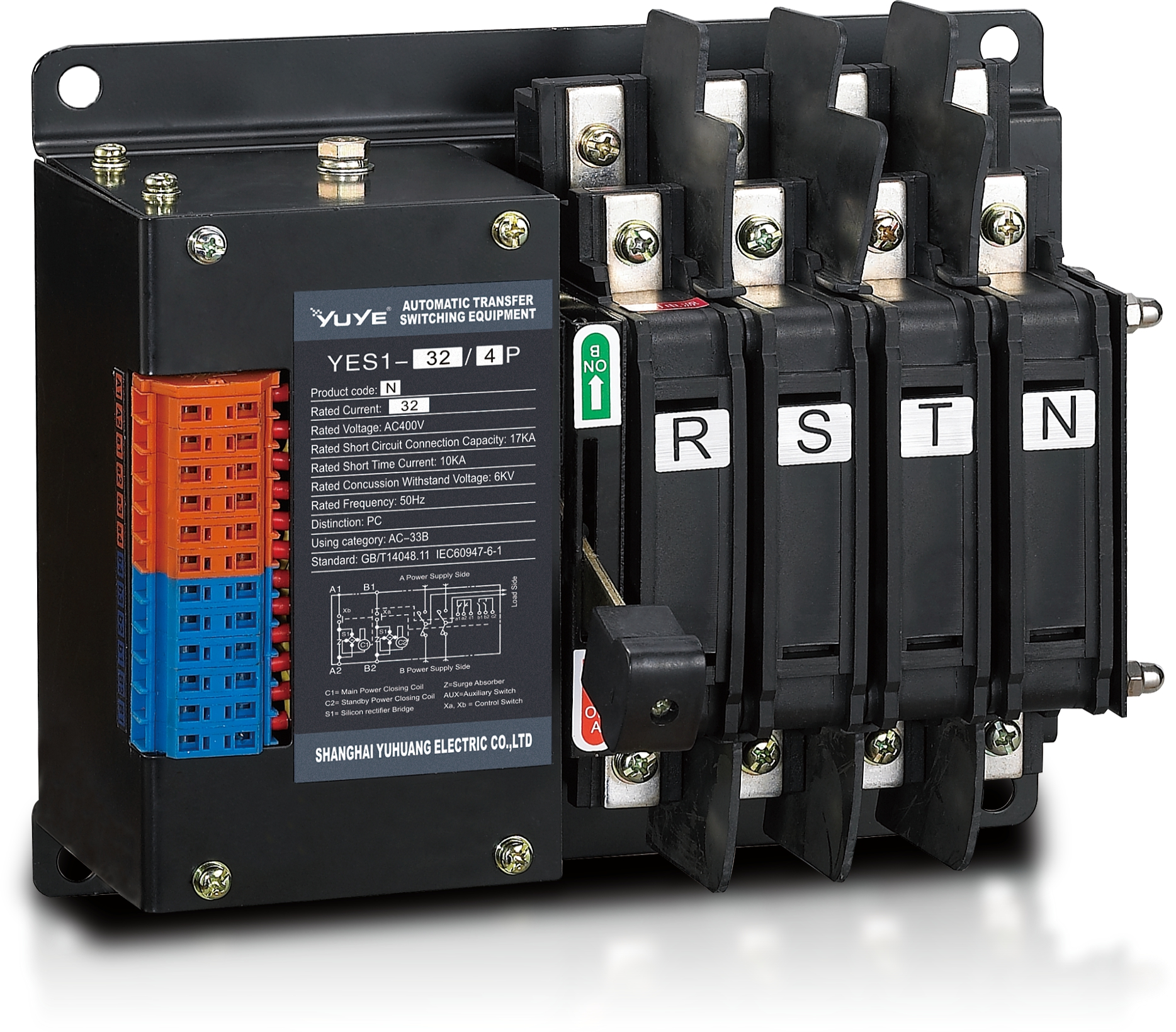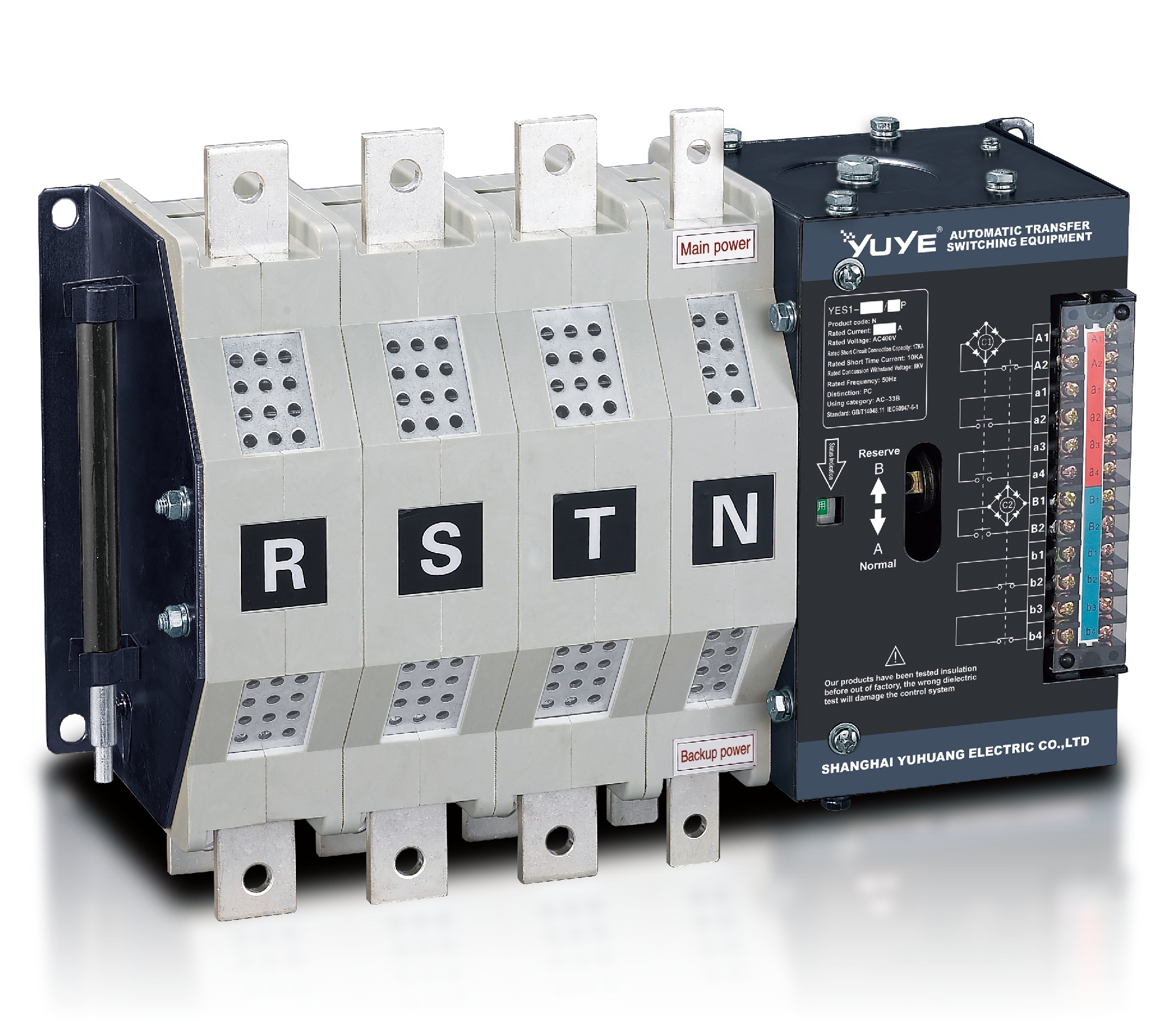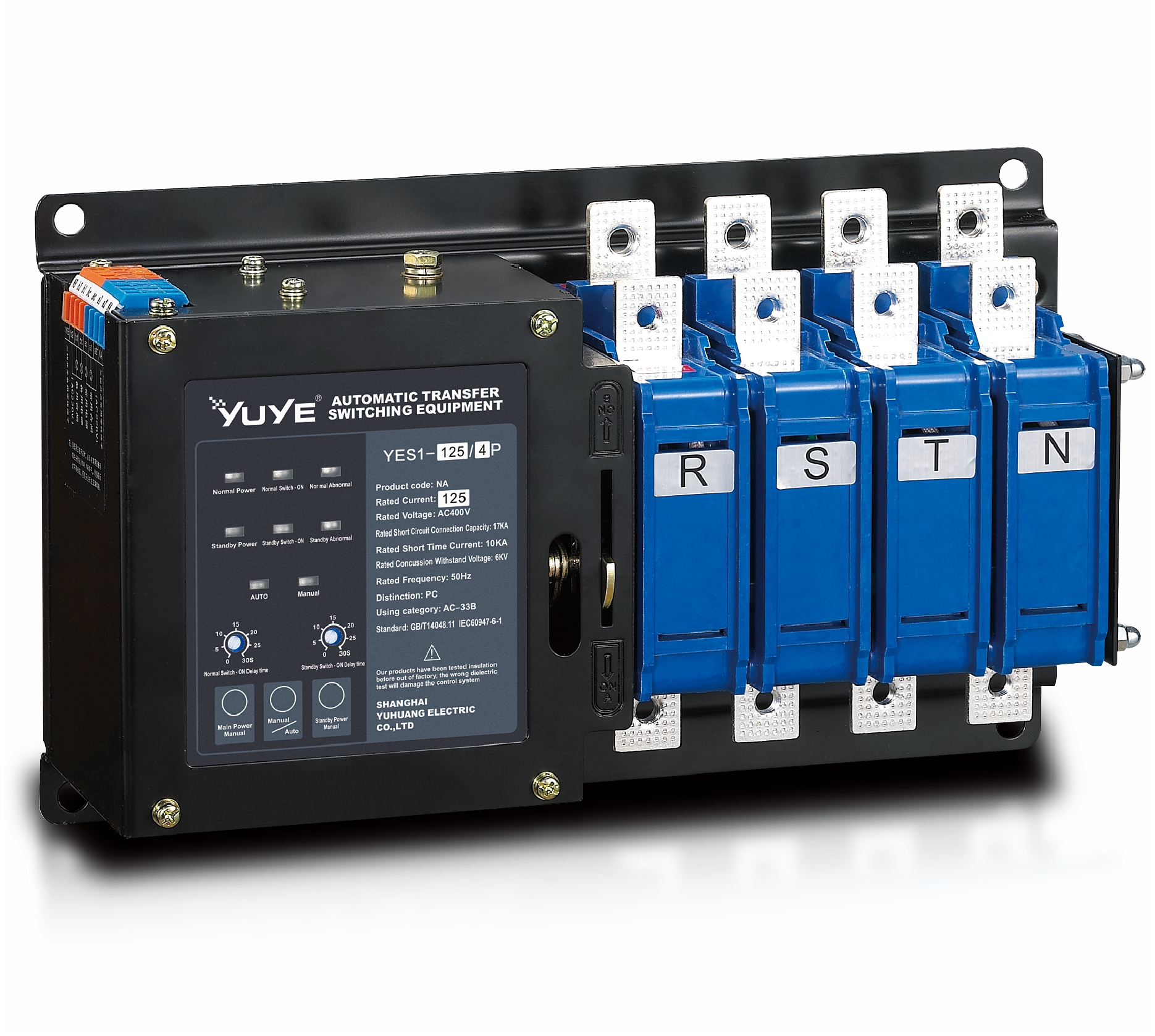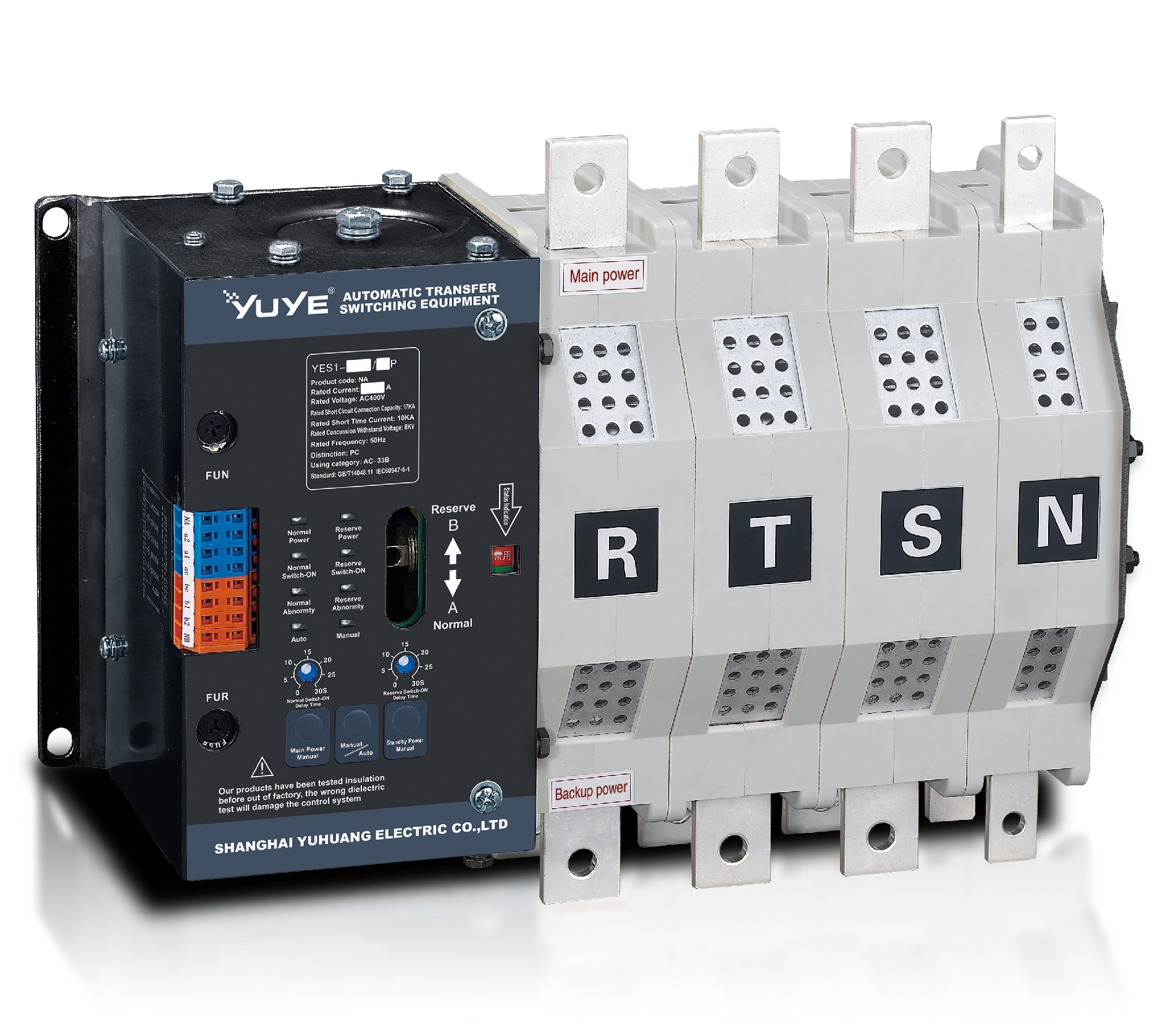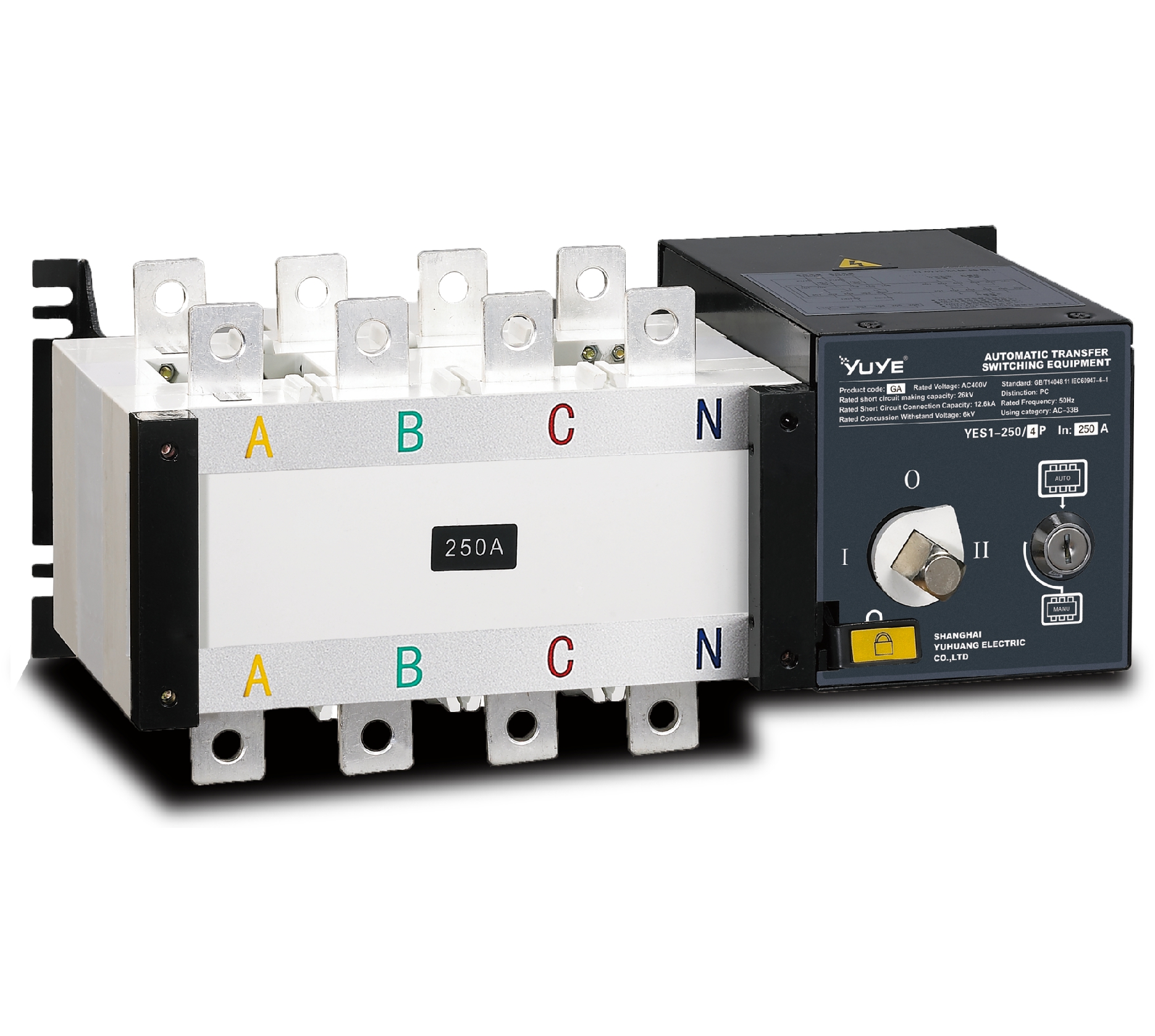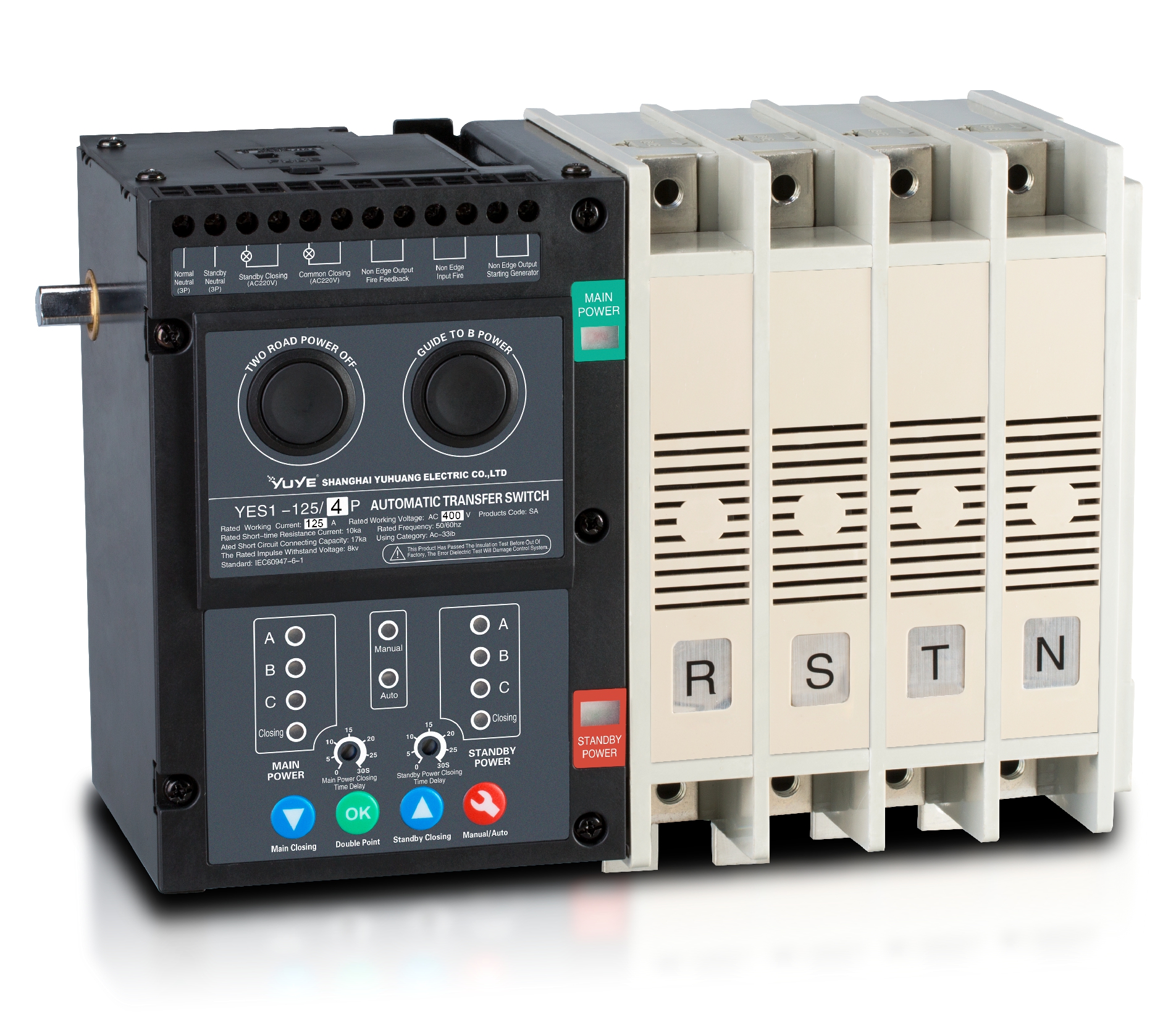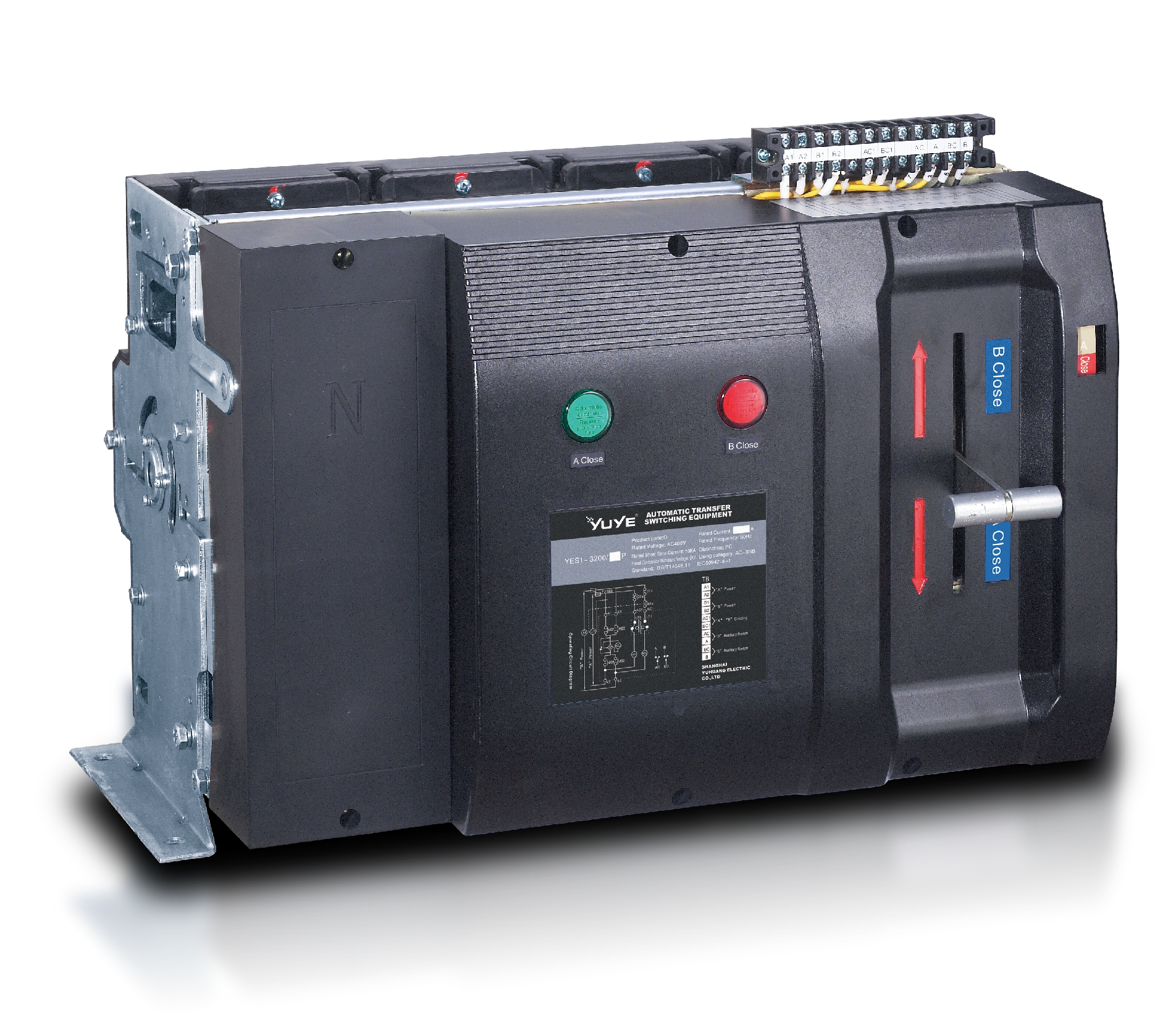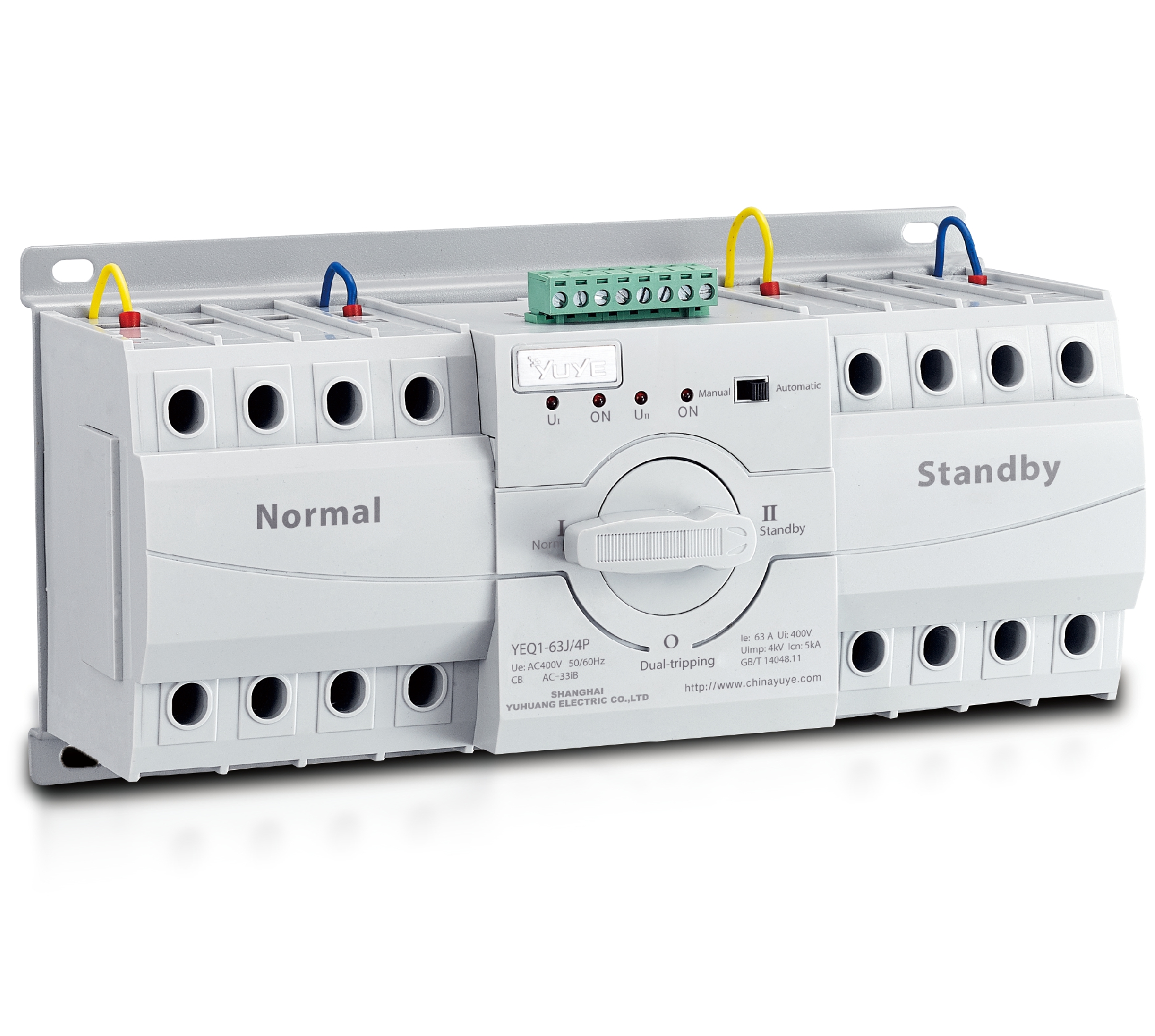
PC ATS YECT1-2000G
PC ATS YES2-63~250GN1
Solenoid-type ATS YES1-32~125N
Solenoid-type ATS YES1-250~630N/NT
Solenoid-type ATS YES1-32~125NA
Solenoid-type ATS YES1-63~630SN
Solenoid-type ATS YES1-1250~4000SN
Solenoid-type ATS YES1-250~630NA/NAT
Solenoid-type ATS YES1-63NJT
PC ATS YES1-100~1600GN1/GN/GNF
PC ATS YES1-2000~3200GN/GNF
PC ATS YES1-100~3200GA1/GA
Solenoid-type ATS YES1-63~630SA
Solenoid-type ATS YES1-63~630L/LA
Solenoid-type ATS YES1-63~630LA3
Solenoid-type ATS YES1-63MA
PC ATS YES1-630~1600M
PC ATS YES1-3200Q
Solenoid-type ATS YES1-4000~6300Q
CB ATS YEQ1-63J
CB ATS YEQ2Y-63
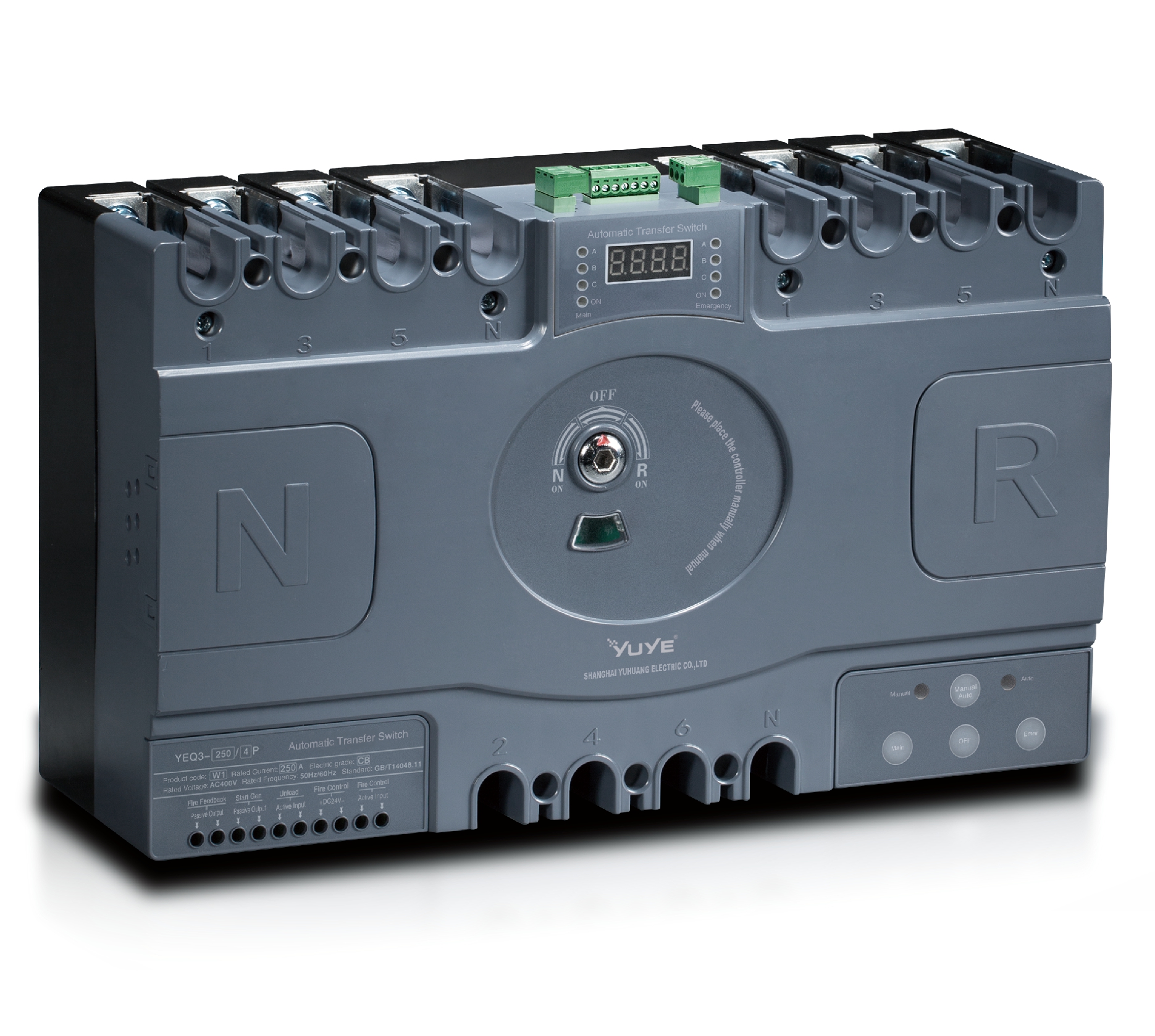
CB ATS YEQ3-63W1
CB ATS YEQ3-125~630W1
ATS controller Y-700
ATS Controller Y-700N
ATS Controller Y-701B
ATS Controller Y-703N
ATS Controller Y-800
ATS Controller W2/W3 Series
ATS switch Cabinet floor-to-ceiling
ATS switch cabinet
JXF-225A power Cbinet
JXF-800A power Cbinet
YEM3-125~800 Plastic Shell Type MCCB
YEM3L-125~630 Leakage Type MCCB
YEM3Z-125~800 Adjustable Type MCCB
YEM1-63~1250 Plastic Shell Type MCCB
YEM1E-100~800 Electronic Type MCCB
YEM1L-100~630 Leakage Type MCCB
Miniature circuit breaker YEMA2-6~100
Miniature circuit breaker YEB1-3~63
Miniature circuit breaker YEB1LE-3~63
Miniature circuit breaker YEPN-3~32
Miniature circuit breaker YEPNLE-3~32
Miniature circuit breaker YENC-63~125Picking the right Automatic Transfer Switch (or ATS for short) is pretty important when it comes to your power setup. Basically, an ATS connects your backup generator to your home's electrical system, making sure you get electricity even when the main grid goes out. But honestly, figuring out which model is best for you can be kinda tricky.
First off, think about how much power you really need. What are your essential appliances, and how much energy do they draw? You want an ATS that can handle all those critical loads easily — nobody wants it choking on sudden surges or just not enough capacity. Pay attention to the wattage of your devices, both starting and running. The last thing you want is to overload or underperform because the switch isn’t up to par.
Oh, and if you’re into techy stuff, finding an ATS with cool features like remote monitoring can be a game-changer. But keep in mind, not all models come with these extras, and that might lead to some frustration down the line. Take a moment to think about your long-term needs — do you want something simple, or are you looking for more advanced options? A good decision now can really save you headaches later, keeping your home comfy and protected no matter what happens with the power grid.
Automatic transfer switches (ATS) play a crucial role in ensuring seamless power supply during outages. These devices automatically switch to backup power, usually a generator, when the main utility power fails. Understanding ATS is essential for both residential and commercial users. The right switch can prevent disruption.
When selecting an ATS, consider the power rating. Ensure it matches your electrical load. Underestimating this can lead to failures. Also, think about the number of circuits you need. A switch with limited circuits may leave some areas unpowered during outages. It's important to plan ahead.
Tips: Check compatibility with your generator. Not all switches work with all generators. Additionally, consider installation requirements. Improper installation can cause malfunctions. Regular maintenance is key to reliability. A neglected switch might fail when you need it most. Keep these things in mind. They can save you from future hardships.
When evaluating your power needs, understanding the load requirements is crucial. A 2021 industry report highlighted that residential buildings often require between 5 kW and 10 kW. However, commercial properties might demand much more. Knowing the specific wattage for your appliances, like HVAC systems or generators, helps to make informed decisions.
**Tips:** Calculate your total wattage by listing all necessary equipment. Then, consider peak usage times. This approach allows you to select the appropriate Automatic Transfer Switch (ATS) that meets your immediate and future needs.
In addition to wattage, consider your frequency of power outages. Some regions report outages more than twice a year. An ATS that can accommodate such conditions might be needed. The decision on an ATS can also depend on whether you'll be using it for residential or industrial purposes. Each has different resilience and load demands.
**Tips:** Research local outage statistics. This data informs what capacity you need. Assess your growth expectations too. Overestimating your requirements can lead to unnecessary costs, while underestimating may leave you vulnerable.
When selecting an automatic transfer switch (ATS), understanding the types available is essential. These switches are critical for ensuring a seamless transition of power. There are two main types: open-transition and closed-transition switches. Open-transition switches quickly switch between sources but may result in a brief power interruption. In contrast, closed-transition switches offer a smoother transition without power loss, but they can be more complex and costly.
Consider your requirements carefully. If your setting demands immediate power restoration, a closed-transition ATS might be the right choice. However, the complexities involved in installation and maintenance can be a drawback. Open-transition models, while potentially less expensive, may not suit critical applications where every second counts.
Often, users overlook the environment where the ATS will be installed. An outdoor installation may require more robust features to withstand weather variations. Not all models are suitable for every setting. The wrong choice can lead to performance issues or even failures when you need them most. Take your time and evaluate your options; it’s a crucial decision that affects operational continuity.
Choosing the right Automatic Transfer Switch (ATS) hinges on understanding key features that align with your specific needs. First, consider the power rating. An ATS must handle your maximum load. According to a recent industry report, overloads can cause costly damages. Ensure the rating exceeds your peak demand by at least 10%.
Another critical feature is the switching time. Quality ATS units typically switch within 10 seconds. Delays can harm sensitive devices. In environments where uptime is crucial, look for units with faster response times. If you're powering medical equipment, this is vital. Reliability is a must.
Finally, remote monitoring capabilities have become essential. A study by a leading energy consultancy revealed that 45% of outages could be avoided with proactive monitoring. Implementing a system to check ATS status remotely can save time and reduce risk. Investing time in these details is worthwhile. Yet, the right ATS may differ from what’s commonly recommended. Assess your unique environment closely.
| Feature | Description | Importance | Recommended Specification |
|---|---|---|---|
| Transfer Time | The time it takes for the ATS to switch from the main power to the backup supply. | Critical for minimizing downtime during power outages. | Less than 10 seconds recommended. |
| Amperage Rating | The maximum current the ATS can handle. | Ensures the switch can support the load requirements. | Select based on the total load in watts/volts. |
| Voltage | The electrical potential difference the ATS is designed to operate with. | Must match the requirements of your system. | Common ratings: 120V, 240V, or 480V. |
| NEMA Rating | The enclosure protection level against environmental elements. | Important for outdoor vs. indoor installations. | NEMA 3R or higher for outdoors. |
| Control Options | Methods of controlling the ATS (manual or automatic). | Flexibility in operation depending on user needs. | Automatic control preferred for minimal user intervention. |
| Maintenance Needs | Required upkeep and service intervals for the ATS. | Essential for reliability and longevity. | Consider options with lower maintenance requirements. |
When considering installation factors for an automatic transfer switch, location matters. Choose a dry and well-ventilated area. Avoid places exposed to moisture or extreme temperatures. Proper placement helps reduce damage. Accessibility is also key. You should be able to reach it for regular checks.
Maintenance is crucial for performance. Schedule regular inspections. Look for signs of wear, rust, or corrosion. Pay attention to connections. Loose wires can cause malfunctions. It’s wise to keep spare parts handy. This will save time during repairs.
Don't neglect clear labeling of switches. It helps in understanding circuits quickly. Mislabeling can lead to confusion during emergencies. Ensure documentation is up to date. This includes installation guidelines and maintenance records. Frequent reviews of these documents are important.
When budgeting for an automatic transfer switch (ATS), costs can vary widely. It’s important to identify your specific power needs. For a home, a smaller unit may suffice. In contrast, larger facilities require more complex systems. Prices can range from a few hundred to several thousand dollars. Knowing your power requirements is crucial to avoid overspending.
Consider installation costs too. Some tools are needed, and professionals might be necessary for complex setups. Make sure to include these expenses in your budget. If you opt for self-installation, it can save money but may lead to mistakes. Be cautious.
Look into additional options that fit your needs. Some switches come with features like remote monitoring. These add convenience but can also increase overall costs. Reflect on how often you’ll use these features. A simple switch might be all you need. Weigh your choices carefully to avoid regret later.
When selecting an automatic transfer switch (ATS), compliance with standards is crucial. Various regulations guide the design and functionality of ATS systems. These include the National Electrical Code (NEC) and Underwriters Laboratories (UL) standards. They ensure safety and reliability. Ignoring these can lead to severe consequences.
Many individuals overlook the importance of certification marks. An ATS not compliant with regulations can malfunction. It may not provide the intended protection during power outages. Additionally, understanding local codes is vital. These codes can vary by region. It’s essential to consult local authorities or experts in the field.
Choosing the right ATS requires careful consideration of electrical loads and connectivity. Not all systems fit every application. A common mistake is assuming a one-size-fits-all approach. Seek guidance if unsure. The implications of poor choices may become apparent only later, often at significant costs. Being proactive can prevent future headaches.
: The main types are open-transition and closed-transition switches. Each serves different needs.
Open-transition switches switch power sources quickly but can cause brief interruptions. This may not suit critical systems.
Closed-transition switches allow smooth transitions without power loss. However, they can be more complex and costlier.
An ATS must handle your peak load. If it’s too low, overloads can cause costly damages.
Ideally, quality ATS units should switch within 10 seconds to protect sensitive devices. Delays can be harmful.
Regular inspections for wear and loose connections are necessary. Keep spare parts handy for timely repairs.
Installing in a dry, ventilated area prevents moisture damage. Accessibility for checks is also essential for maintenance.
Remote monitoring can help prevent about 45% of outages. It enables proactive status checks and reduces risks.
Clear labeling helps quickly identify circuits. Mislabeling can create confusion in emergencies, so accuracy is crucial.
Keep installation guidelines and maintenance records updated. Regular reviews of these documents ensure everything is in order.
Choosing the right Automatic Transfer Switch (ATS) is crucial for ensuring a reliable power supply during outages. Understanding the fundamentals of ATS, including their functions and the various types available, is the first step in the selection process. Evaluating your specific power needs helps determine the appropriate capacity and features required for your installation.
It is also essential to consider key features such as switching speed, control mechanisms, and integration options. Budgeting for an ATS involves understanding the initial costs and long-term maintenance expenses. Additionally, adhering to compliance standards and regulations ensures the safe and effective operation of your switch. By carefully assessing these factors, you can select an ATS that meets your unique requirements and enhances your overall power management strategy.