1.General
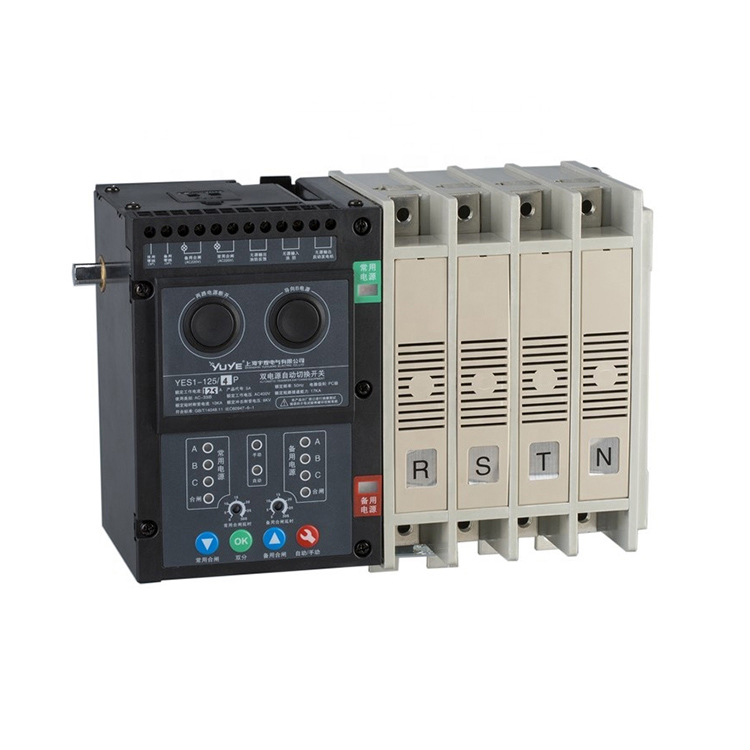
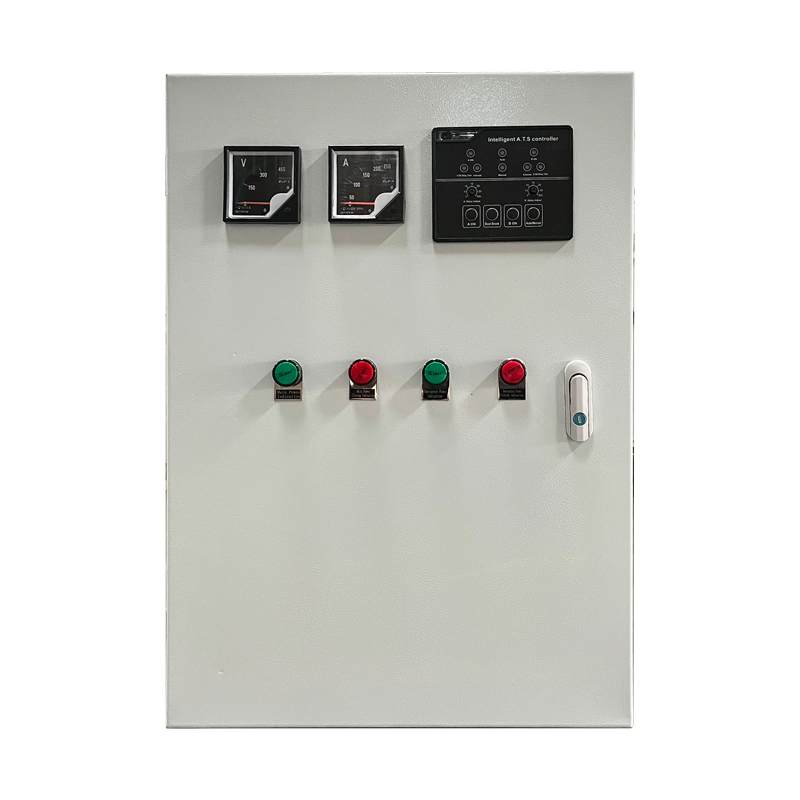
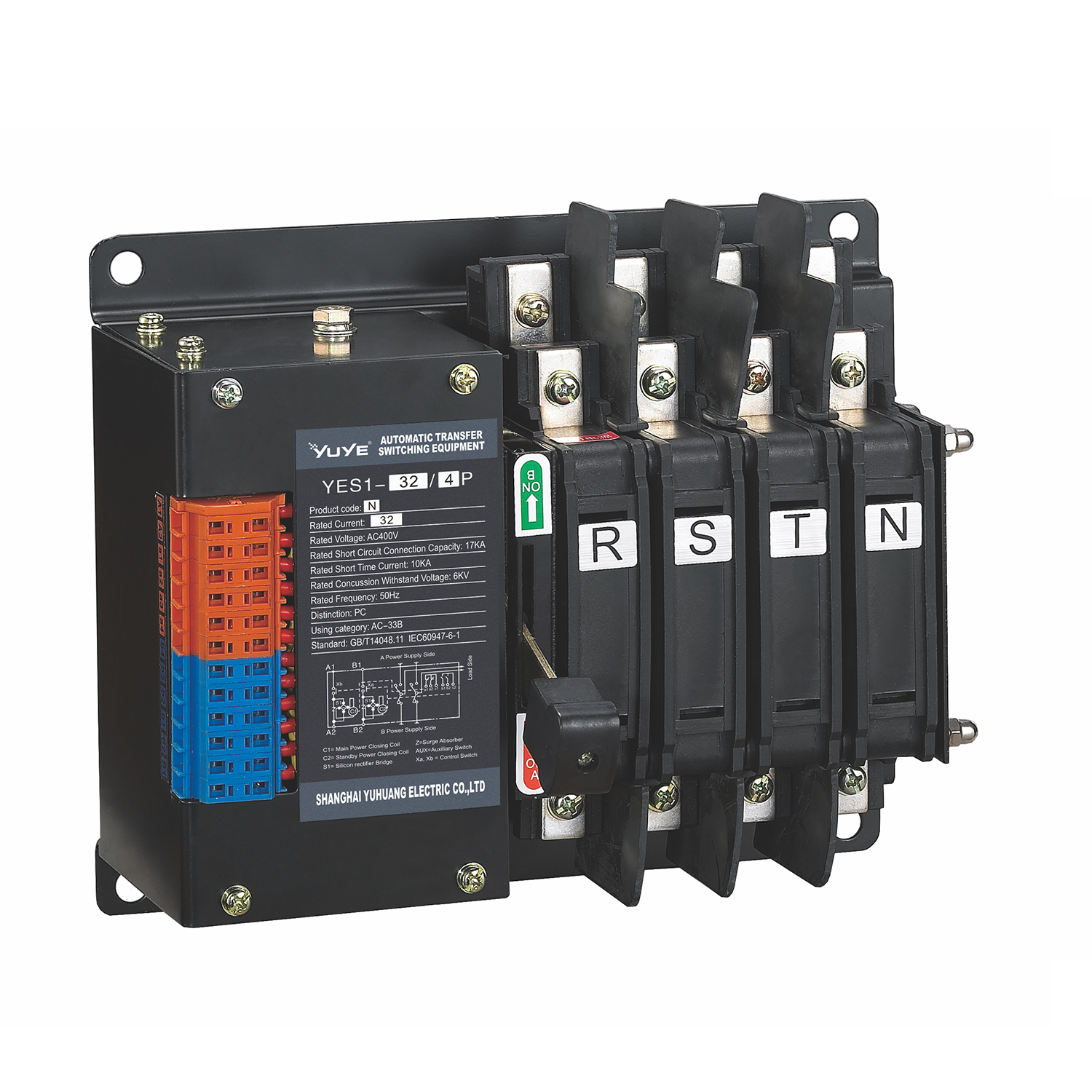
Automatic transfer switch is a high-tech product developed by our company,Comply with GB/T14048.11Standards, also in line with 《Fire Protection Code for High-Rise Civil Buildings》, 《Emergency Lighting Design Guidelines》etc.The parts and components of the product have undergone strict aging and screening. The finished product has been energized and aged at a continuous high temperature for 24 hours, and finally passed the loading inspection before leaving the factory. Thus ensuring the reliability and safety of the product .Suitable for AC 400V and below, rated frequency 50Hz. In the power supply, there is phase loss, overvoltage, Under the control of the controller, the transfer switch can quickly change the load from the common power supply to the backup power supply (the backup power supply must be normal at this time) in the case of fault conditions such as undervoltage. The user can also put the load in an intermediate position when needed, so that the load is neither connected to the normal power supply nor to the standby power supply.This product is mainly used for the primary and secondary loads specified by the state, and is widely used in fire-fighting, post and telecommunications Information, hospitals, hotels, urban rail transit,high-rise buildings, industrial assembly lines, television stations, etc.Places with continuous power supply. Commonly power sources can be power grids, self-starting generator sets, battery packs, etc.
2.Working Conditions
□ Ambient air temperature: ambient temperature -5℃ to +40℃, and the 24-hour average temperature value does not exceed Over +35°C.Users whose ambient air temperature is higher than +40°C or lower than -5°C should consult with the manufacturer.
□ The highest temperature of atmospheric humidity: when the degree is +40℃, the relative humidity does not exceed 50%, and the maximum relative humidity per month Degree 90%, resistant to the influence of humid air on the sea, and can allow higher relative humidity at lower temperatures , special measures should be taken for the occasional condensation caused by temperature changes.
□ Installation altitude: The altitude of the installation site does not exceed 2000 meters. When used at higher altitudes, the dielectric strength and cooling effect of the air should be considered to be reduced, please consult with the manufacturer.
□ Pollution level: The environmental pollution level of the installation site is level 3 .
□ Installation category: IV .
□ Installation inclination: the product is fixedly installed in the cabinet, the maximum inclination is ±22.5° .
□Arcing distance: The arcing distance is 30mm when AC 400V. The arcing distance when AC 690V is 60mm.
□ Use category : AC-33iB .
3.Product details
| Mode |
SN Type,S Type,LA Type,L Type |
| Insulation voltage |
AC690V |
| Rated voltage |
400V |
| Rated current |
20A~125A |
160A~250A |
315A~630A |
| Rated impulse withstand voltage |
8kV |
| Kind of throw |
Double throw |
| Wiring method |
Front board |
| Number of pole |
2P |
3P |
4P |
2P |
3P |
4P |
2P |
3P |
4P |
| Weight |
6 |
6.3 |
7 |
6 |
8 |
10 |
11 |
13.6 |
16.2 |
Rated co
ntrol pow
er current |
AC100V/110V |
3 |
3 |
4 |
3 |
4 |
5 |
5 |
5 |
7 |
| AC200V/220V |
1.5 |
1.5 |
2 |
1.5 |
2 |
2.5 |
2.5 |
2.5 |
3 |
| Performance |
Short-time
resistance current |
10kA |
Through to breaking
capacity |
17kA |
| Transfer time |
A
Power |
Input |
80ms |
80ms |
100ms |
| Break |
30ms |
30ms |
30ms |
B
Power |
Input |
100ms |
100ms |
120ms |
| Break |
30ms |
30ms |
30ms |
Electrical Life/
Mechanical Life |
1000/5000 |
1000/4000 |
| Operating cycle |
60times/hour |
| Use type |
AC-33iB |
| Auxiiary switch(Optional) |
A、Bpower source side are both 2 normalopen,
2nomalclosed,switch capabity 15A/AC250V |
| Accessaries |
Manual handle |
4..Maintenance and storage
Inspection and maintenance must be carried out by professionals.Allexternal power supplies should be cut off during inspection andmaintenance.In order to maintain the performance of the power switchand keep it in good condition,the first maintenance inspection shall becarried out within one year after installation,and regular maintenanceshall be done at leastonce ayearthereafter.

 PC ATS YECT1-2000G
 PC ATS YES2-63~250GN1
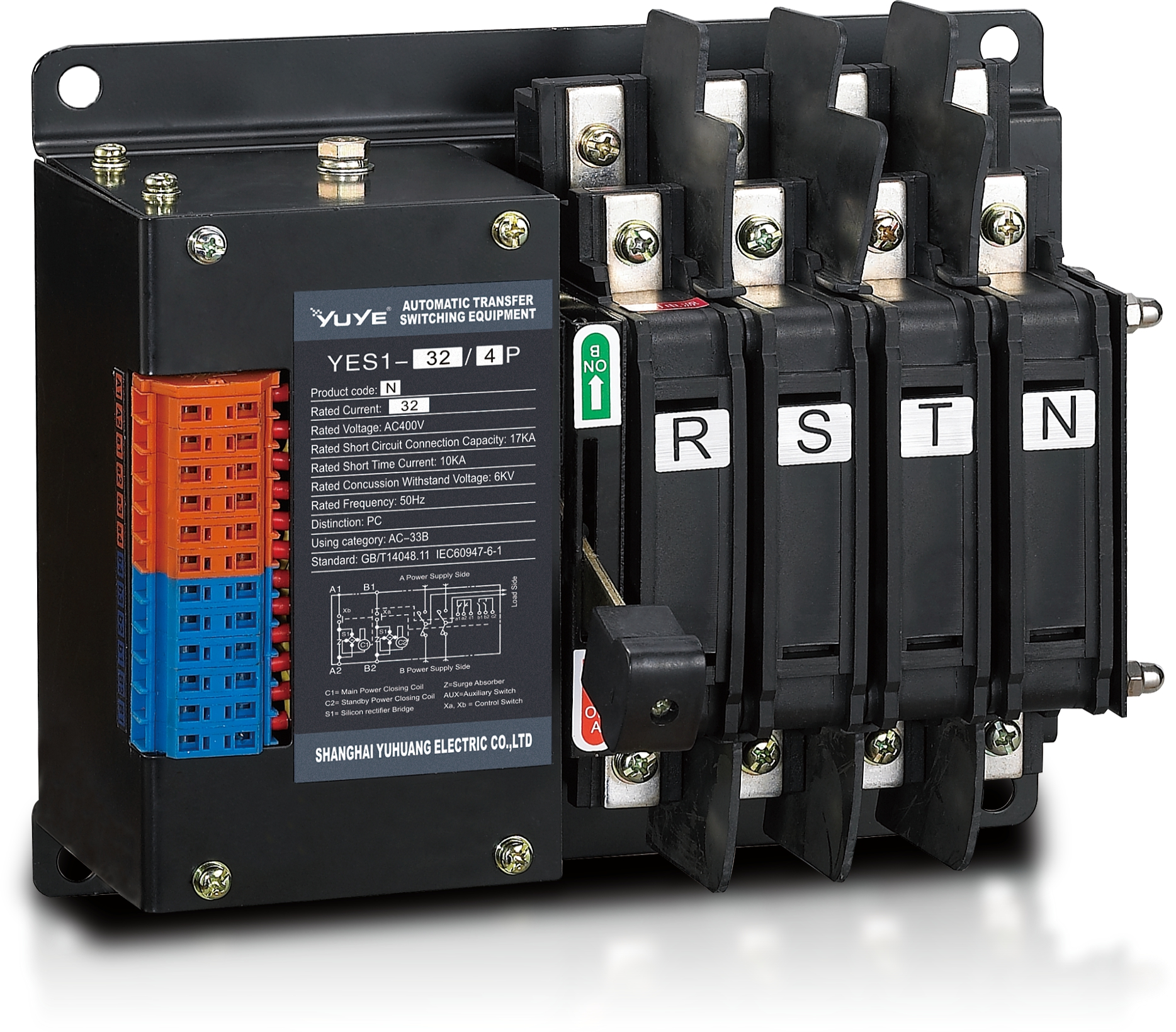 Solenoid-type ATS YES1-32~125N
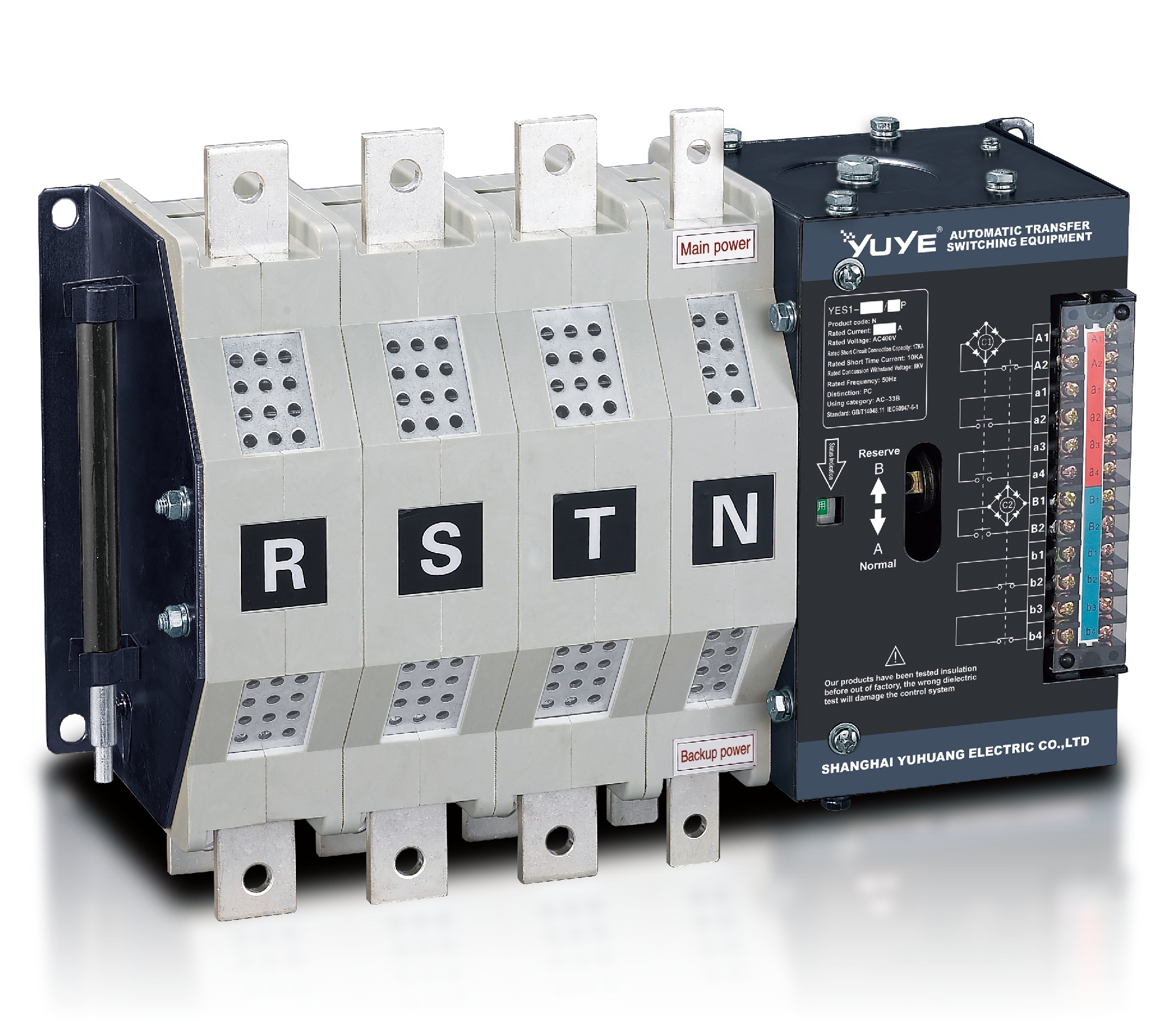 Solenoid-type ATS YES1-250~630N/NT
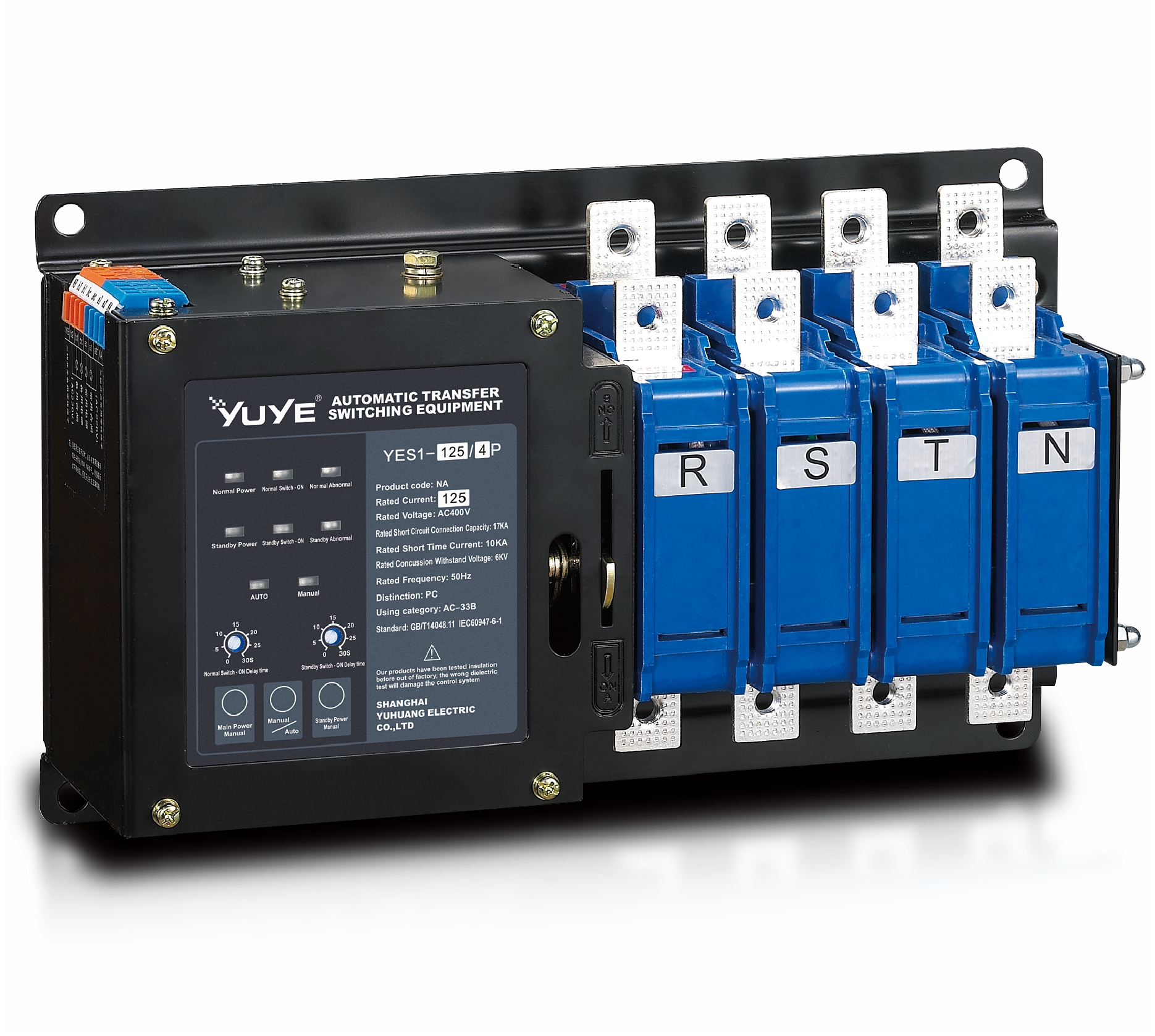 Solenoid-type ATS YES1-32~125NA
 Solenoid-type ATS YES1-63~630SN
 Solenoid-type ATS YES1-1250~4000SN
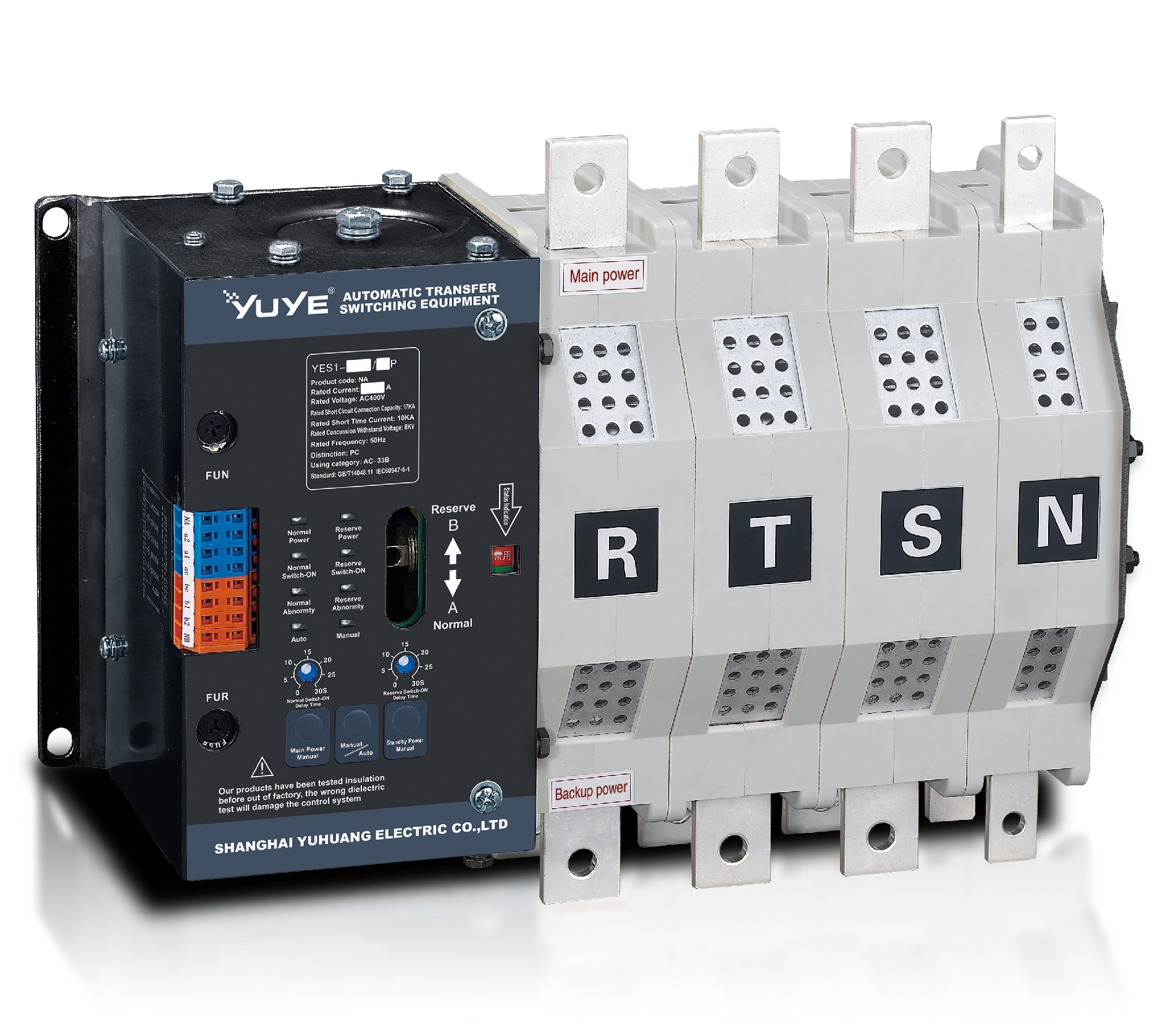 Solenoid-type ATS YES1-250~630NA/NAT
 Solenoid-type ATS YES1-63NJT
 PC ATS YES1-100~1600GN1/GN/GNF
 PC ATS YES1-2000~3200GN/GNF
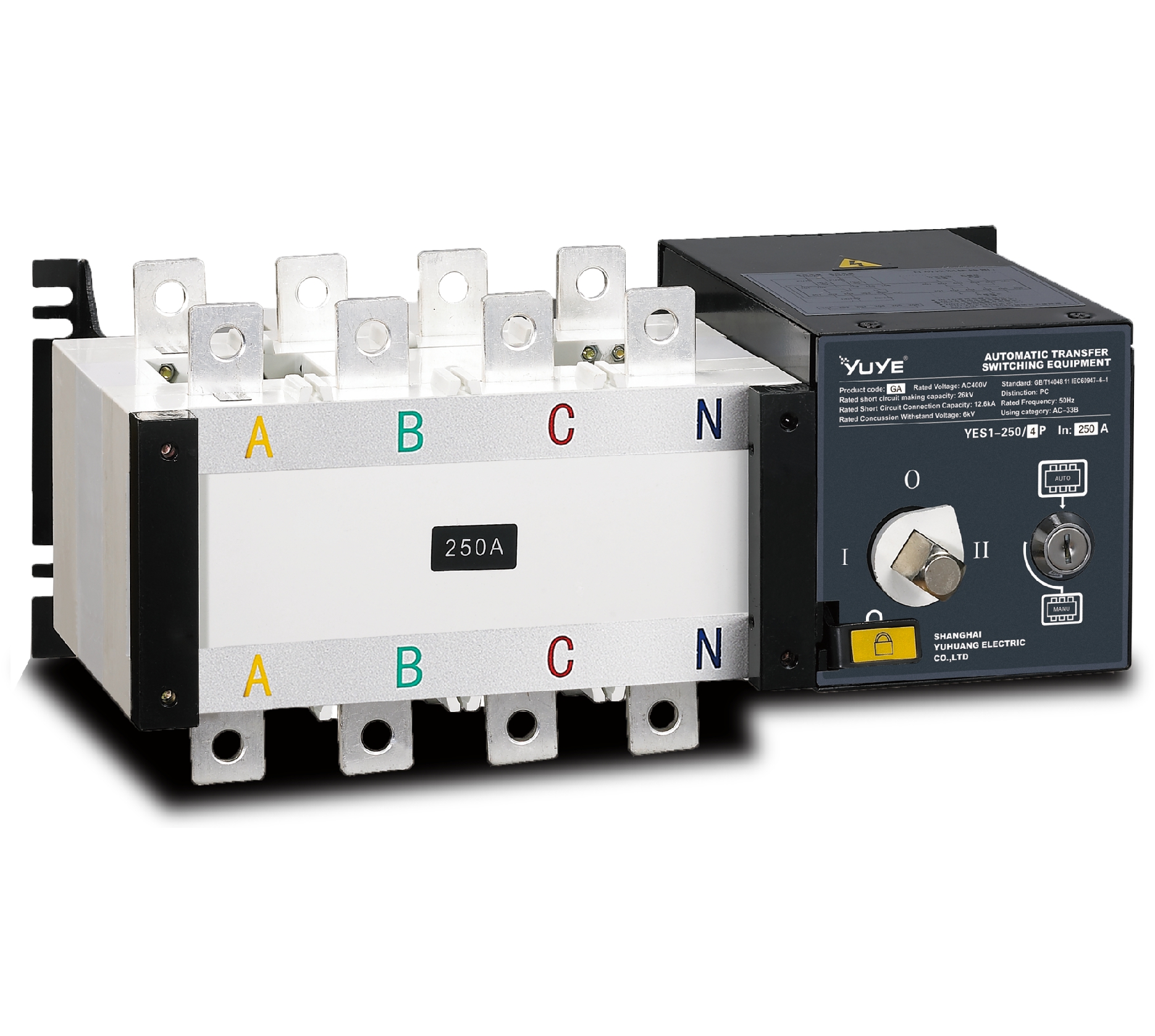 PC ATS YES1-100~3200GA1/GA
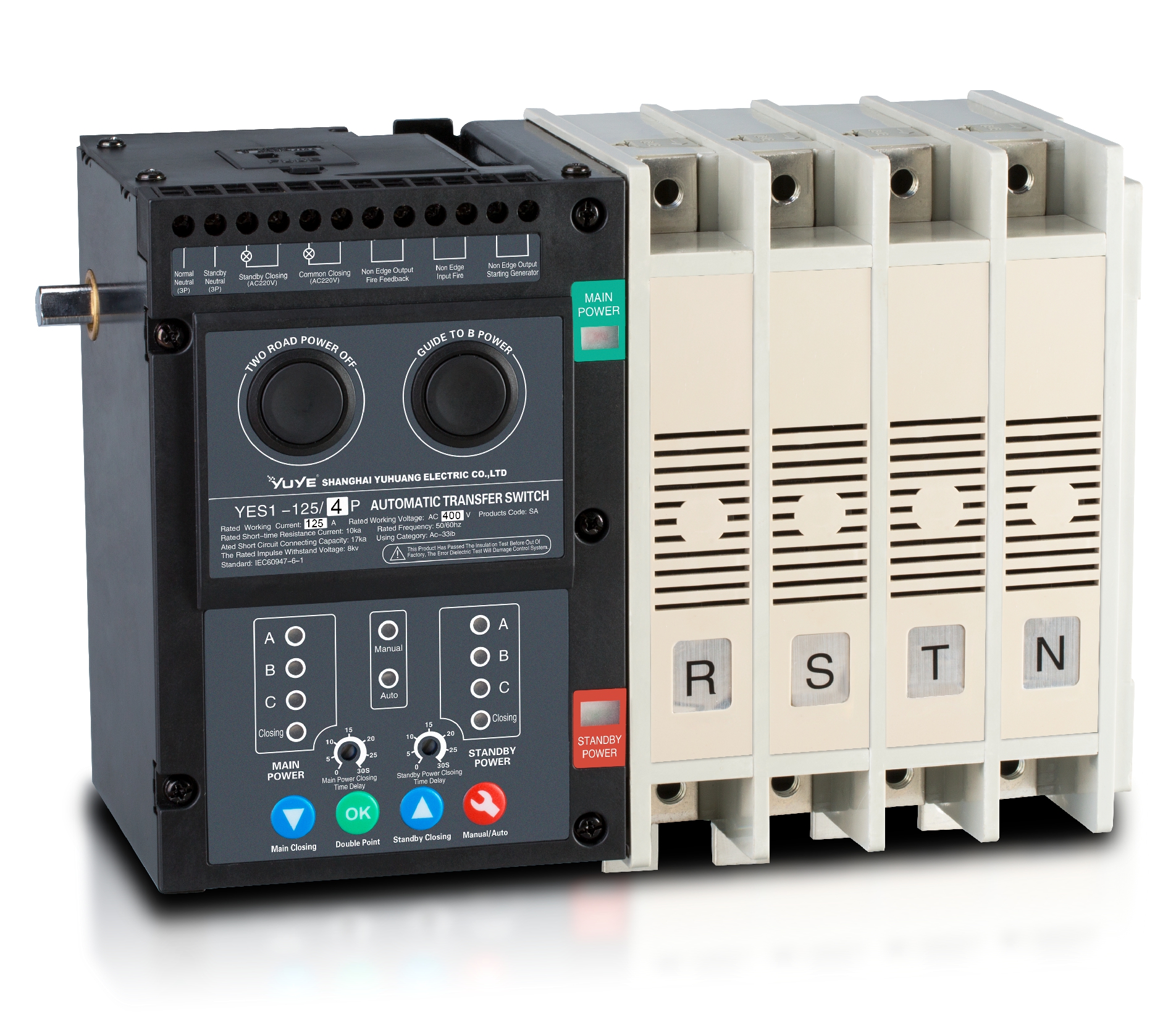 Solenoid-type ATS YES1-63~630SA
 Solenoid-type ATS YES1-63~630L/LA
 Solenoid-type ATS YES1-63~630LA3
 Solenoid-type ATS YES1-63MA
 PC ATS YES1-630~1600M
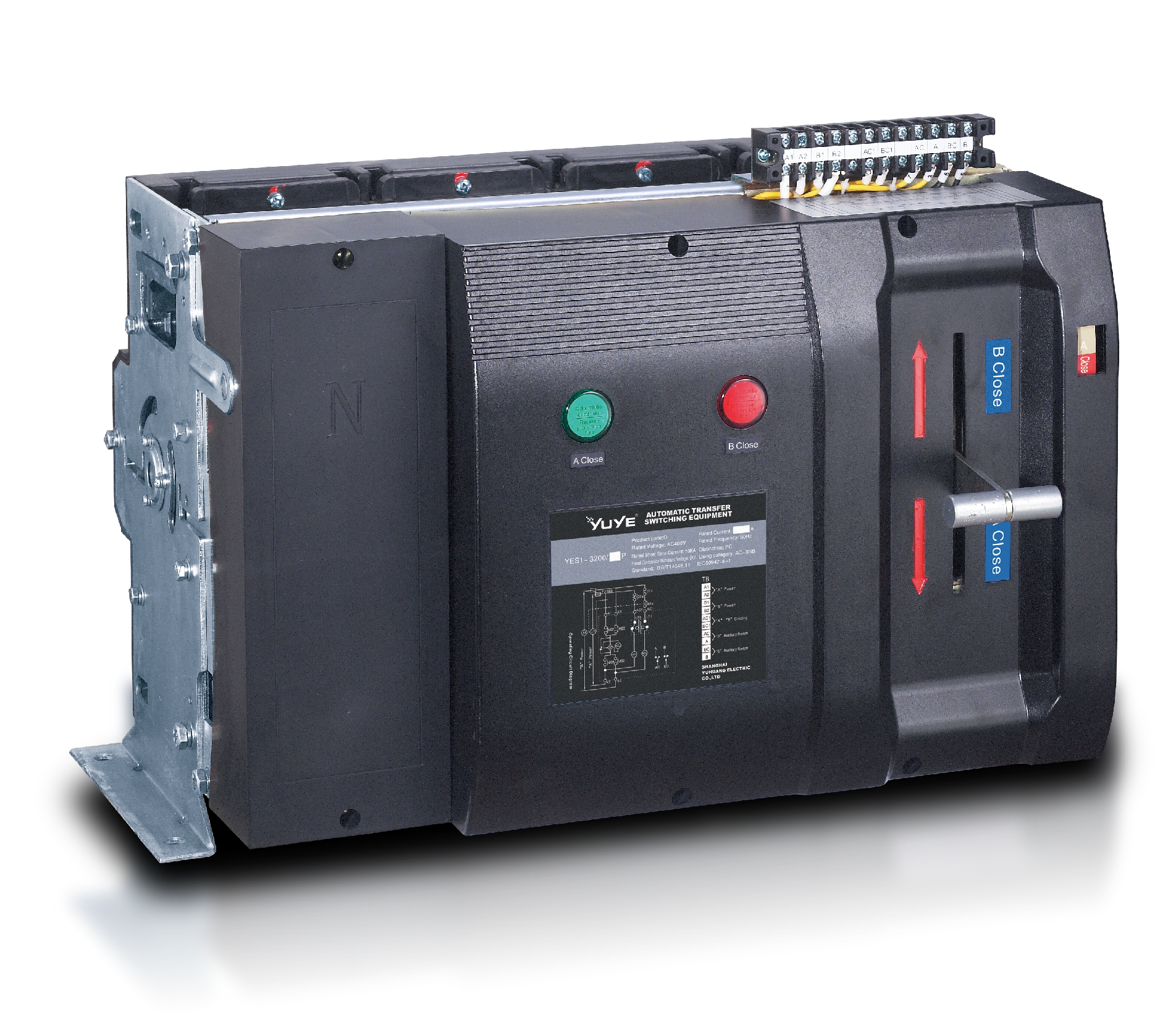 PC ATS YES1-3200Q
 Solenoid-type ATS YES1-4000~6300Q
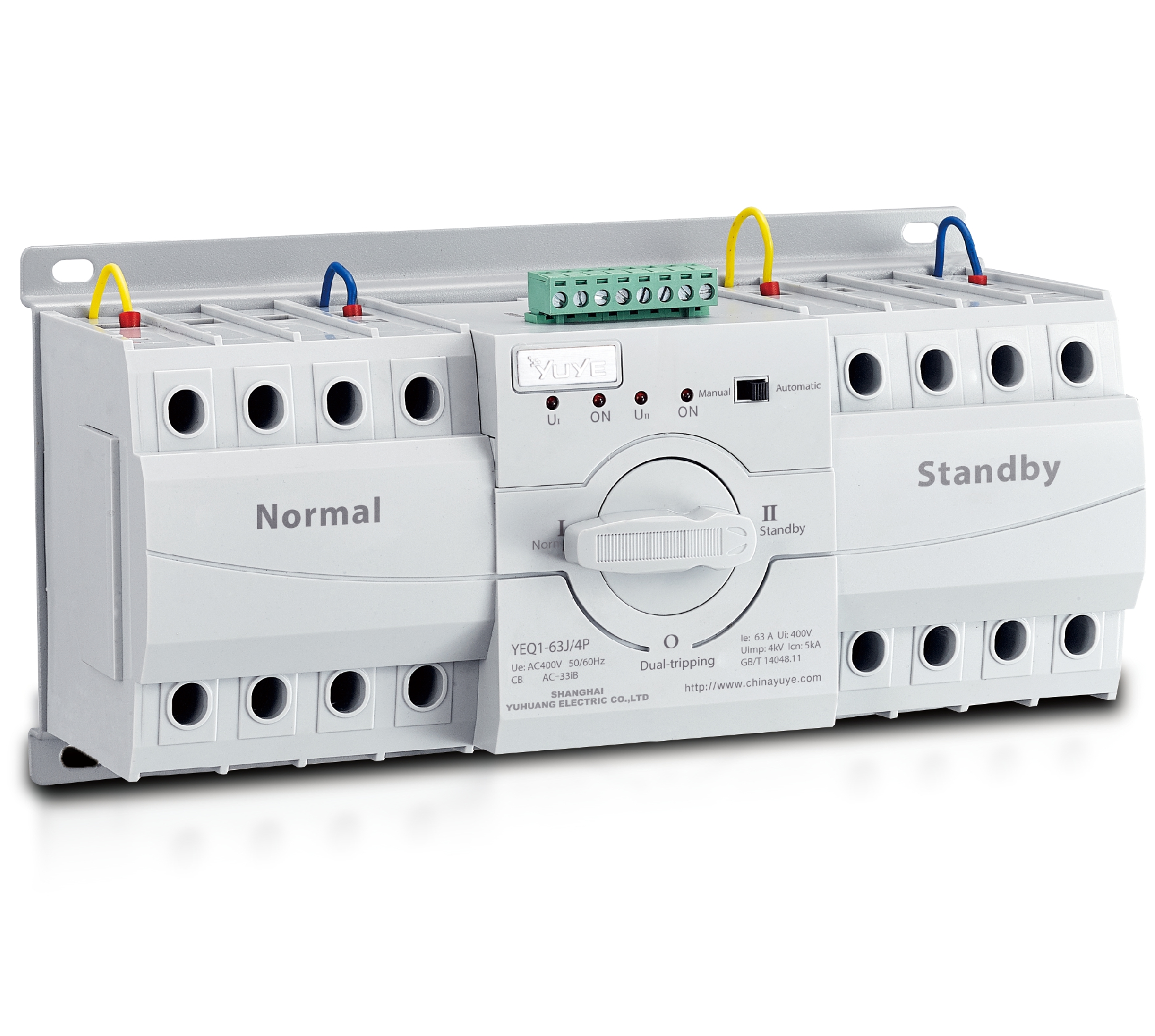 CB ATS YEQ1-63J
 CB ATS YEQ2Y-63
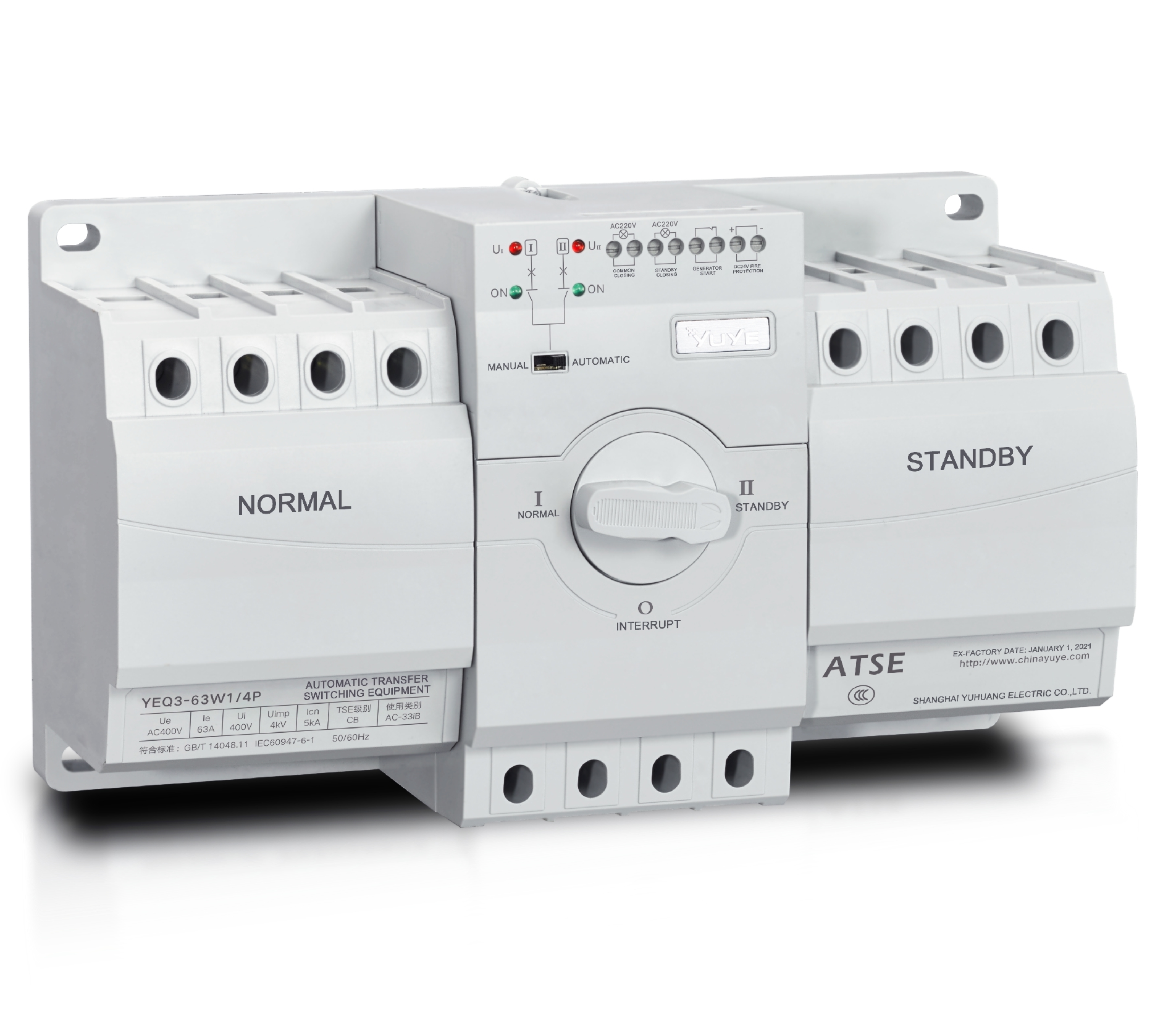 CB ATS YEQ3-63W1
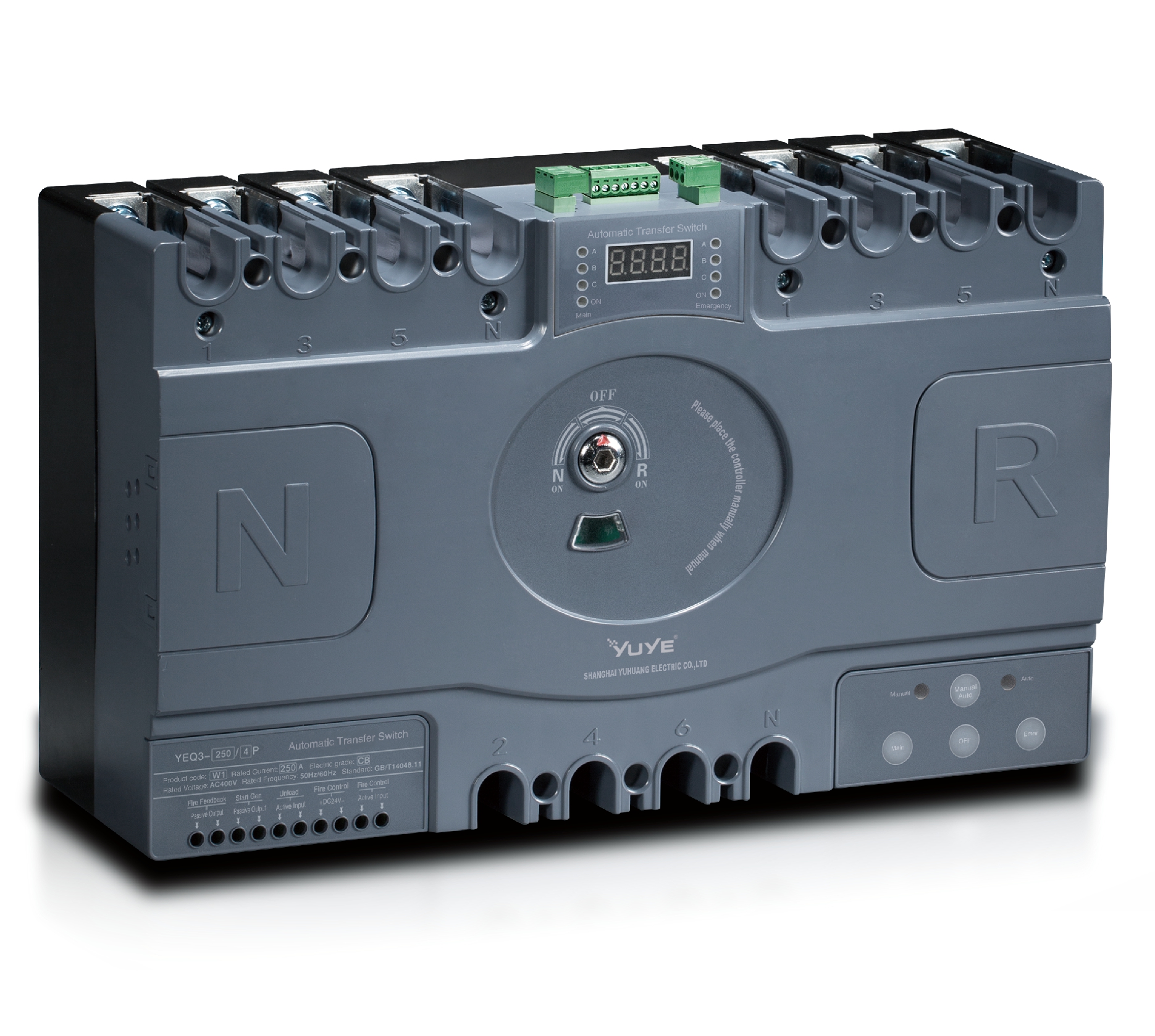 CB ATS YEQ3-125~630W1
 ATS controller Y-700
 ATS Controller Y-700N
 ATS Controller Y-701B
 ATS Controller Y-703N
 ATS Controller Y-800
 ATS Controller W2/W3 Series
 ATS switch Cabinet floor-to-ceiling
 ATS switch cabinet
 JXF-225A power Cbinet
 JXF-800A power Cbinet
 YEM3-125~800 Plastic Shell Type MCCB
 YEM3L-125~630 Leakage Type MCCB
 YEM3Z-125~800 Adjustable Type MCCB
 YEM1-63~1250 Plastic Shell Type MCCB
 YEM1E-100~800 Electronic Type MCCB
 YEM1L-100~630 Leakage Type MCCB
 Miniature circuit breaker YEMA2-6~100
 Miniature circuit breaker YEB1-3~63
 Miniature circuit breaker YEB1LE-3~63
 Miniature circuit breaker YEPN-3~32
 Miniature circuit breaker YEPNLE-3~32
 Miniature circuit breaker YENC-63~125
 Air Circuit Breaker YEW1-2000~6300
 Air Circuit Breaker YEW3-1600
 Load isolation switch YGL-63~3150
 Load Isolation Switch YGL2-63~3150
 Manual Changeover Switch YGL-100~630Z1A
 Manual Changeover Switch YGLZ1-100~3150
 YECPS2-45~125 LCD
 YECPS-45~125 Digital
 CNC Milling/Turning-OEM
 DC relay MDC-300M
 DC Isolation Switch YEGL3D-630