
 PC ATS YECT1-2000G
 PC ATS YES2-63~250GN1
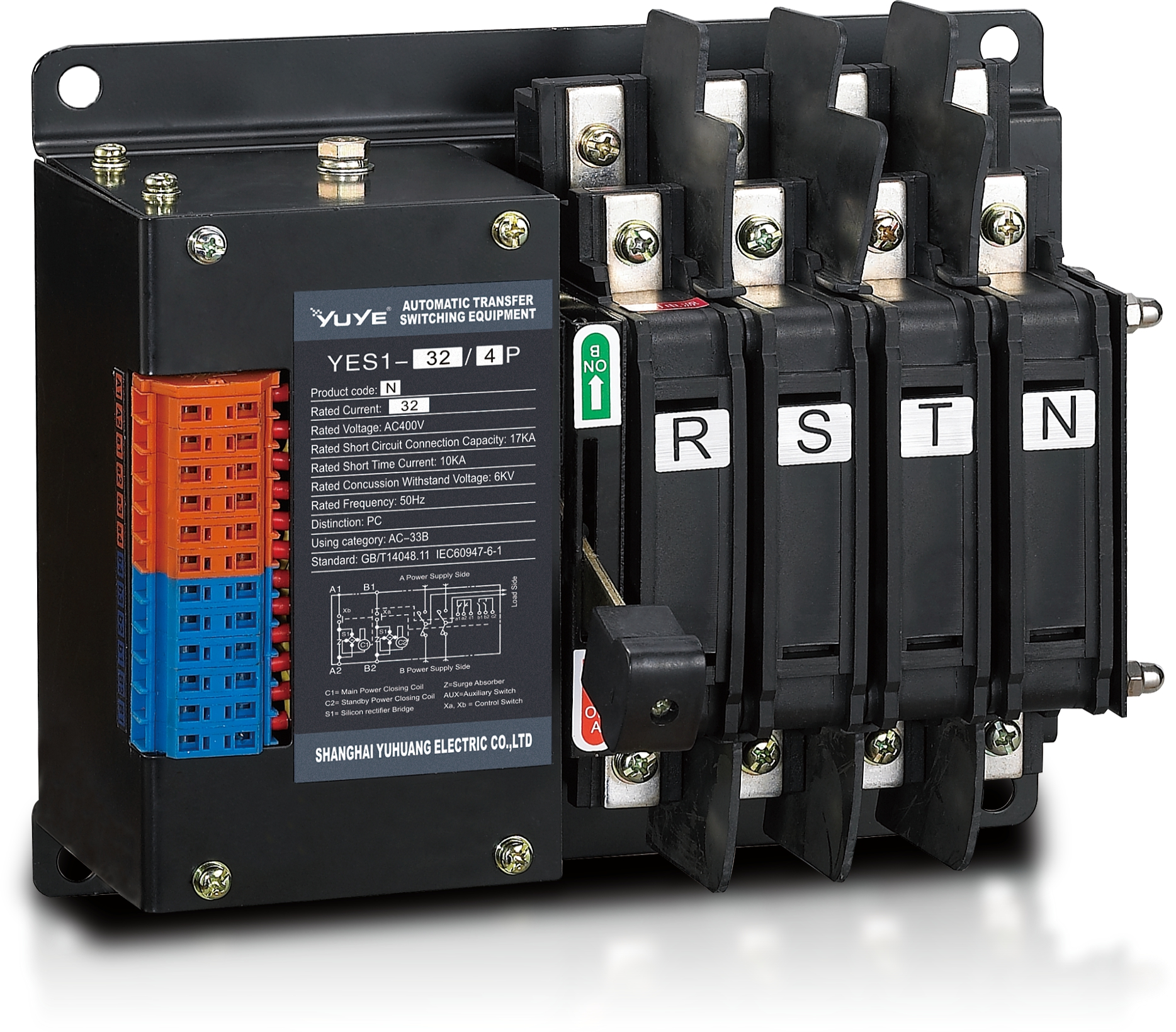 Solenoid-type ATS YES1-32~125N
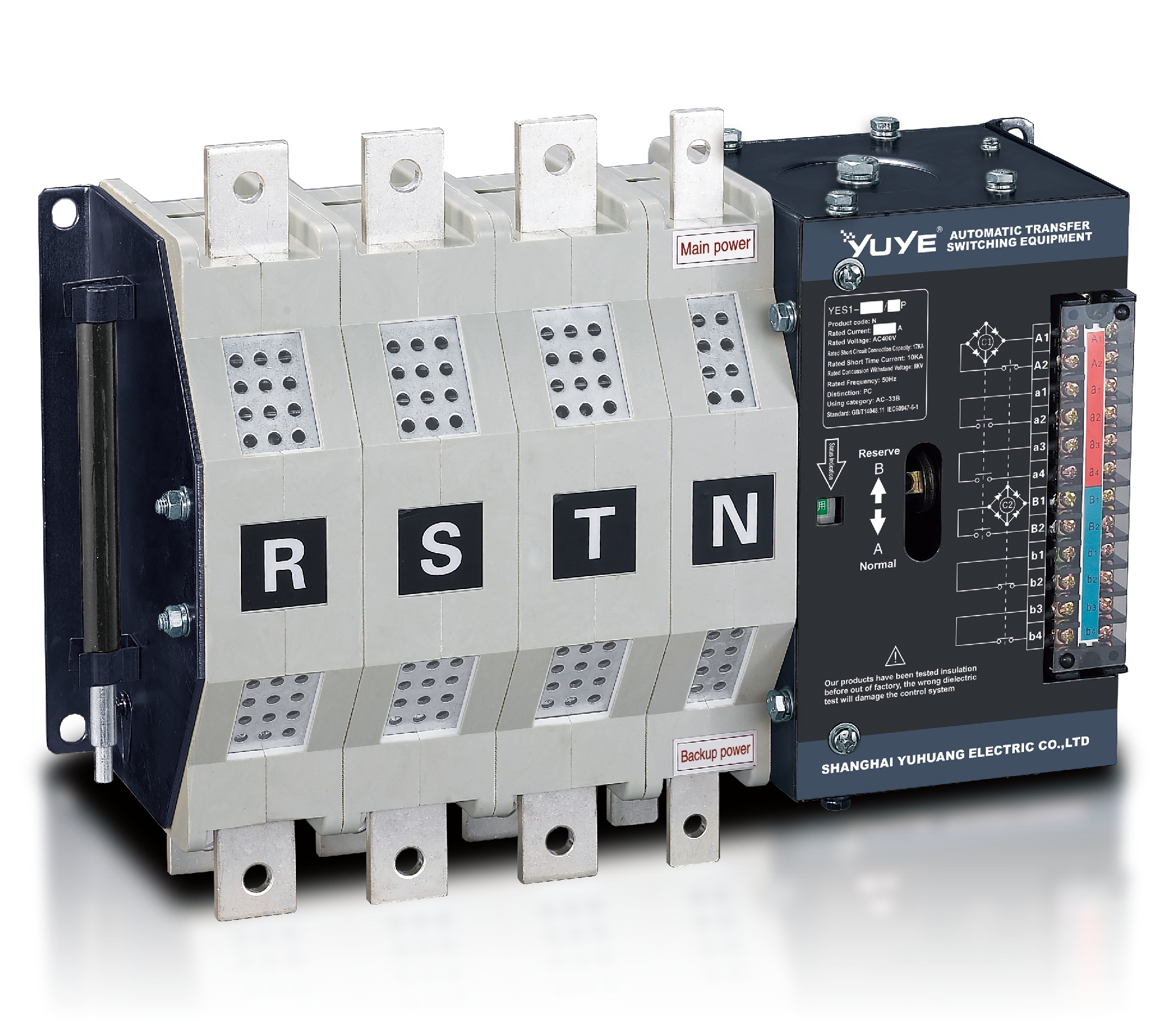 Solenoid-type ATS YES1-250~630N/NT
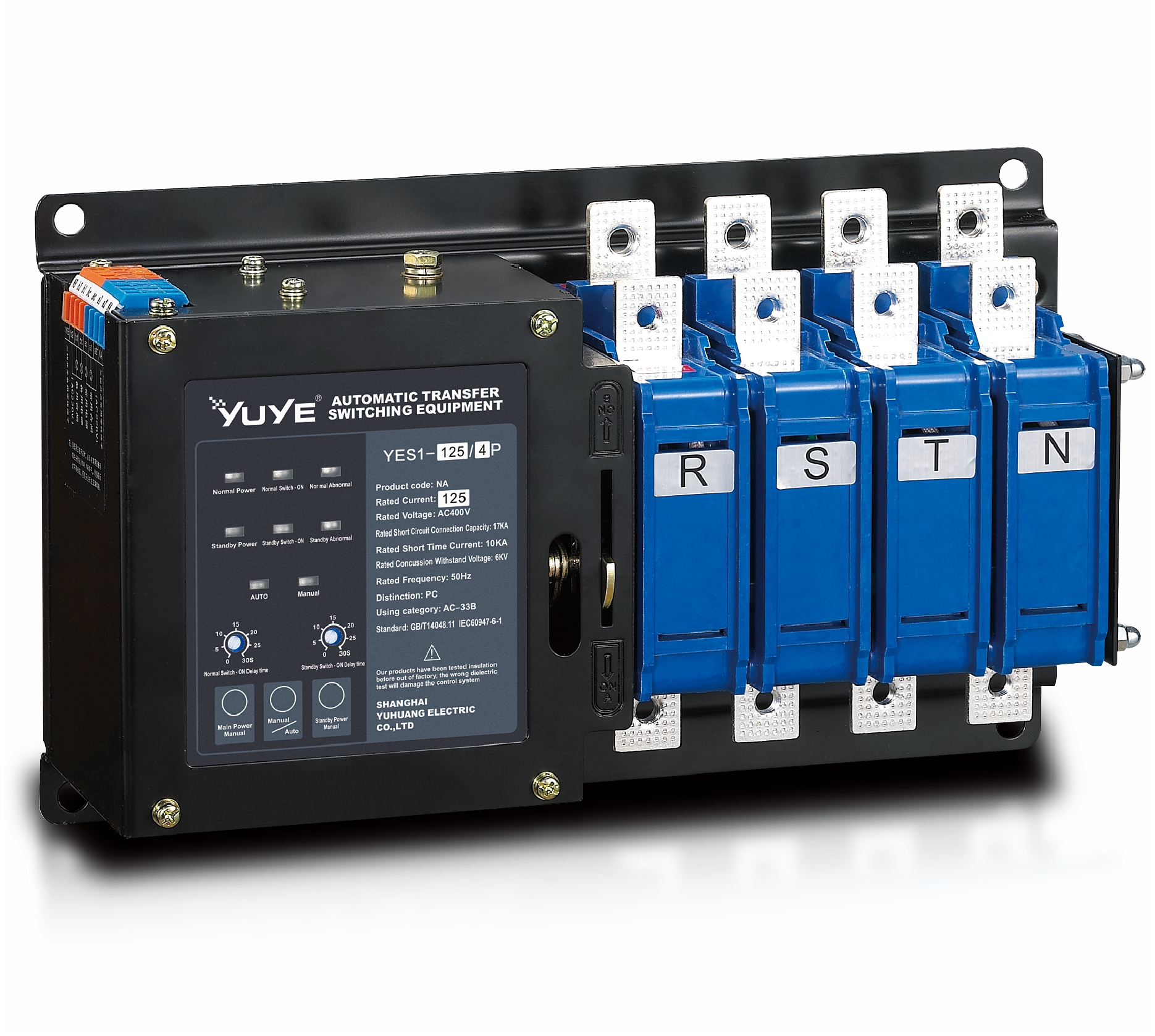 Solenoid-type ATS YES1-32~125NA
 Solenoid-type ATS YES1-63~630SN
 Solenoid-type ATS YES1-1250~4000SN
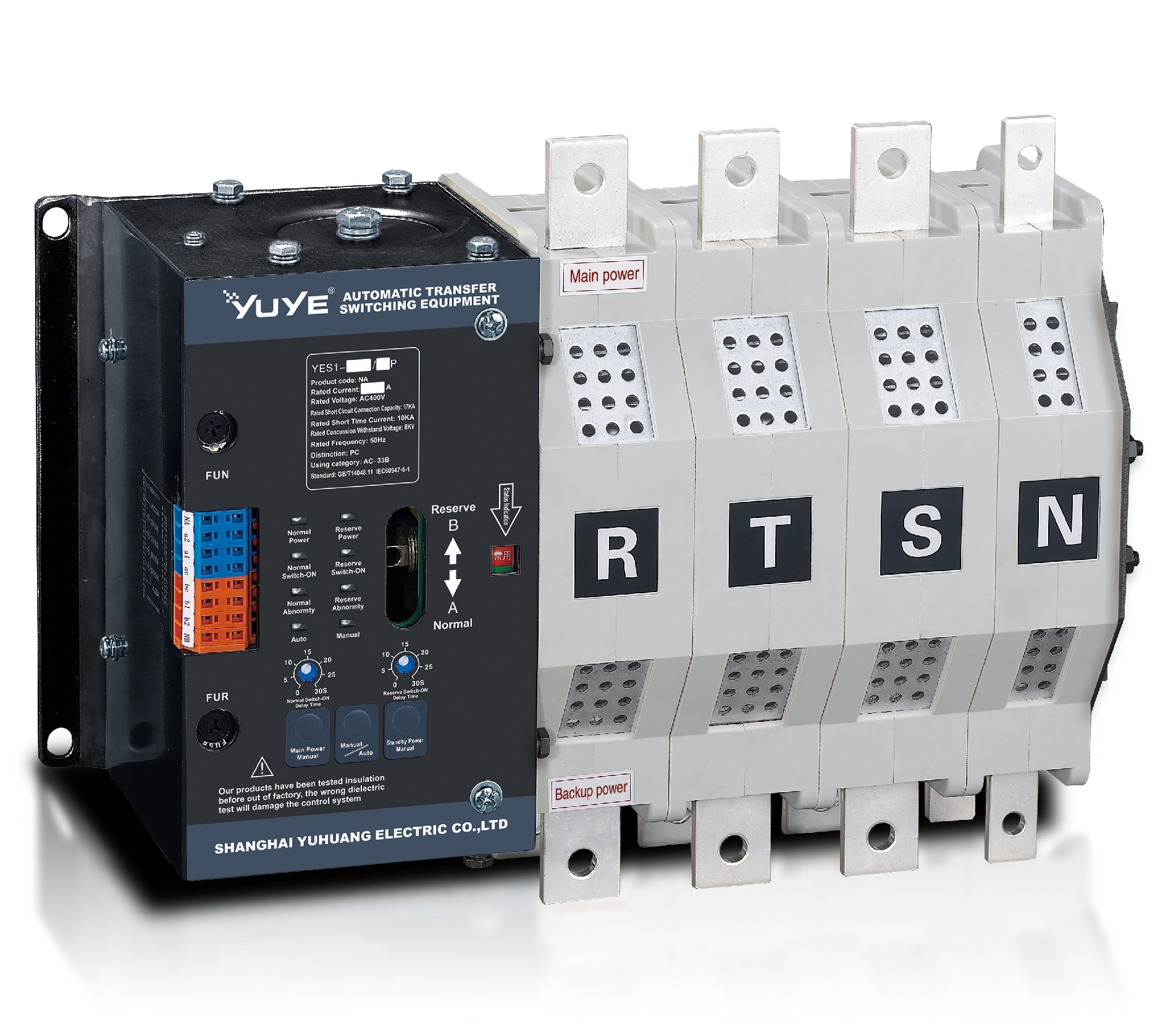 Solenoid-type ATS YES1-250~630NA/NAT
 Solenoid-type ATS YES1-63NJT
 PC ATS YES1-100~1600GN1/GN/GNF
 PC ATS YES1-2000~3200GN/GNF
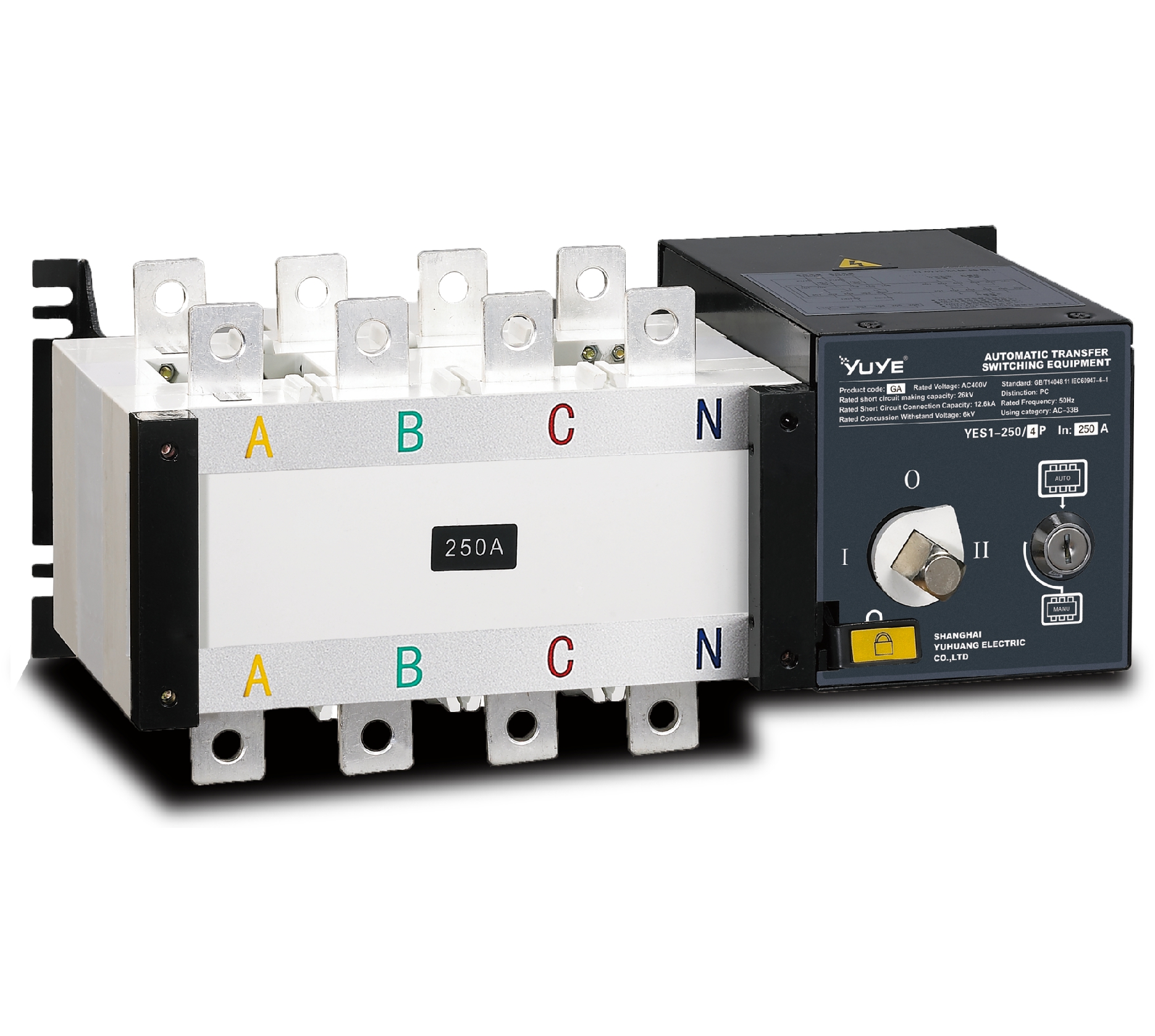 PC ATS YES1-100~3200GA1/GA
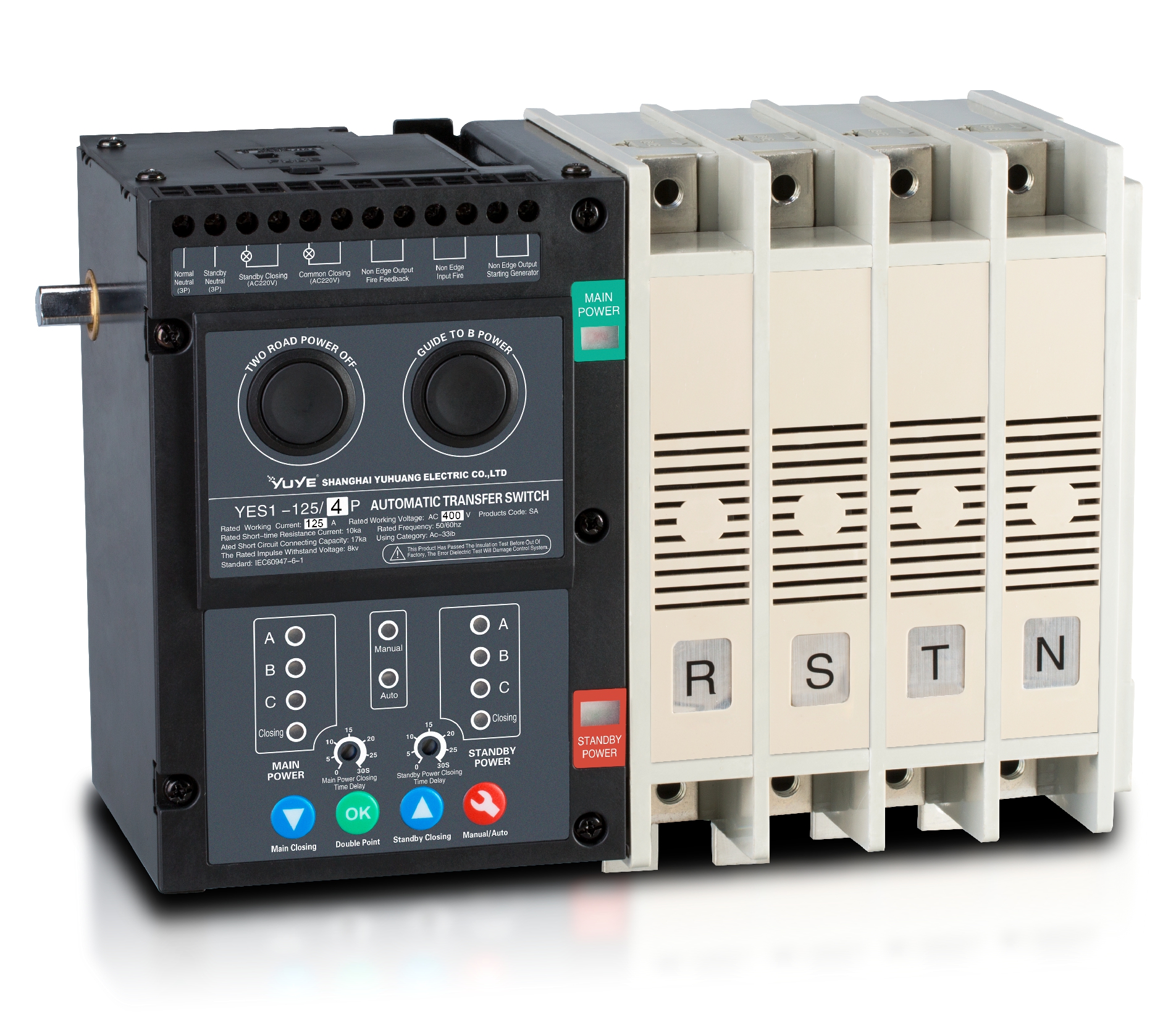 Solenoid-type ATS YES1-63~630SA
 Solenoid-type ATS YES1-63~630L/LA
 Solenoid-type ATS YES1-63~630LA3
 Solenoid-type ATS YES1-63MA
 PC ATS YES1-630~1600M
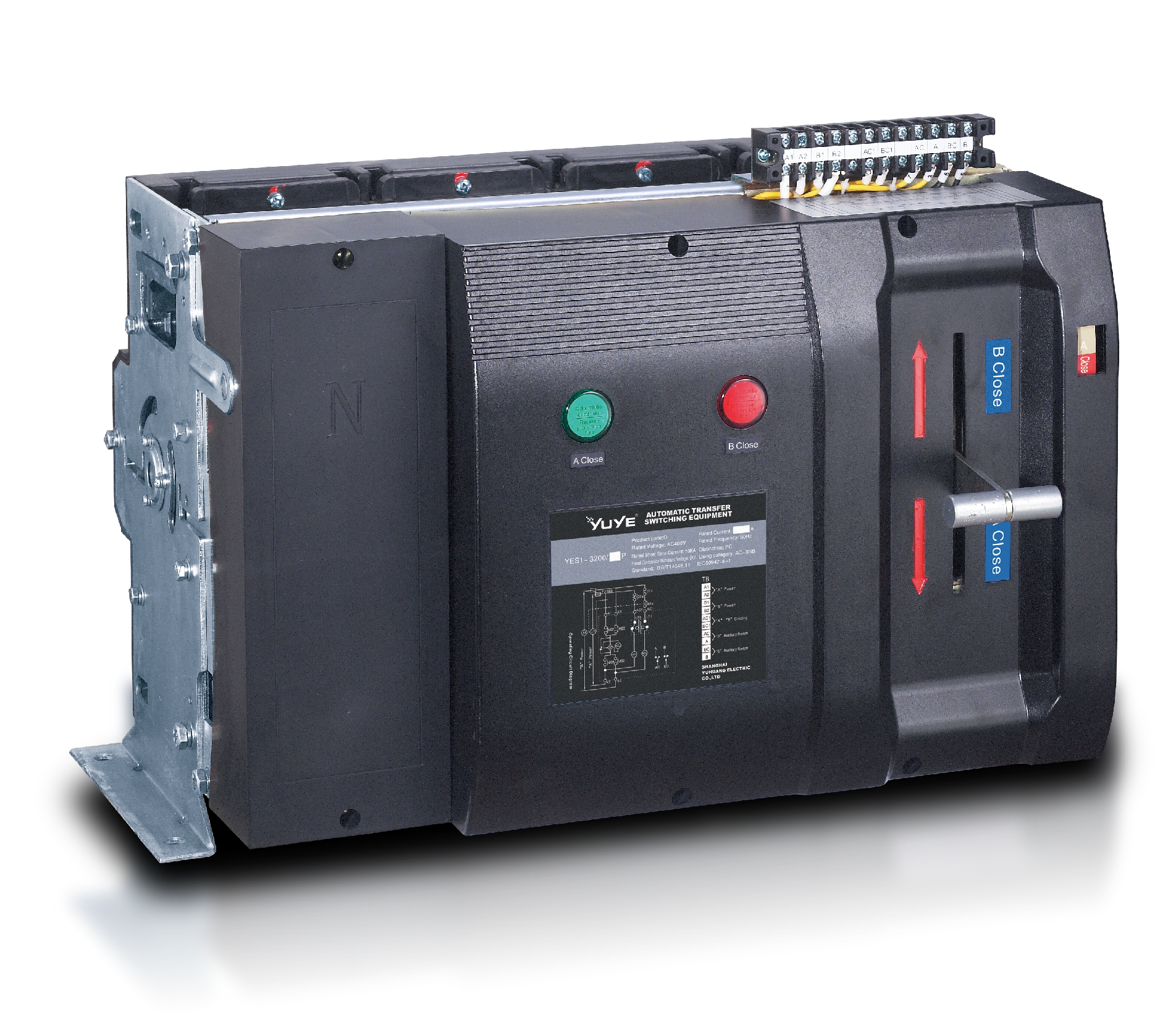 PC ATS YES1-3200Q
 Solenoid-type ATS YES1-4000~6300Q
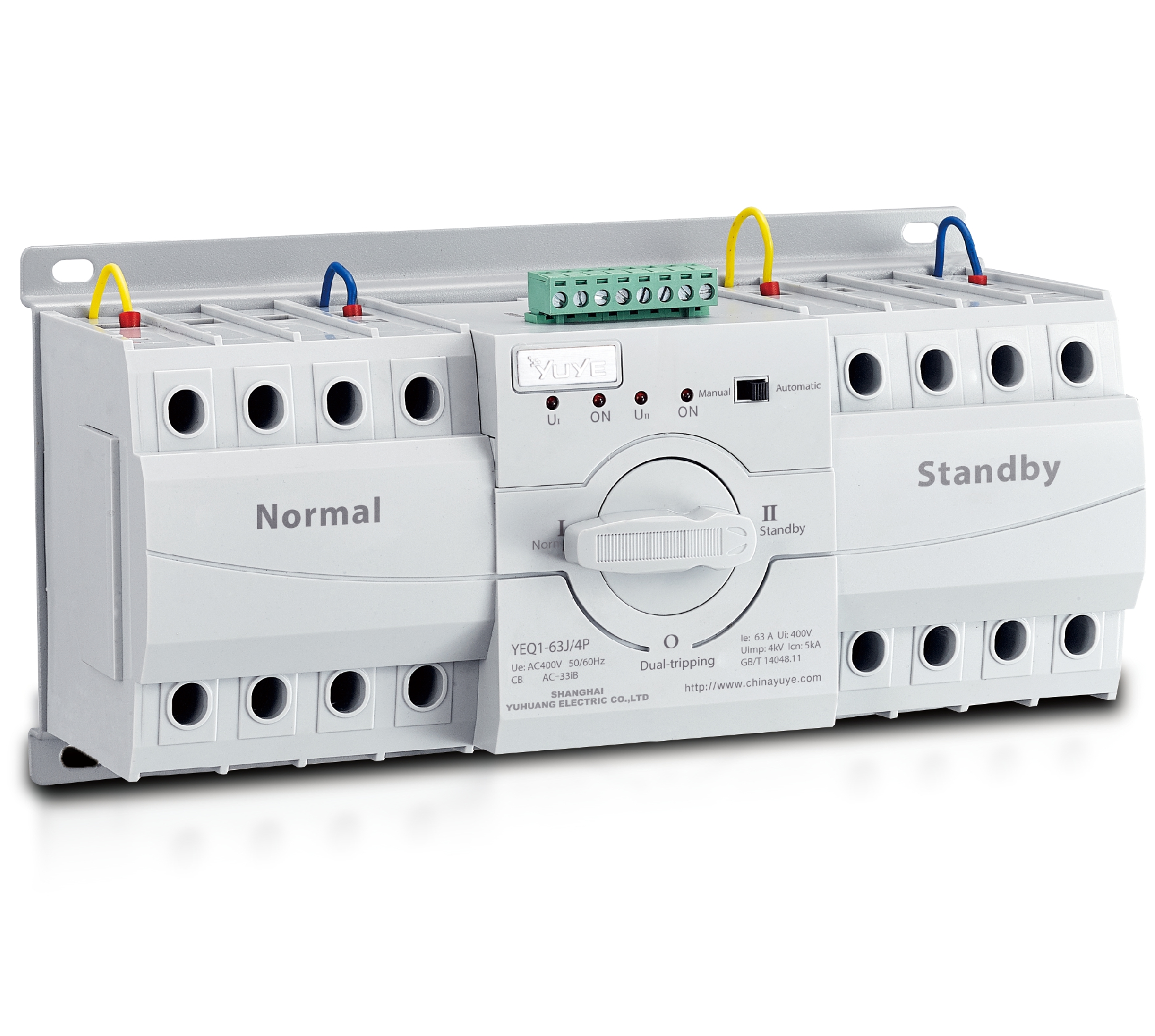 CB ATS YEQ1-63J
 CB ATS YEQ2Y-63
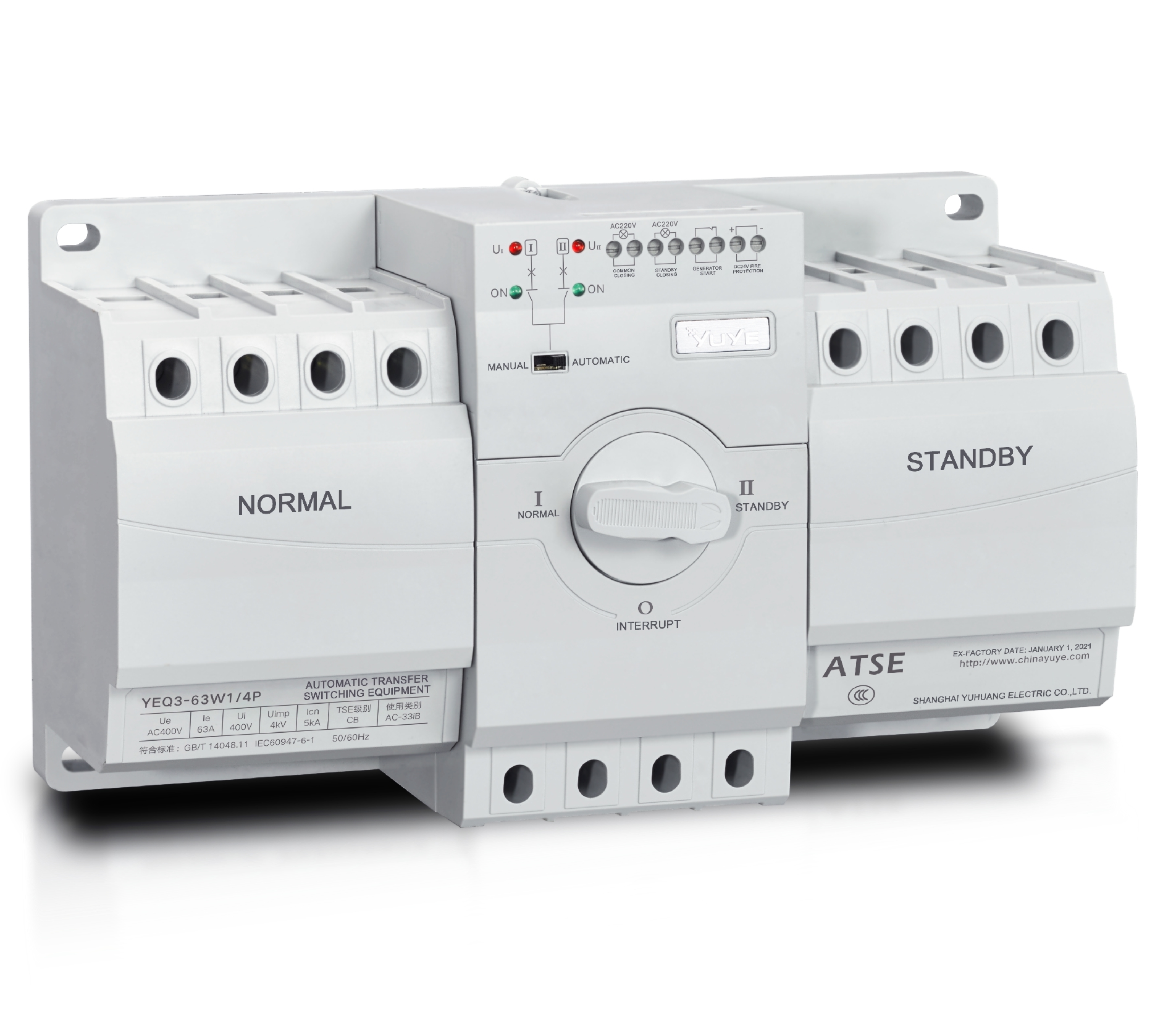 CB ATS YEQ3-63W1
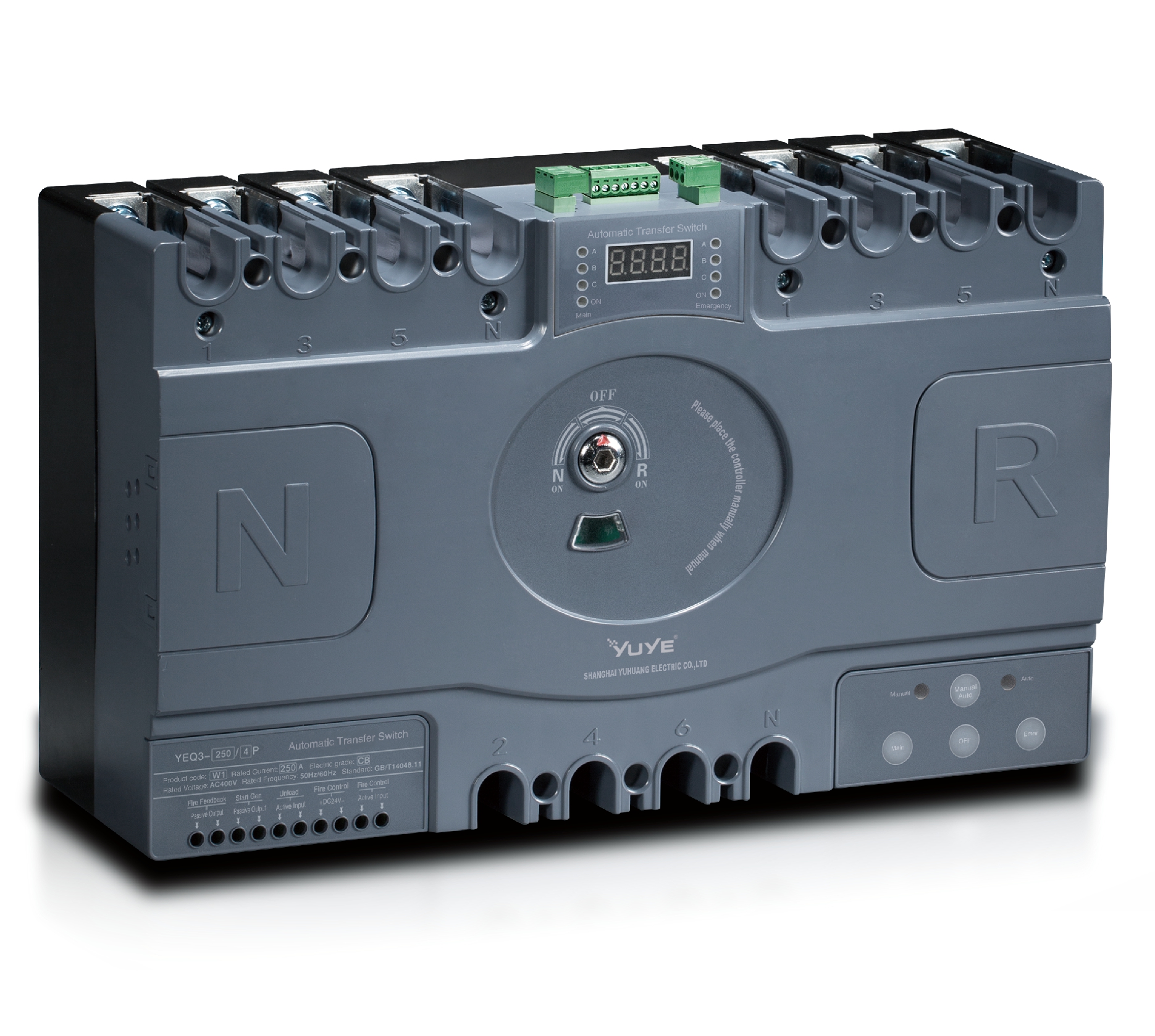 CB ATS YEQ3-125~630W1
 ATS controller Y-700
 ATS Controller Y-700N
 ATS Controller Y-701B
 ATS Controller Y-703N
 ATS Controller Y-800
 ATS Controller W2/W3 Series
 ATS switch Cabinet floor-to-ceiling
 ATS switch cabinet
 JXF-225A power Cbinet
 JXF-800A power Cbinet
 YEM3-125~800 Plastic Shell Type MCCB
 YEM3L-125~630 Leakage Type MCCB
 YEM3Z-125~800 Adjustable Type MCCB
 YEM1-63~1250 Plastic Shell Type MCCB
 YEM1E-100~800 Electronic Type MCCB
 YEM1L-100~630 Leakage Type MCCB
 Air Circuit Breaker YEW1-2000~6300
 Air Circuit Breaker YEW3-1600
 Miniature circuit breaker YEMA2-6~100
 Miniature circuit breaker YEB1-3~63
 Miniature circuit breaker YEB1LE-3~63
 Miniature circuit breaker YEPN-3~32
 Miniature circuit breaker YEPNLE-3~32
 Miniature circuit breaker YENC-63~125
 Load isolation switch YGL-63~3150
 Load Isolation Switch YGL2-63~3150
 DC relay YDC-P20
 DC relay YDC-P250
 DC relay YDC-P400
 DC relay MDC-300M
 DC relay YDC-M400
 DC Isolation Switch YEGL3D-630
 YECPS2-45~125 LCD
 YECPS-45~125 Digital
 CNC Milling/Turning-OEM
In industrial power supply systems, solenoid-driven automatic transfer switches are key to ensuring continuous power, widely used in scenarios like heavy industry and data centers. They switch to standby power quickly when the main power fails, avoiding production losses. Long-term high-load operation leads to faults, so this article provides a practical troubleshooting guide for operation and maintenance personnel.
1. Introduction
With rising industrial automation, power continuity requirements become stricter. The Solenoid Type ATS, with fast switching and compact structure, is essential in industrial power systems, used in metallurgy, electronics and new energy to switch main and standby power.
Relying on solenoid-driven mechanisms, it is prone to switching issues, jamming and coil faults due to voltage fluctuations and wear. About 30% of industrial power outages relate to transfer switches, with solenoid-driven faults accounting for over half. This article summarizes its common faults and troubleshooting methods.
2. Prerequisites for Solenoid Type ATS Troubleshooting: Safety Operation Specifications and Tool Preparation
Solenoid Type ATS is directly connected to the industrial power supply circuit. Troubleshooting involves high-voltage circuits and precision components, so safe operation is the primary prerequisite. The core safety operation specifications must follow the three principles of “power off, electricity inspection and protection”. Before troubleshooting, the main and standby power supplies of the Solenoid Type ATS must be cut off to ensure the equipment is completely powered off. Operators must wear protective equipment such as insulating gloves and insulating shoes.
Necessary troubleshooting tools include a multimeter (for detecting voltage, current and coil on-off), insulating screwdrivers, wire strippers, needle-nose pliers, protective tools and auxiliary tools such as brushes and air blowers. Before troubleshooting, it is also necessary to check the equipment status, including whether the equipment shell is intact and whether the wiring is loose.
3. Classification of Common Faults and Phenomenon Identification of Solenoid Type ATS
Faults of Solenoid Type ATS are mainly concentrated in four dimensions: switching, mechanical, solenoid-driven and circuit. Switching faults are the most common, mainly manifested as failure to switch, switching delay and misoperation. Mechanical faults are related to the transmission mechanism, such as jamming, looseness and wear.
Solenoid-driven faults are unique to Solenoid Type ATS, mainly related to coils and iron cores, manifested as coil heating, coil burnout and insufficient electromagnetic suction. Circuit faults involve equipment wiring and control circuits, such as loose wiring, short circuits and leakage. Accurately identifying fault phenomena is the key to quickly locating the root cause of faults.

4. Quick Fault Location Skills of Solenoid Type ATS
Fault location should follow the core logic of “first phenomenon, then root cause; first easy, then difficult”. Circuit-level location is the foundation: use a multimeter to detect the main and standby power supply voltage and control circuit on-off. Solenoid-driven module location focuses on coils, iron cores and return springs: measure coil resistance with a multimeter to judge whether there is a short circuit or open circuit.
Mechanical mechanism location is mainly for transmission mechanisms and contacts: observe whether there is wear, looseness or jamming, and manually operate the switching mechanism to judge the fault location. These three dimensions are progressive to accurately locate fault points.
5. Practical Troubleshooting Steps and Repair Methods for Typical Faults
Typical Fault 1: Solenoid Type ATS fails to switch (coil is normal, mechanism is stuck). Troubleshooting steps: confirm the main and standby power supplies are normal, disassemble the equipment shell to check for jamming and dust accumulation, and manually push the switching mechanism to determine the stuck position. Repair method: clean the transmission mechanism and iron core, add an appropriate amount of grease, and test the switching function after reinstallation.
Typical Fault 2: Solenoid Type ATS switching delay (insufficient electromagnetic suction). Troubleshooting steps: detect power supply voltage and coil resistance, and check whether the iron core is stuck. Repair method: adjust the power supply voltage, replace the aging coil, and clean the iron core.
Other typical faults include coil heating/burnout and loose/short-circuit wiring, which can be troubleshooted and repaired according to the corresponding steps.
6. Acceptance Standards and Daily Maintenance Suggestions After Troubleshooting
After fault repair, the equipment must be tested in accordance with acceptance standards, including normal switching function, no abnormal operation, and normal circuit parameters. Daily maintenance focuses on regular cleaning, lubrication and detection. It is recommended to clean the equipment every 3 months, add lubricating grease every 6 months, and regularly detect voltage, current and coil resistance to reduce the occurrence of faults.
7. Conclusion
The Solenoid Type ATS is a core switching equipment in industrial power supply systems, and its operational stability is directly related to the continuity and safety of industrial production. This article sorts out the full process of troubleshooting, helping operation and maintenance personnel quickly locate and resolve faults. In the future, with the continuous upgrading of industrial technology, the structure and performance of Solenoid Type ATS will be optimized, but the core logic of troubleshooting and daily maintenance remains unchanged.
8. References
1. VIOX ELECTRIC. ATS Troubleshooting Guide: Why Your Transfer Switch Won’t Switch to Generator[EB/OL]. 2026-01-08.
2. Zhejiang Brand Construction Federation. T∕ZZB 1630-2020 Automatic Transfer Switchgear[S]. 2020.
3. Lvma Electric. Solenoid Type ATS: How Automatic Transfer Switch Ensures Instant Power Transfer for Critical Systems[EB/OL].
4. KTH Electric. 5 Common ATS Faults & Detailed Troubleshooting Guide (2026)[EB/OL].
5. Elmeasure. Solenoid-Based Automatic Transfer Switch[EB/OL].
9. FAQ
Q1: Must the Solenoid Type ATS be completely powered off when troubleshooting? Can simple faults be checked with power on?
A1: It must be completely powered off. Live troubleshooting may cause electric shock and secondary faults.
Q2: Can the coil continue to be used if it is hot but not burned out?
A2: It is not recommended. Long-term heating will accelerate coil aging. The solution is to adjust the power supply voltage and clean the coil.
Q3: What are the possible causes of switching delay besides insufficient electromagnetic suction?
A3: Mechanical mechanism jamming, abnormal control module and unstable power supply voltage.
Q4: What items need to be focused on during acceptance after fault repair?
A4: Switching function, equipment operation status and circuit parameters.
Q5: How to judge whether the vulnerable parts of Solenoid Type ATS need to be replaced?
A5: Judge according to service life and operation status.
