
 PC ATS YECT1-2000G
 PC ATS YES2-63~250GN1
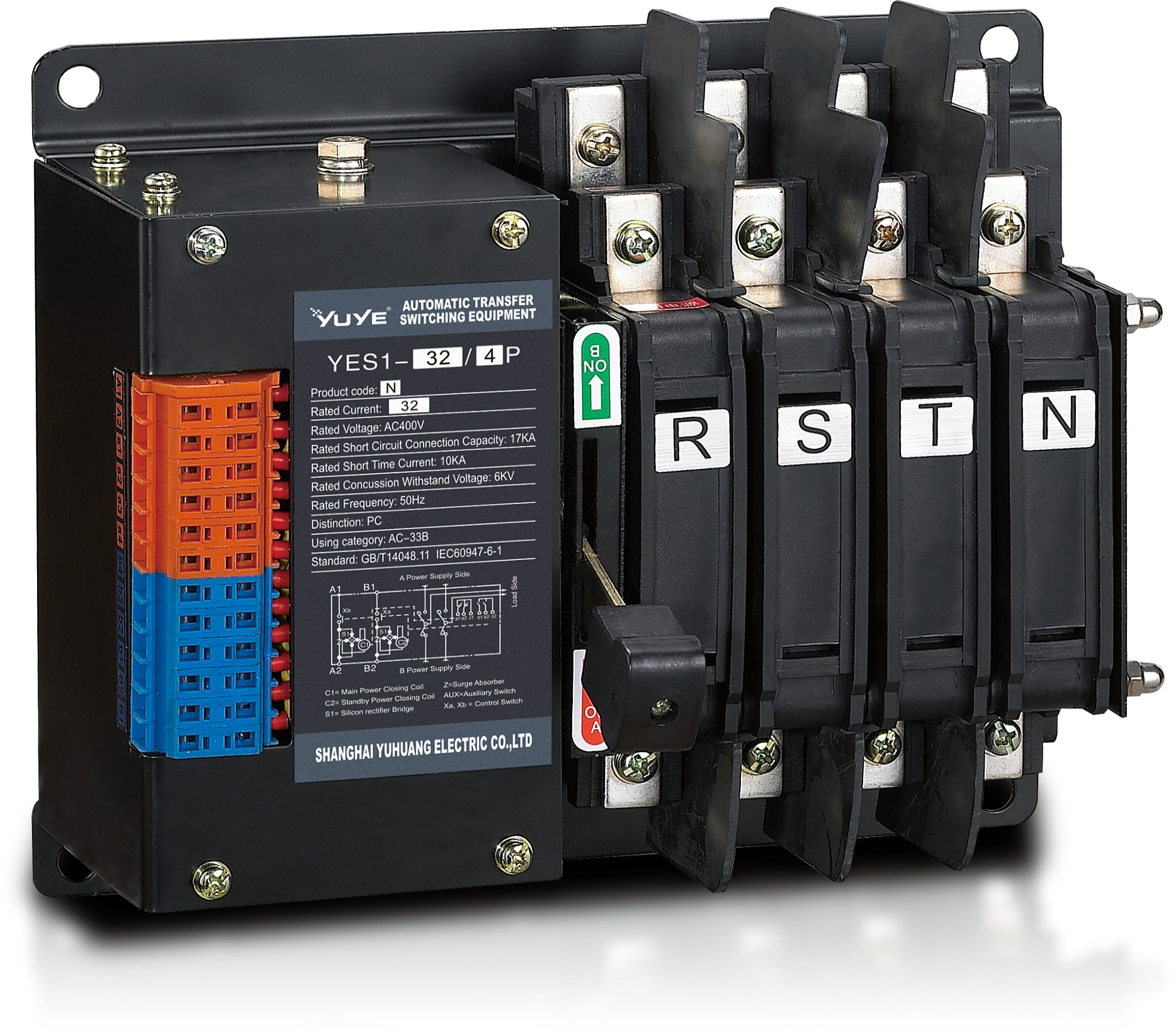 Solenoid-type ATS YES1-32~125N
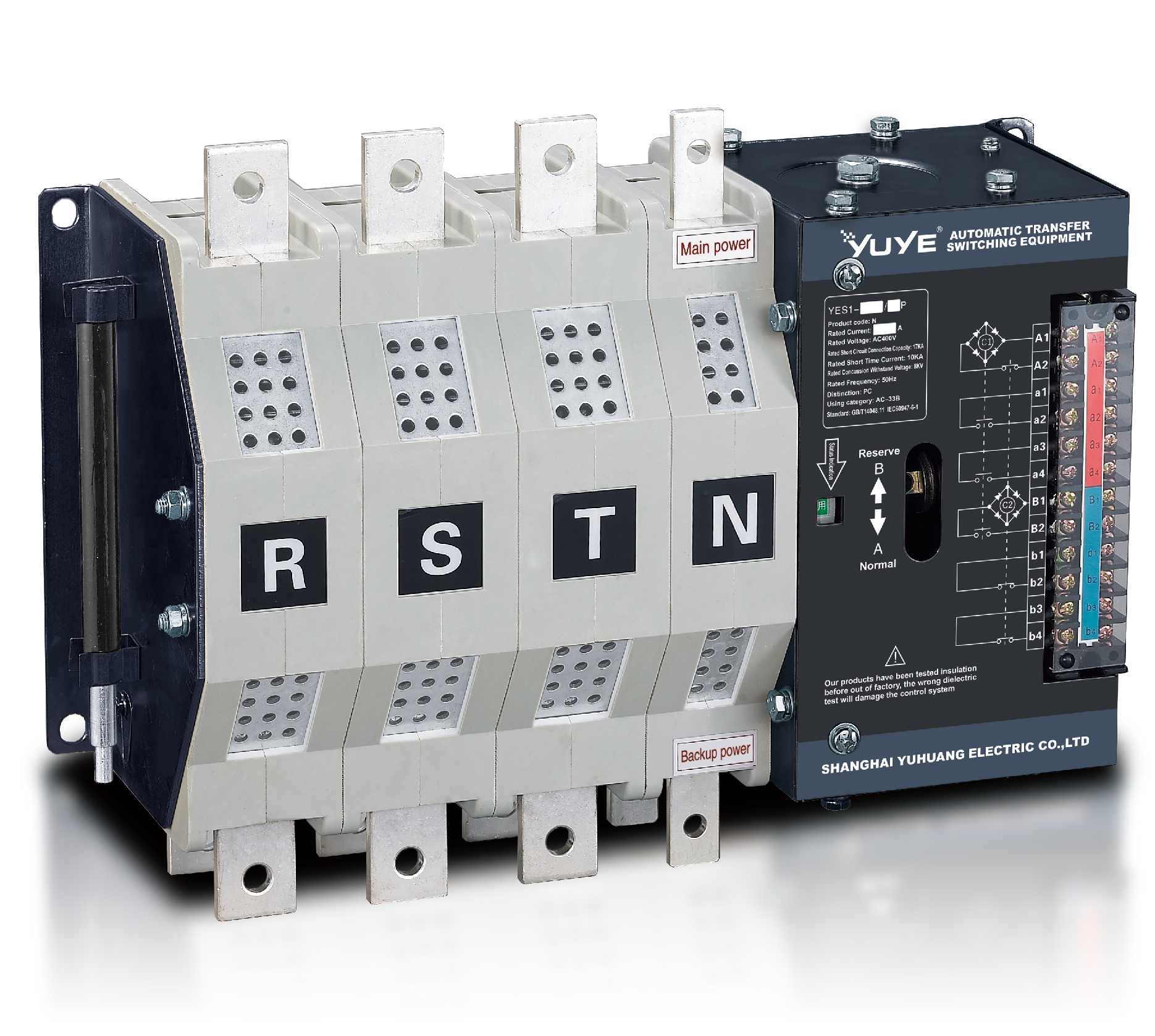 Solenoid-type ATS YES1-250~630N/NT
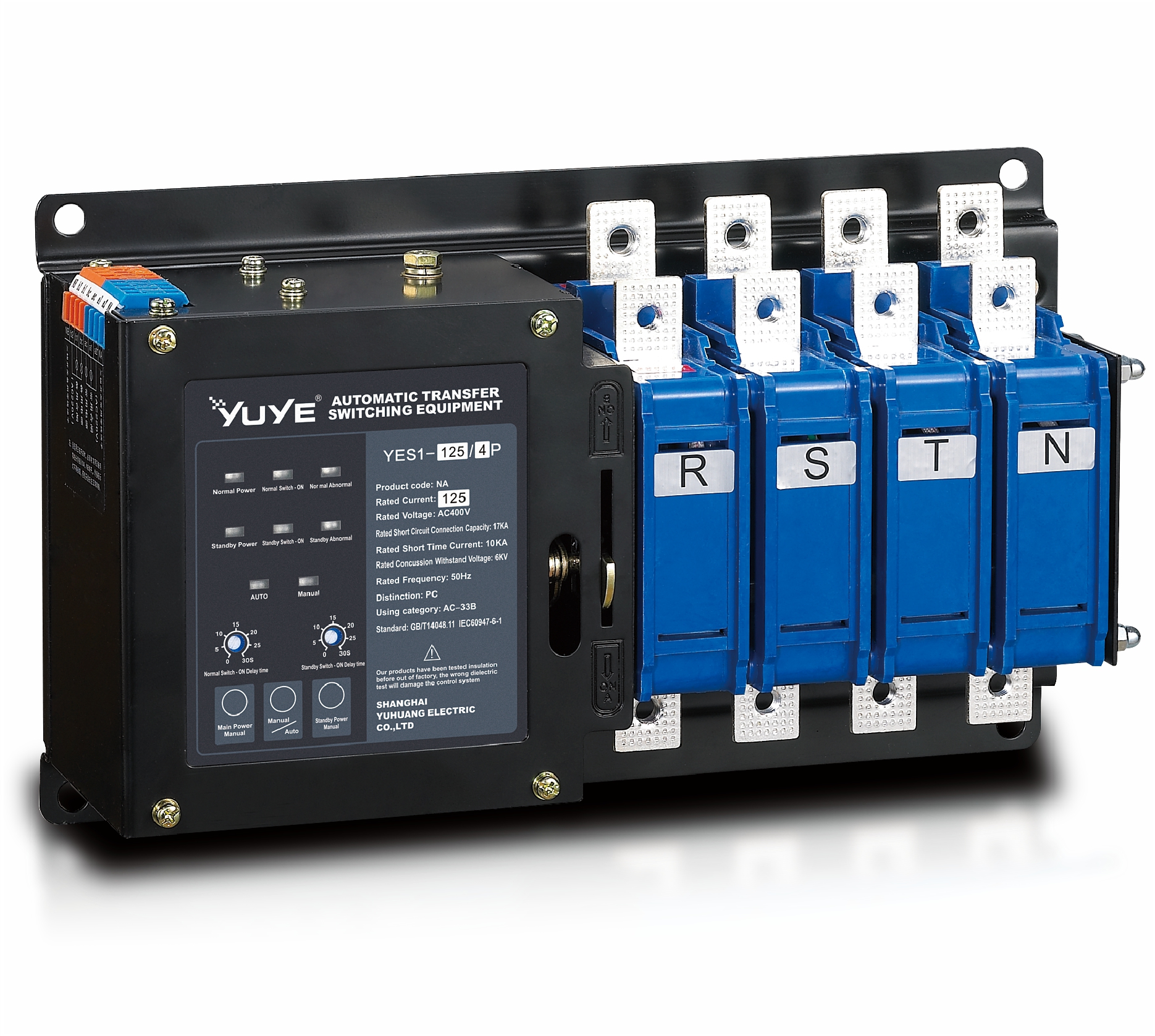 Solenoid-type ATS YES1-32~125NA
 Solenoid-type ATS YES1-63~630SN
 Solenoid-type ATS YES1-1250~4000SN
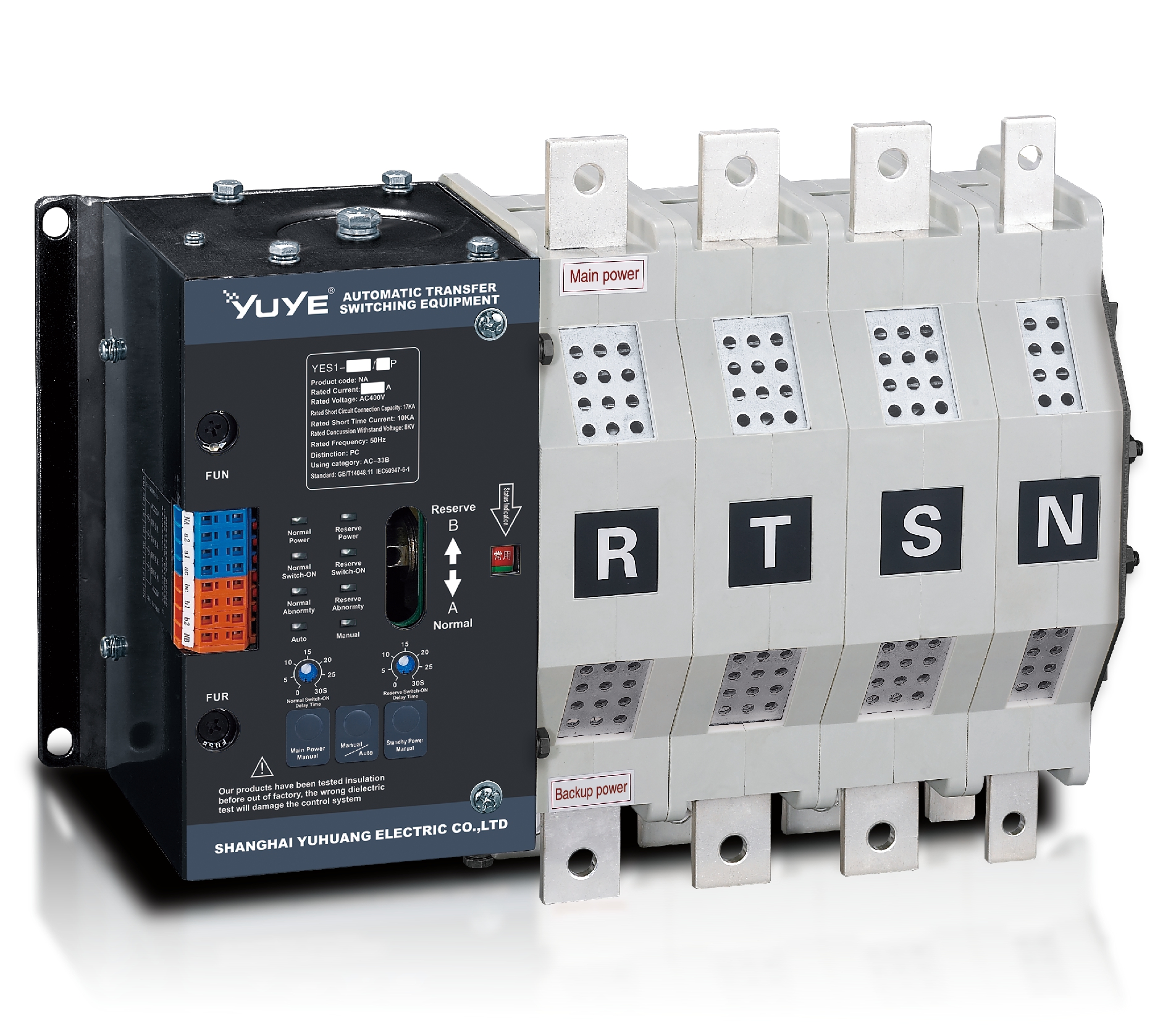 Solenoid-type ATS YES1-250~630NA/NAT
 Solenoid-type ATS YES1-63NJT
 PC ATS YES1-100~1600GN1/GN/GNF
 PC ATS YES1-2000~3200GN/GNF
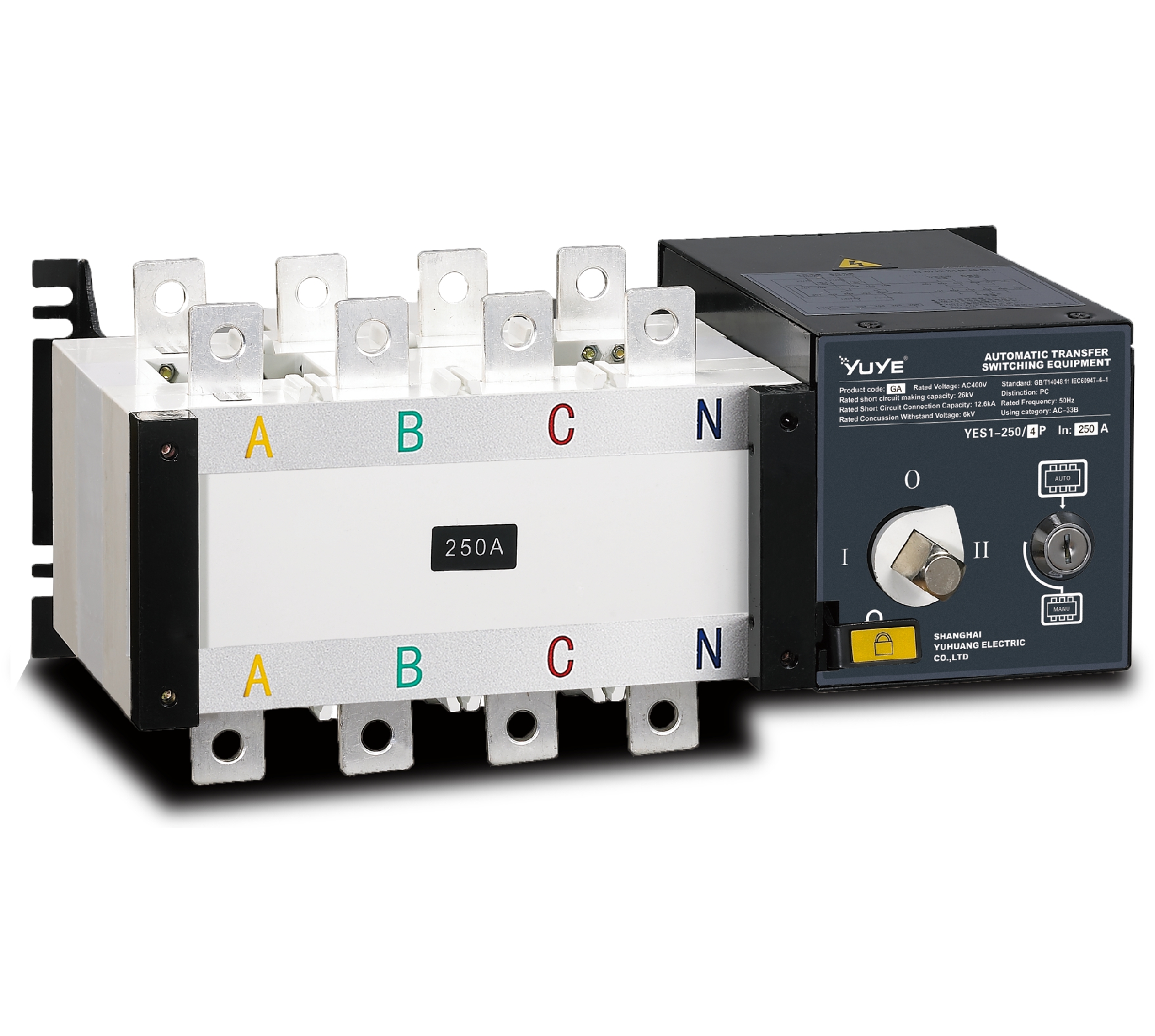 PC ATS YES1-100~3200GA1/GA
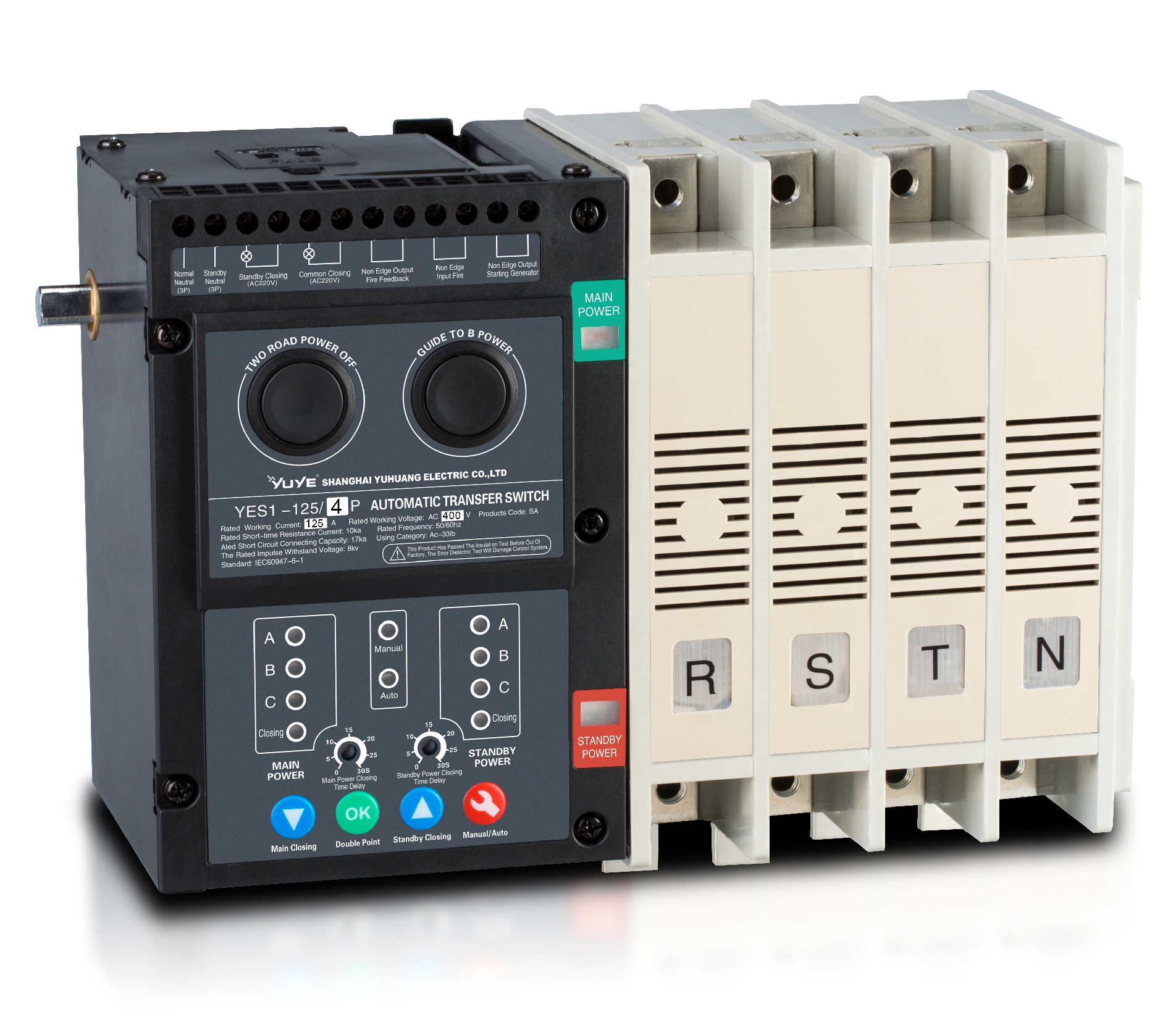 Solenoid-type ATS YES1-63~630SA
 Solenoid-type ATS YES1-63~630L/LA
 Solenoid-type ATS YES1-63~630LA3
 Solenoid-type ATS YES1-63MA
 PC ATS YES1-630~1600M
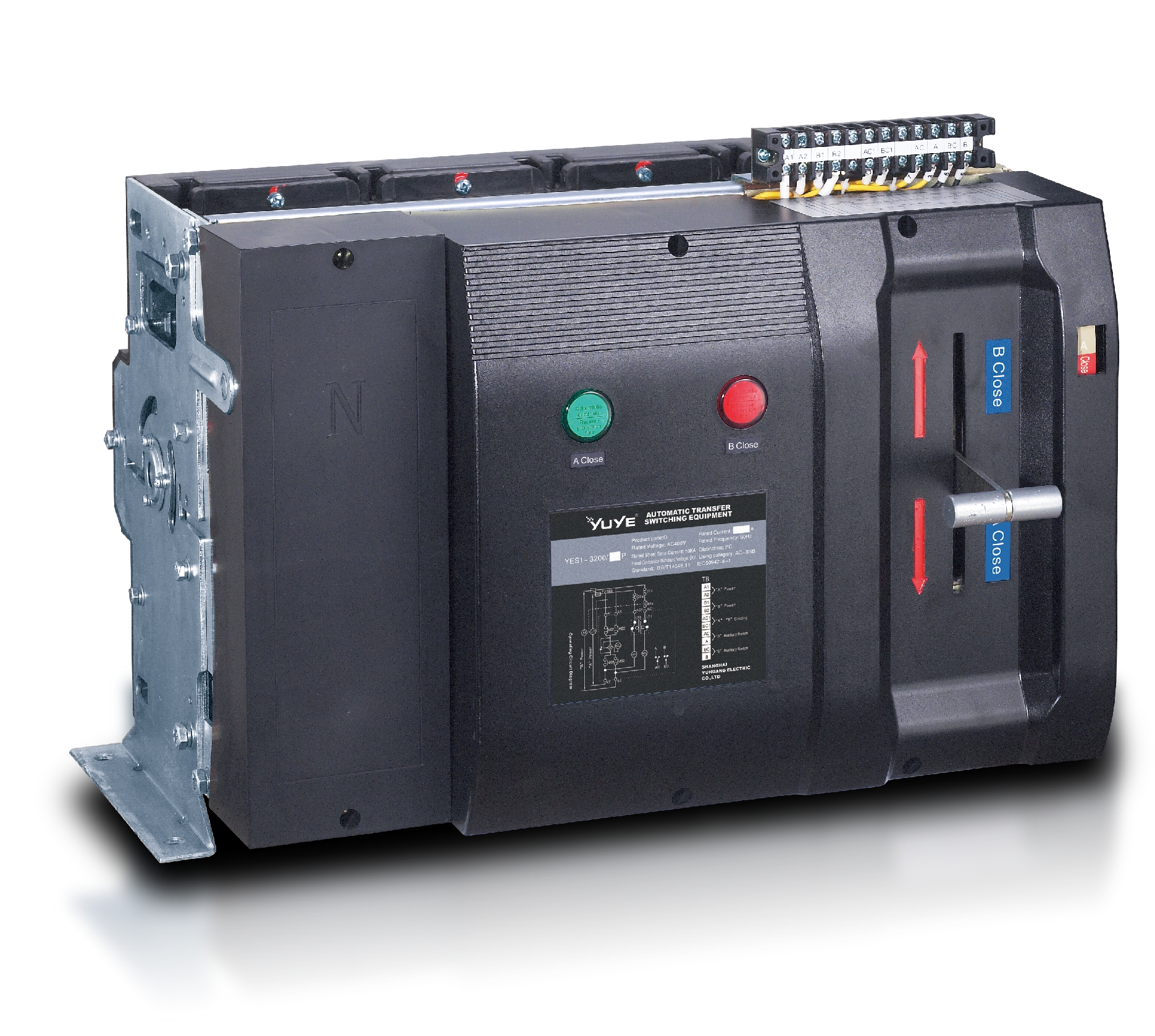 PC ATS YES1-3200Q
 Solenoid-type ATS YES1-4000~6300Q
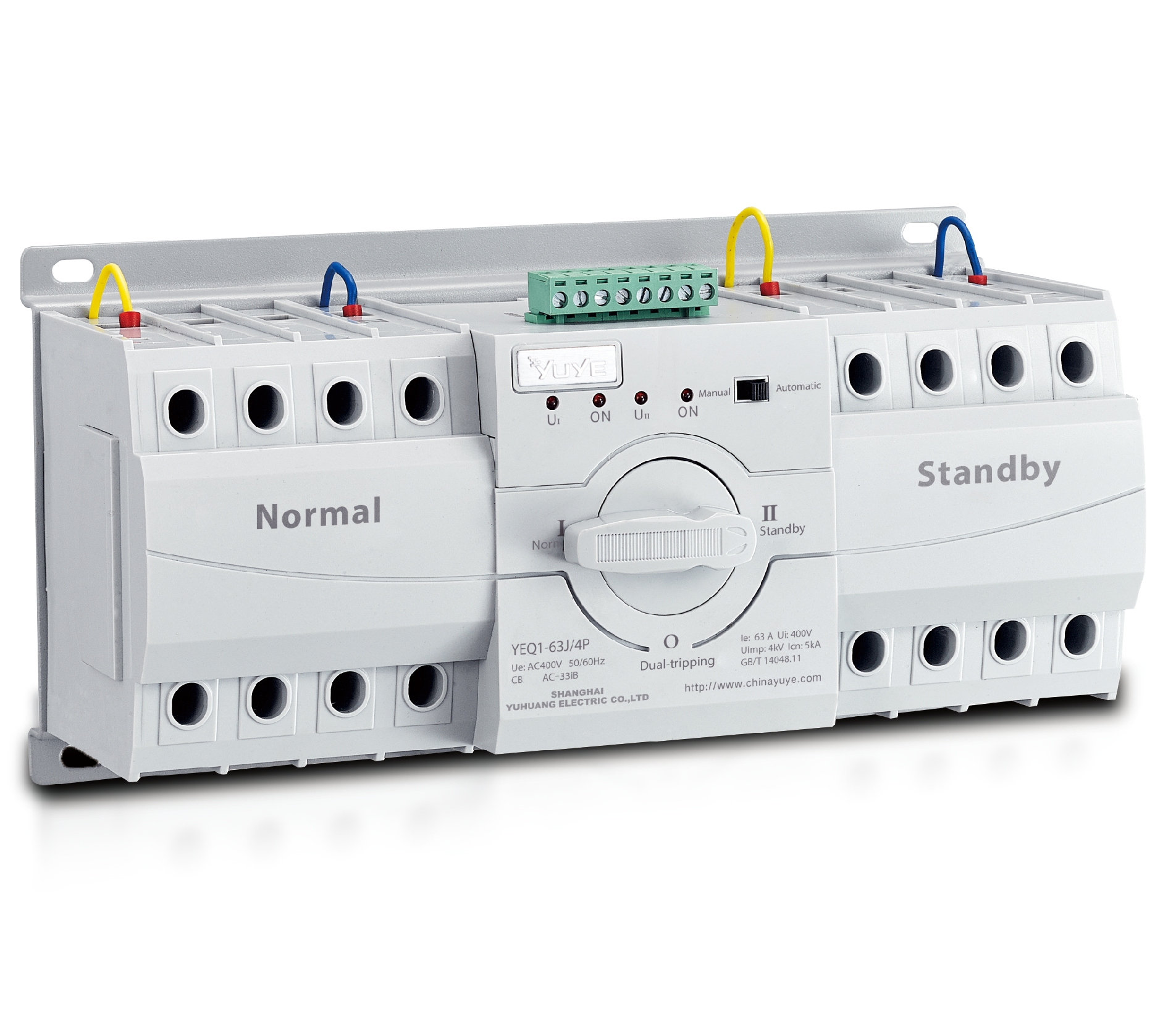 CB ATS YEQ1-63J
 CB ATS YEQ2Y-63
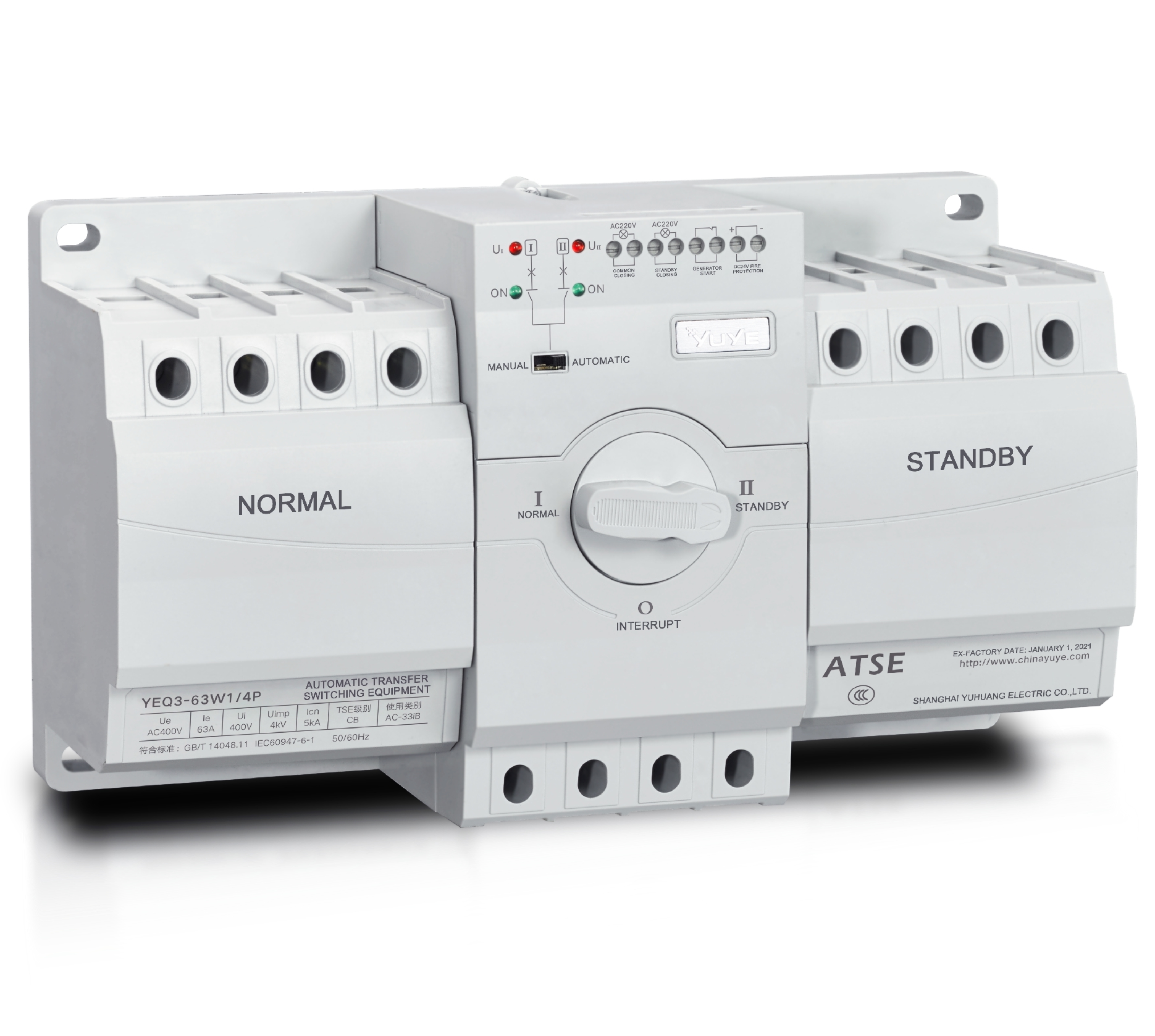 CB ATS YEQ3-63W1
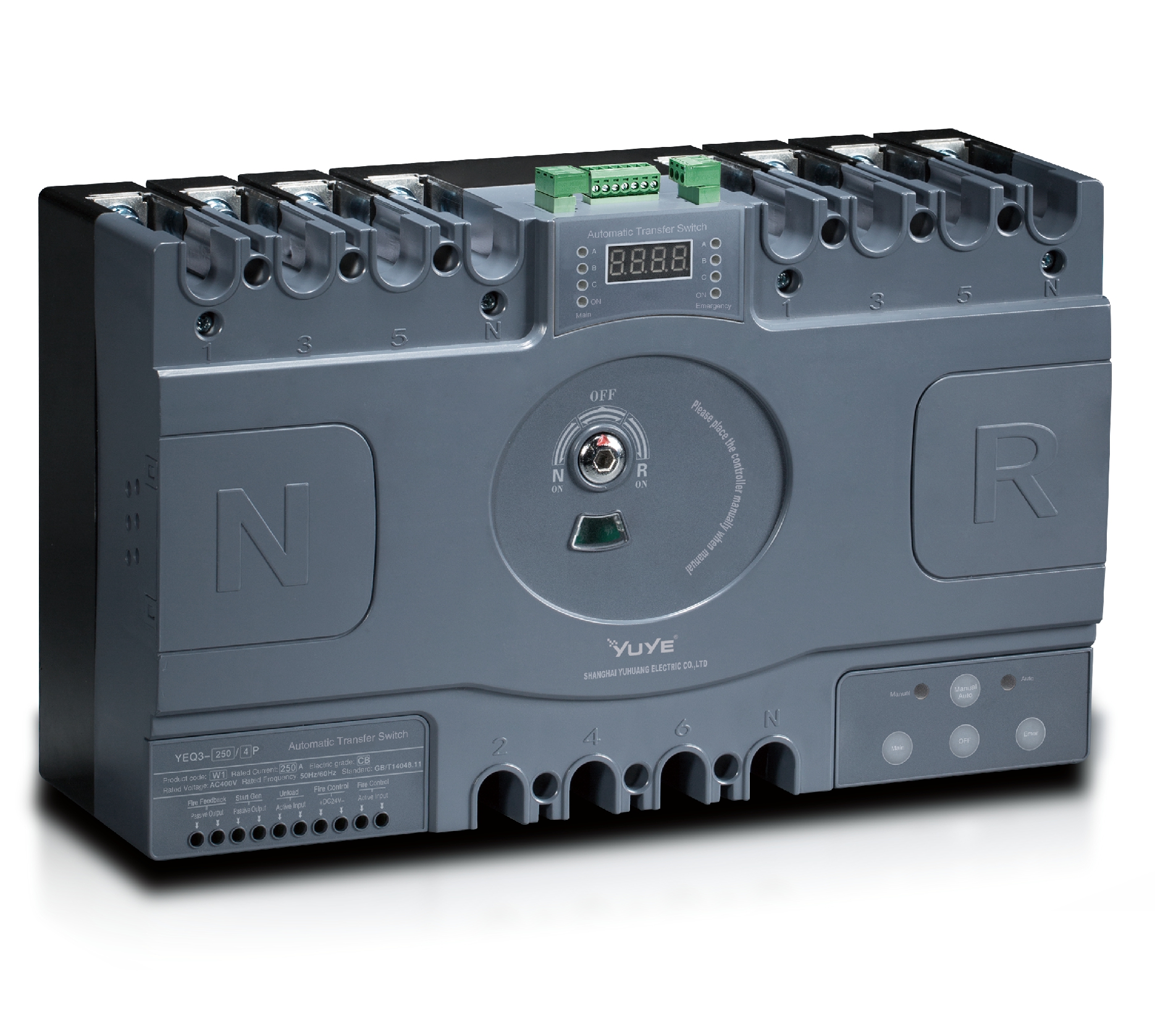 CB ATS YEQ3-125~630W1
 ATS controller Y-700
 ATS Controller Y-700N
 ATS Controller Y-701B
 ATS Controller Y-703N
 ATS Controller Y-800
 ATS Controller W2/W3 Series
 ATS switch Cabinet floor-to-ceiling
 ATS switch cabinet
 JXF-225A power Cbinet
 JXF-800A power Cbinet
 YEM3-125~800 Plastic Shell Type MCCB
 YEM3L-125~630 Leakage Type MCCB
 YEM3Z-125~800 Adjustable Type MCCB
 YEM1-63~1250 Plastic Shell Type MCCB
 YEM1E-100~800 Electronic Type MCCB
 YEM1L-100~630 Leakage Type MCCB
 Air Circuit Breaker YEW1-2000~6300
 Air Circuit Breaker YEW3-1600
 Miniature circuit breaker YEMA2-6~100
 Miniature circuit breaker YEB1-3~63
 Miniature circuit breaker YEB1LE-3~63
 Miniature circuit breaker YEPN-3~32
 Miniature circuit breaker YEPNLE-3~32
 Miniature circuit breaker YENC-63~125
 Load isolation switch YGL-63~3150
 Load Isolation Switch YGL2-63~3150
 DC relay YDC-P20
 DC relay YDC-P250
 DC relay YDC-P400
 DC relay MDC-300M
 DC relay YDC-M400
 DC Isolation Switch YEGL3D-630
 YECPS2-45~125 LCD
 YECPS-45~125 Digital
 CNC Milling/Turning-OEM
1. What Are PC Class and CB Class ATS Under IEC 60947-6-1
For dual-power supply systems, automatic transfer switches fall into two core categories defined by IEC 60947-6-1: PC class and CB class ATS. Many overseas project engineers and panel builders often struggle to tell them apart. The classification mainly depends on whether the switch itself carries integrated overcurrent protection functions. This standard sets clear rules for their breaking capacity, duty definition and test requirements, forming the basic reference for low‑voltage dual power distribution design.
A PC class ATS is fundamentally a transfer switching device without built-in protective tripping. It only undertakes the task of switching between two power sources. A CB class ATS is built based on molded case circuit breakers. It inherits the overload and short‑circuit protection features of MCCB, combining switching and fault protection in one unit.
2. Working Principle & Internal Structure of PC Class ATS
The PC class ATS is a dedicated changeover switch. Its core structure includes mechanical interlock, driving motor or spring release mechanism, contact sets and control board. It has no bimetallic strip, trip coil or microprocessor trip unit inside. When the controller detects loss or abnormality of the main power, the drive mechanism acts to shift the load circuit from mains supply to standby power. Its contacts are designed for frequent source transfer under normal load current. If a short circuit or overload fault occurs downstream, external protective breakers must cut off the fault current. Without built‑in protection, PC ATS focuses purely on reliable source transfer.
3. Working Principle & Protection Logic of CB Class ATS
CB class ATS uses two MCCBs as the switching body. The mechanical interlock ensures only one breaker can close at any time to prevent parallel connection of two power sources. Since MCCB trip units are reserved, this ATS can directly detect overload, short circuit and in some cases earth faults. Once the circuit exceeds preset current limits, the breaker trips independently, isolating the fault before transfer action. Its protection curve follows MCCB specifications. Designers do not need to add separate upstream breakers for fault protection in many simple distribution schemes, which simplifies cabinet layout.
4. Core Performance Differences Between PC and CB Class ATS
The biggest distinction lies in overcurrent protection. PC class ATS has zero self-contained protection and relies fully on external circuit breakers. CB class ATS carries native overcurrent protection. In terms of breaking performance, PC ATS is rated for making and carrying rated current; it cannot break short-circuit current. CB ATS can break fault current according to the short-circuit capacity of its MCCB base. On operation cost and reliability, PC ATS usually has a simpler structure, fewer components and lower failure points. CB ATS has more functional parts, so maintenance needs to cover both transfer mechanism and trip units. Selective coordination is another key point. PC schemes make coordination easier because protection devices are separately arranged. CB class integration may need careful curve matching to avoid unwanted tripping during source switching.
5. Application Scenarios and Practical Selection Advice
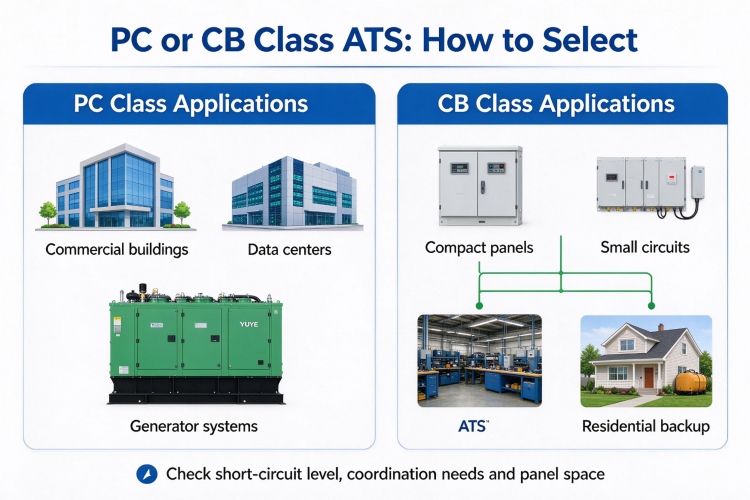
PC class ATS suits most standard backup power projects, such as commercial buildings, telecom rooms and generator matching systems. It is widely adopted when upstream distribution breakers are already configured for overcurrent protection. It is also preferred for projects requiring high transfer reliability and long service life. CB class ATS fits compact power cabinets with limited installation space. Small branch backup circuits, simple workshop power supply and small residential dual-power systems are typical uses. It helps reduce the total number of components inside the panel. Before final selection, check the short-circuit level of the busbar, confirm whether separate protection coordination is required, and evaluate cabinet space. Do not pick CB class blindly just for integrated functions, as improper trip setting may cause nuisance tripping during generator startup.
Conclusion
PC class and CB class ATS meet different design purposes in dual-power systems. PC class acts purely as a transfer switch, stable and easy for protection coordination. CB class integrates MCCB protection for space‑saving cabinet design. Understanding this classification helps electrical designers avoid specification mistakes and improve the safety of backup power circuits.
FAQ
Q1: Does PC class ATS offer short-circuit protection?
A: No. PC class ATS cannot trip for overload or short-circuit faults. External protective devices must be arranged in the circuit.
Q2: Can CB class ATS replace both transfer switch and circuit breaker?
A: In suitable simple circuits it can, but you still need to verify its breaking capacity and protection curve for selective coordination.
Q3: Which one costs more generally?
A: CB class ATS usually carries a higher price, as it is built on two MCCB units with trip functions. PC class ATS is more economical for large-volume standard projects.
Q4: Can I use CB class ATS for generator inlet?
A: It is allowed for small generators. For large generator systems, PC class ATS with separate upstream protection is more common and safer.
Q5: Are PC and CB definitions unique to IEC 60947-6-1?
A: Yes, this PC / CB classification for automatic transfer switches comes from IEC 60947-6-1, the core standard for dual-power transfer equipment.
