
 PC ATS YECT1-2000G
 PC ATS YES2-63~250GN1
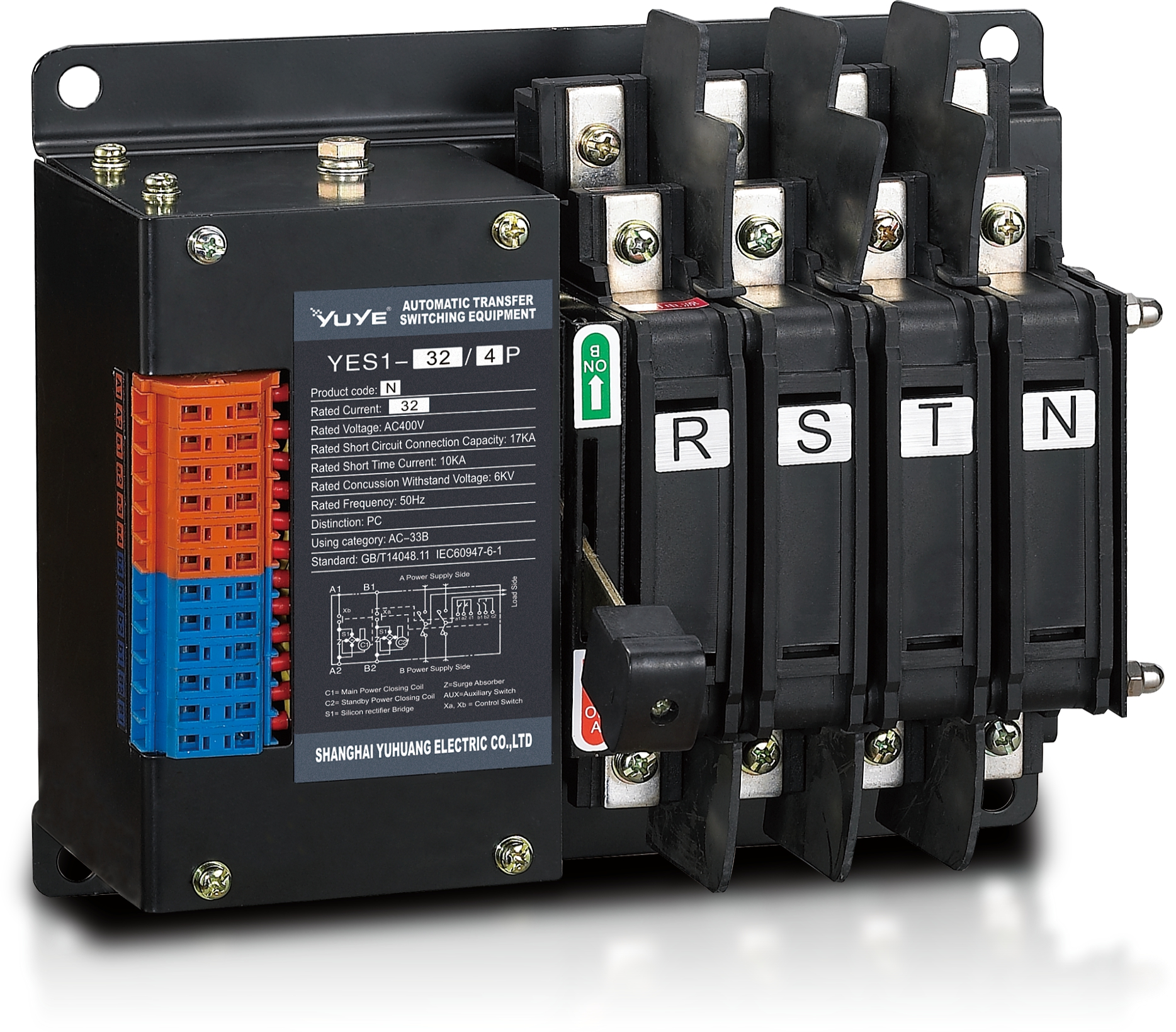 Solenoid-type ATS YES1-32~125N
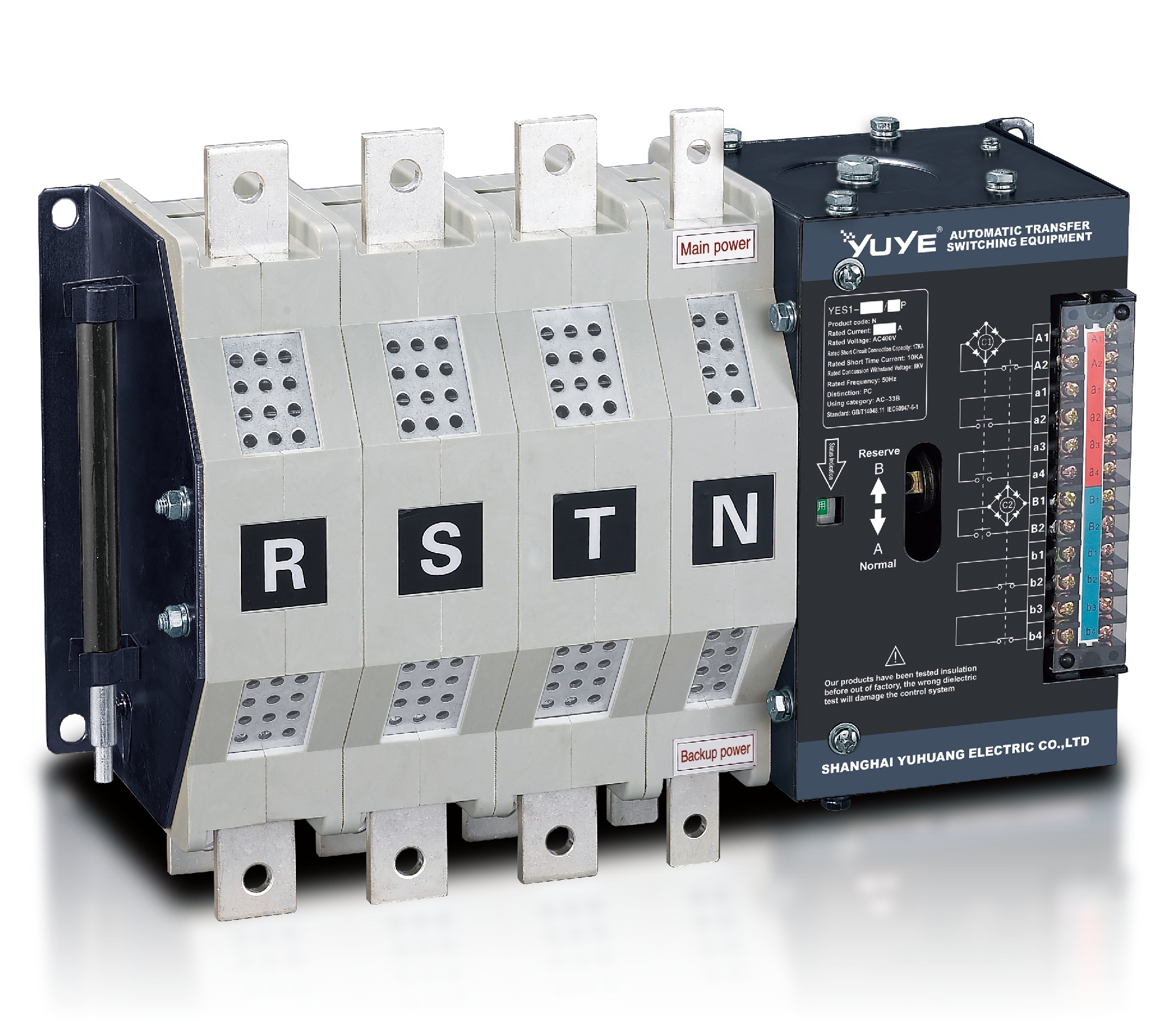 Solenoid-type ATS YES1-250~630N/NT
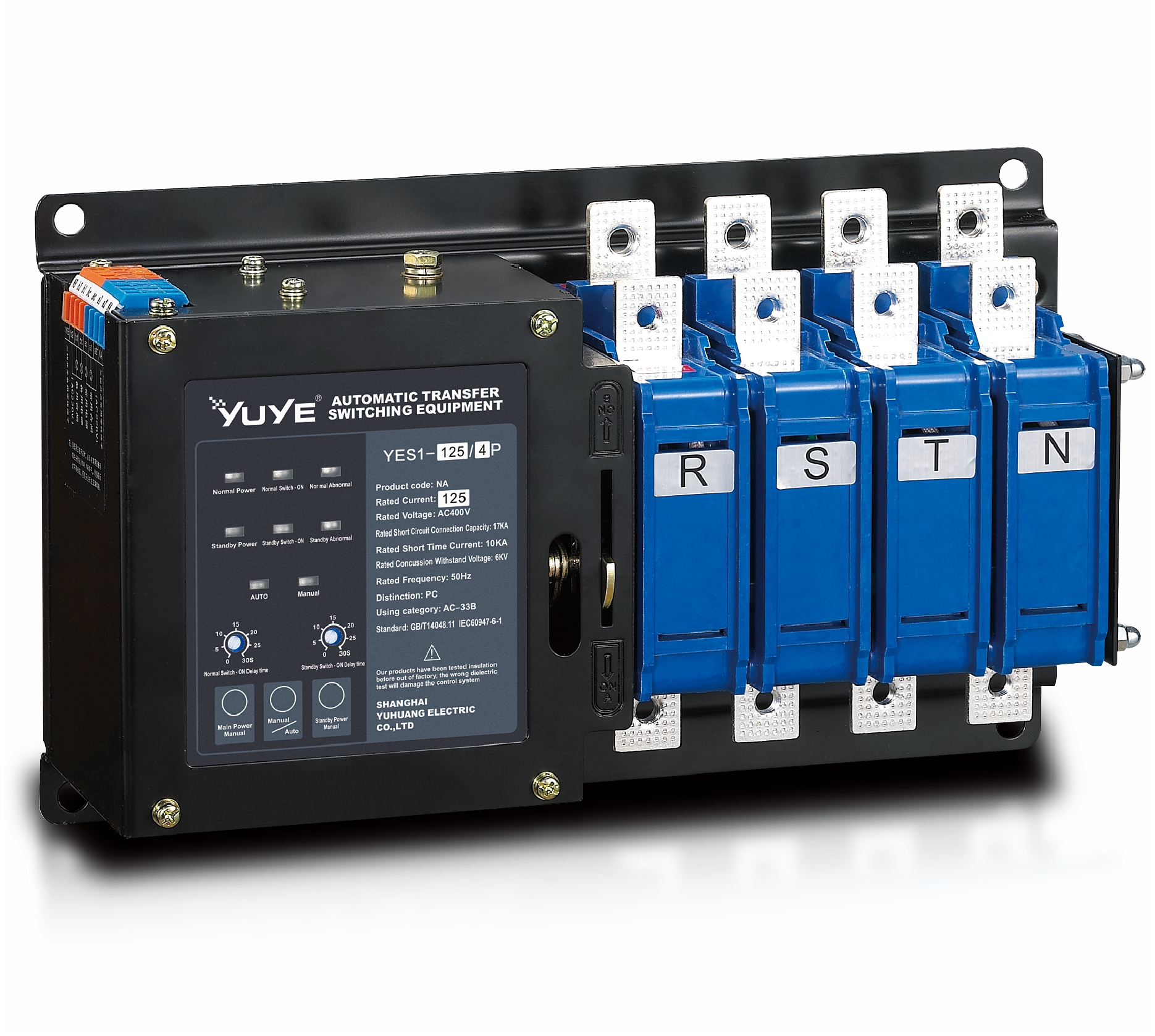 Solenoid-type ATS YES1-32~125NA
 Solenoid-type ATS YES1-63~630SN
 Solenoid-type ATS YES1-1250~4000SN
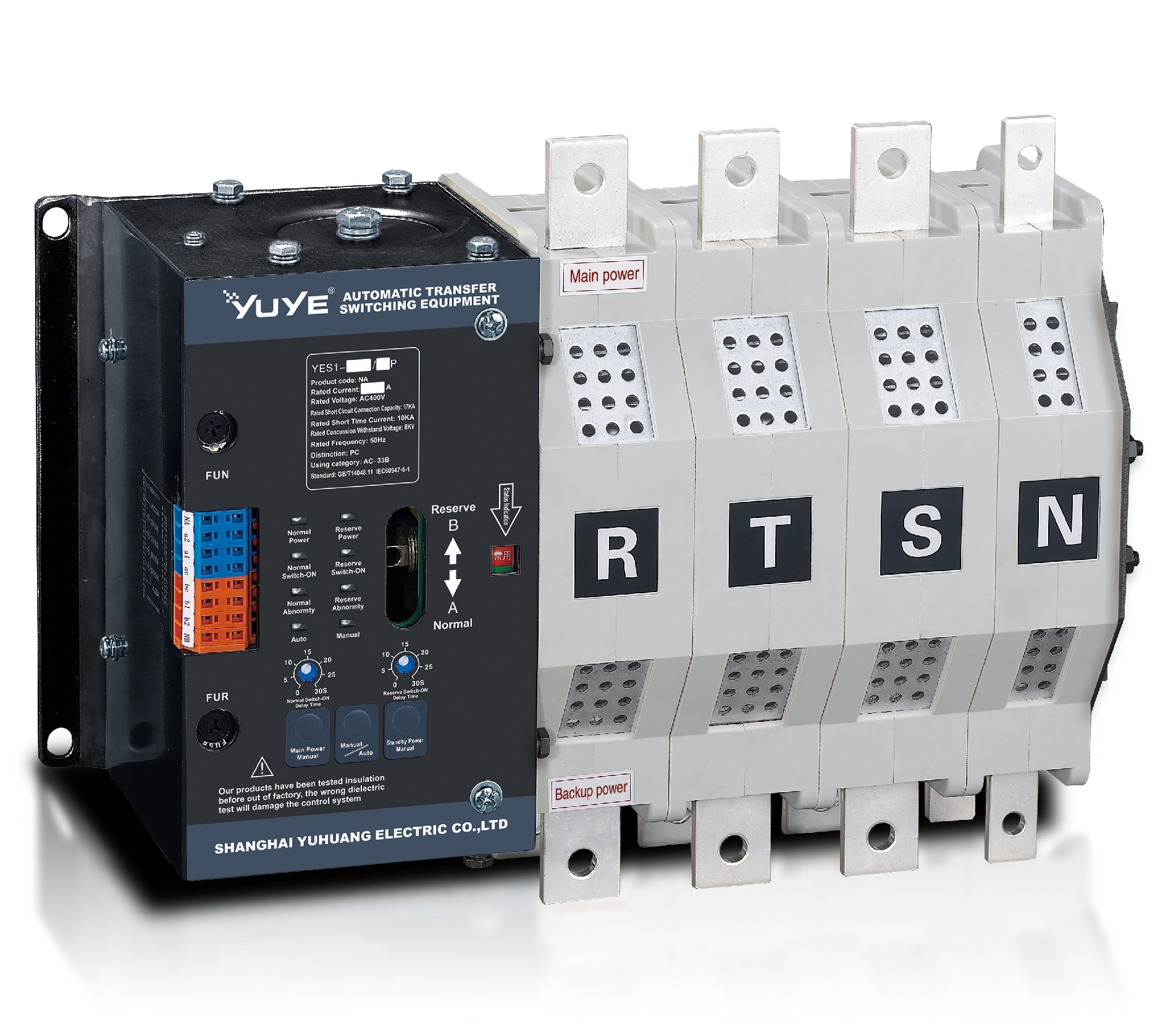 Solenoid-type ATS YES1-250~630NA/NAT
 Solenoid-type ATS YES1-63NJT
 PC ATS YES1-100~1600GN1/GN/GNF
 PC ATS YES1-2000~3200GN/GNF
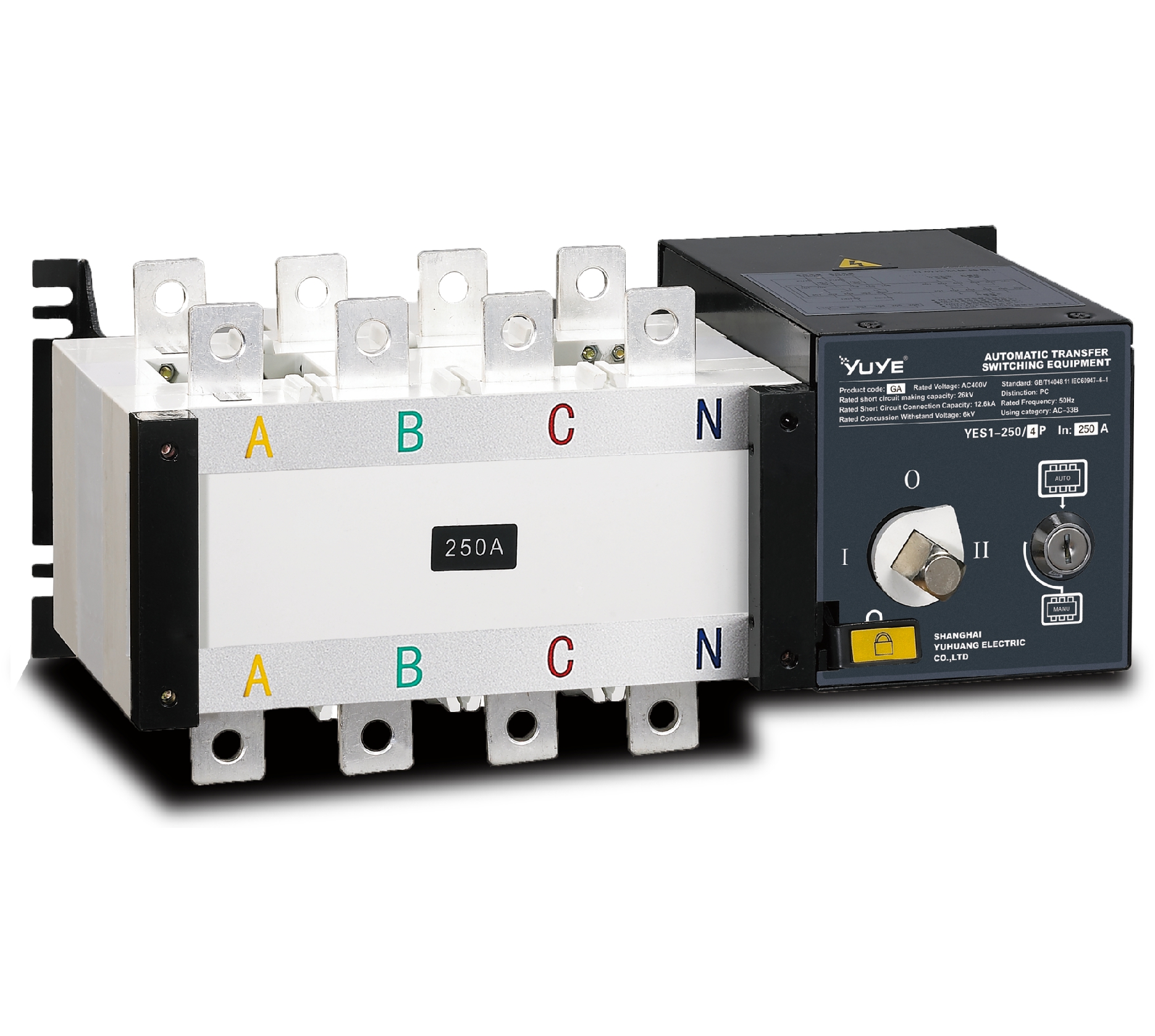 PC ATS YES1-100~3200GA1/GA
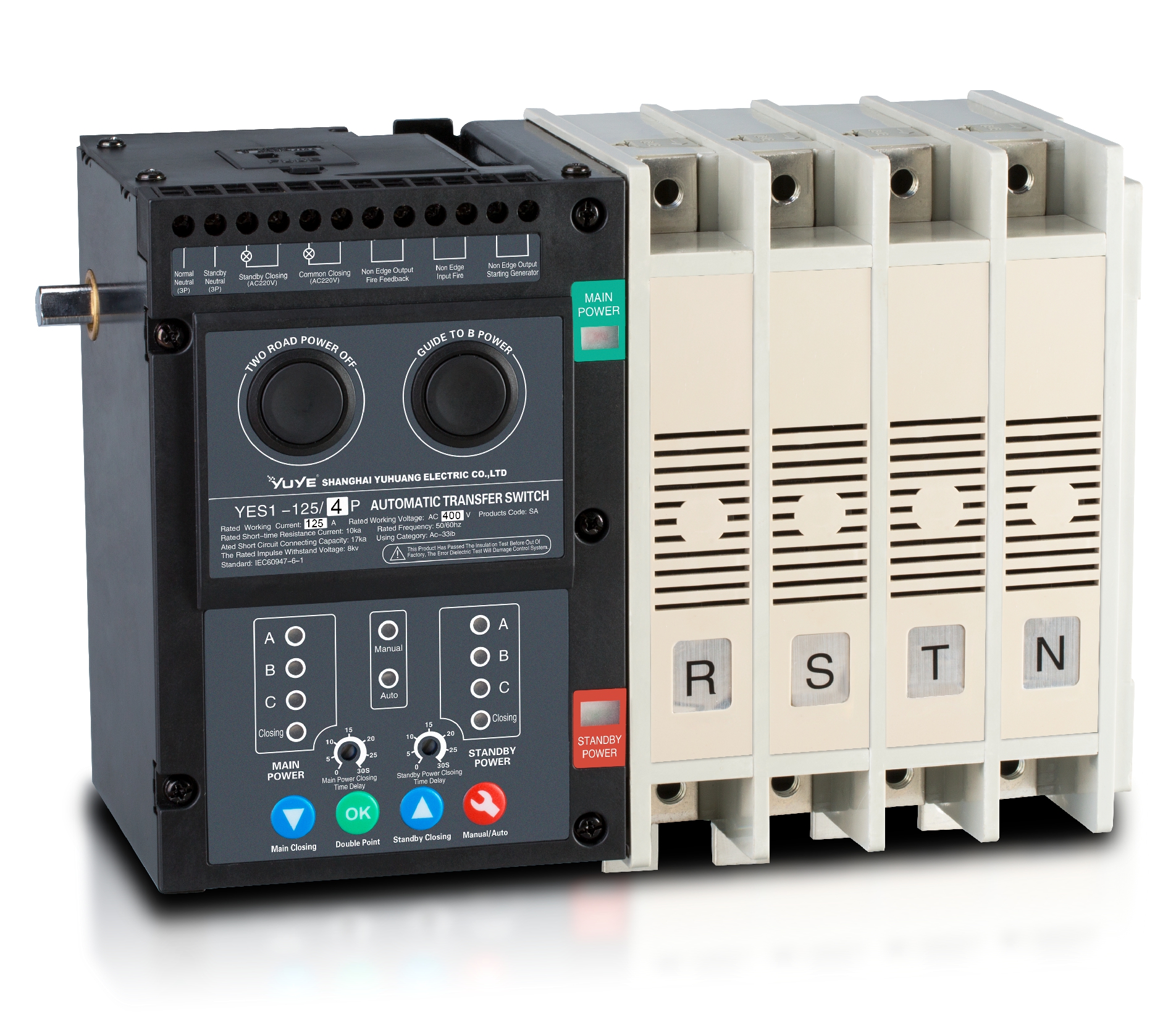 Solenoid-type ATS YES1-63~630SA
 Solenoid-type ATS YES1-63~630L/LA
 Solenoid-type ATS YES1-63~630LA3
 Solenoid-type ATS YES1-63MA
 PC ATS YES1-630~1600M
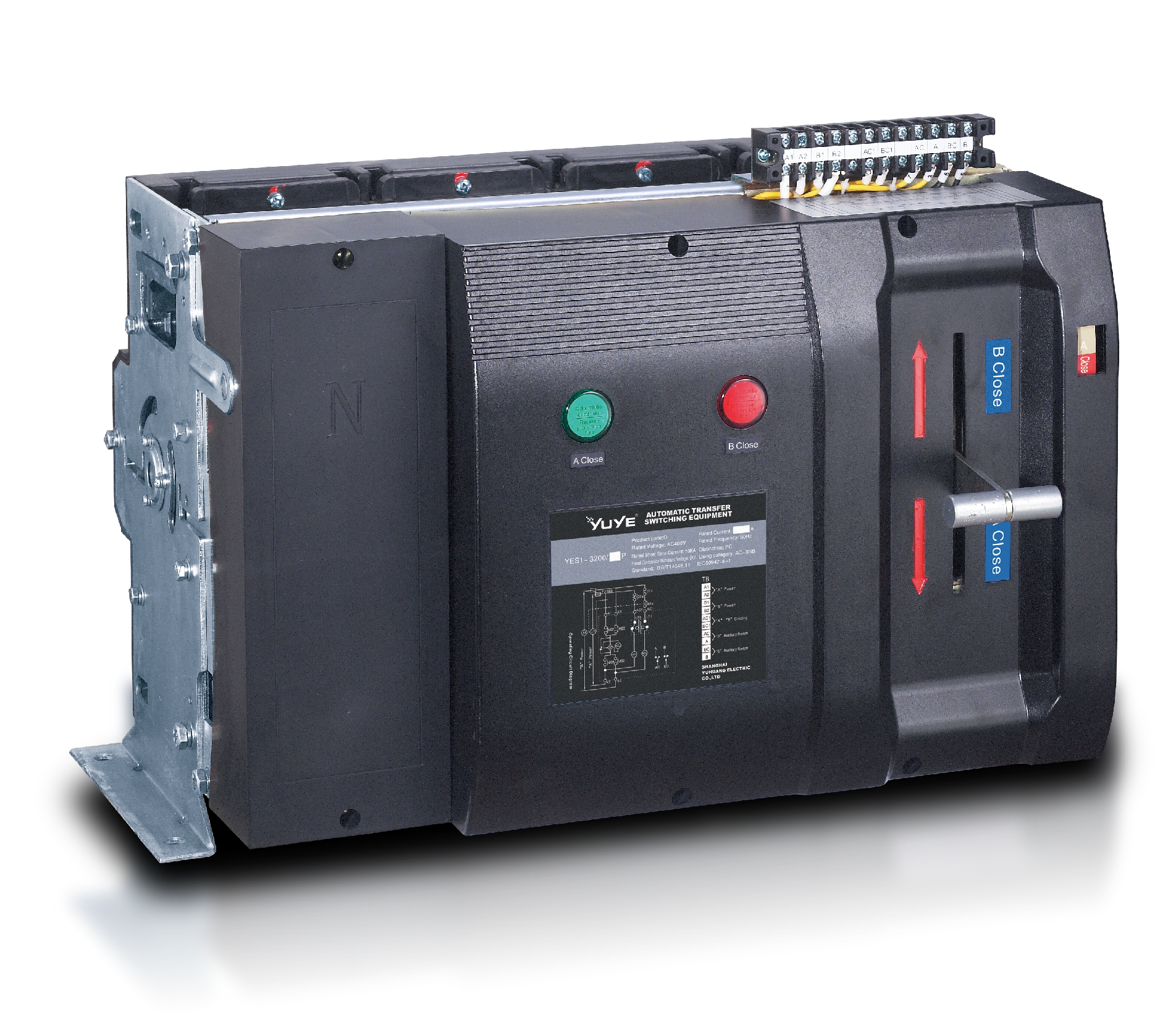 PC ATS YES1-3200Q
 Solenoid-type ATS YES1-4000~6300Q
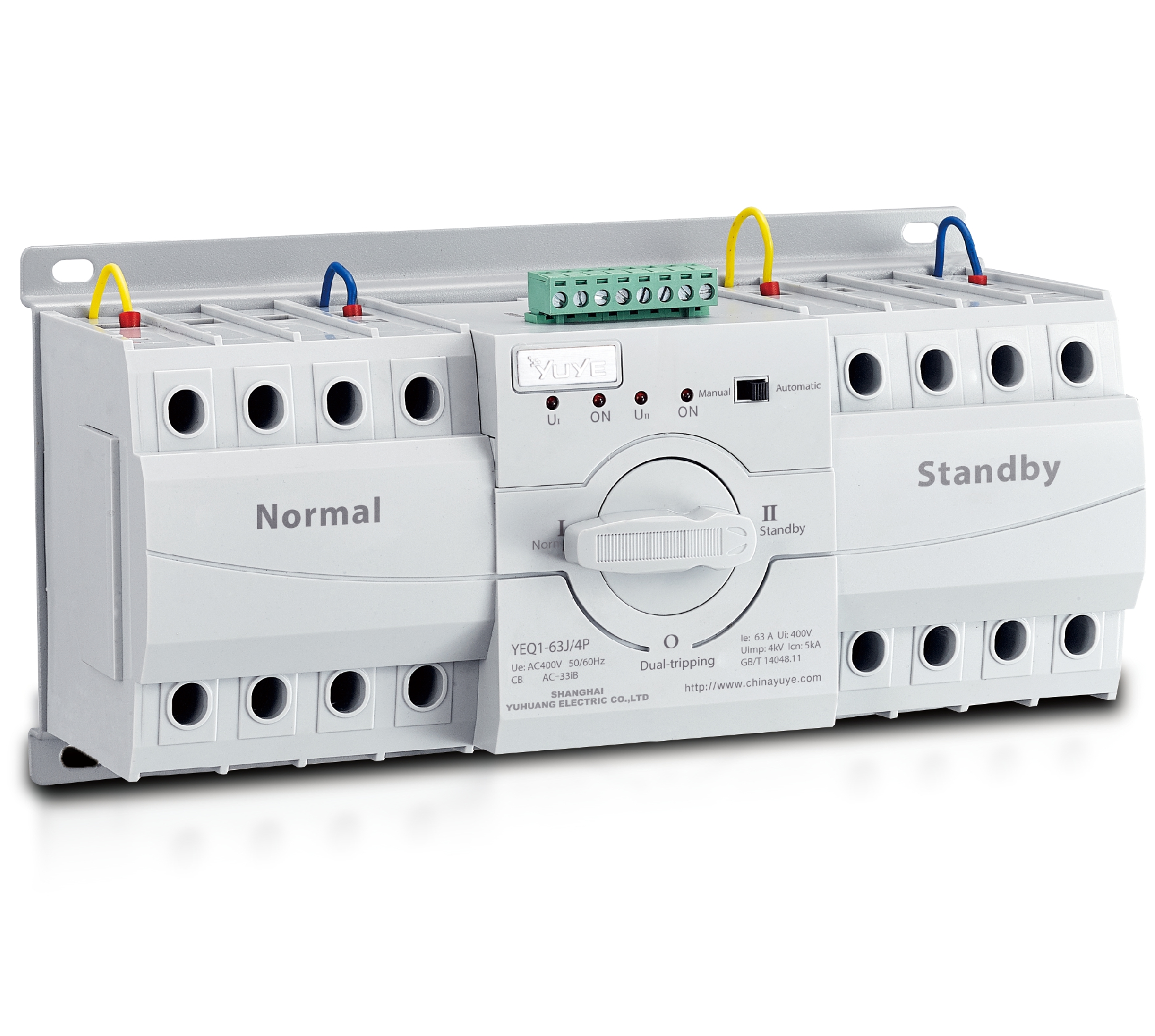 CB ATS YEQ1-63J
 CB ATS YEQ2Y-63
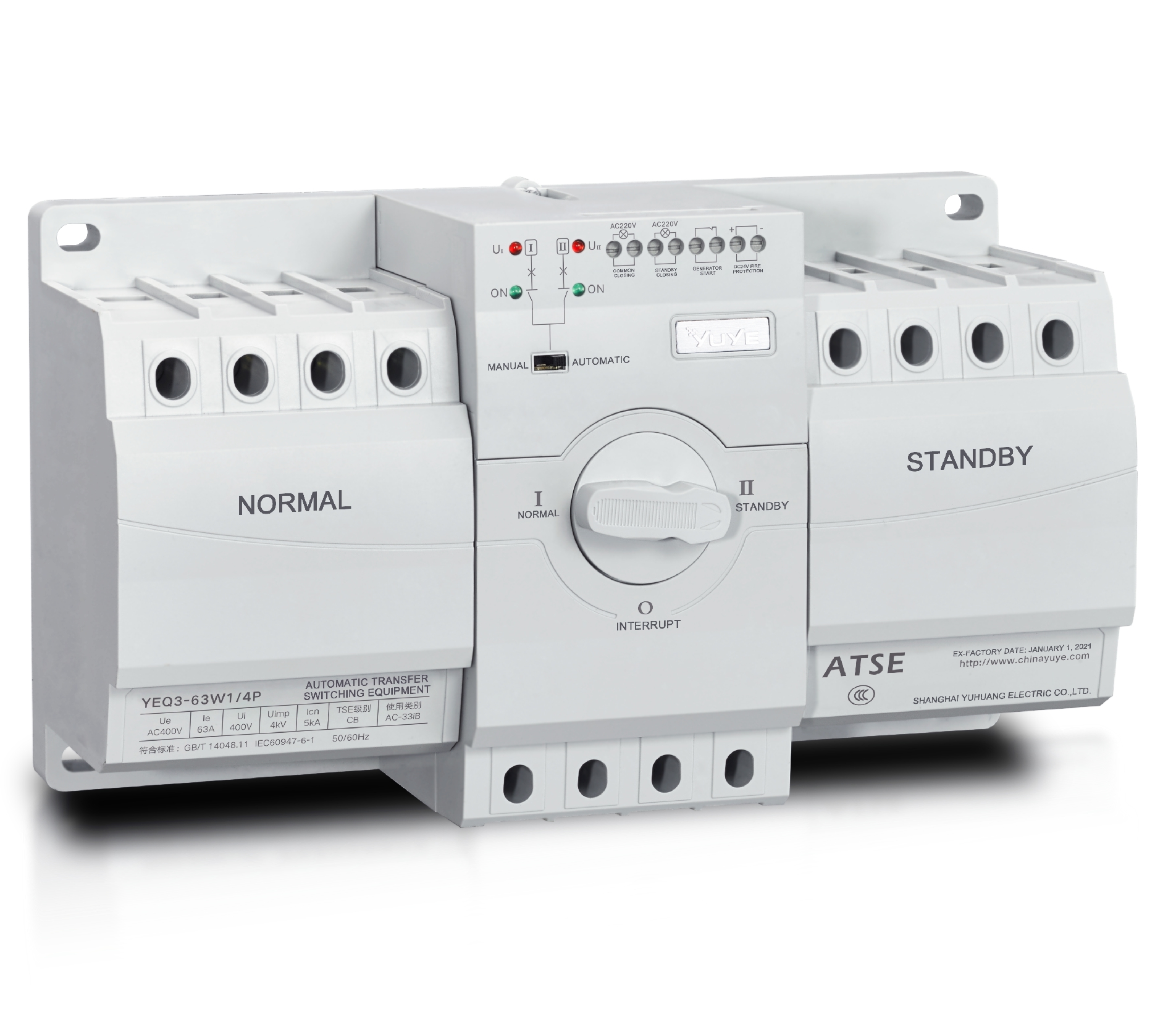 CB ATS YEQ3-63W1
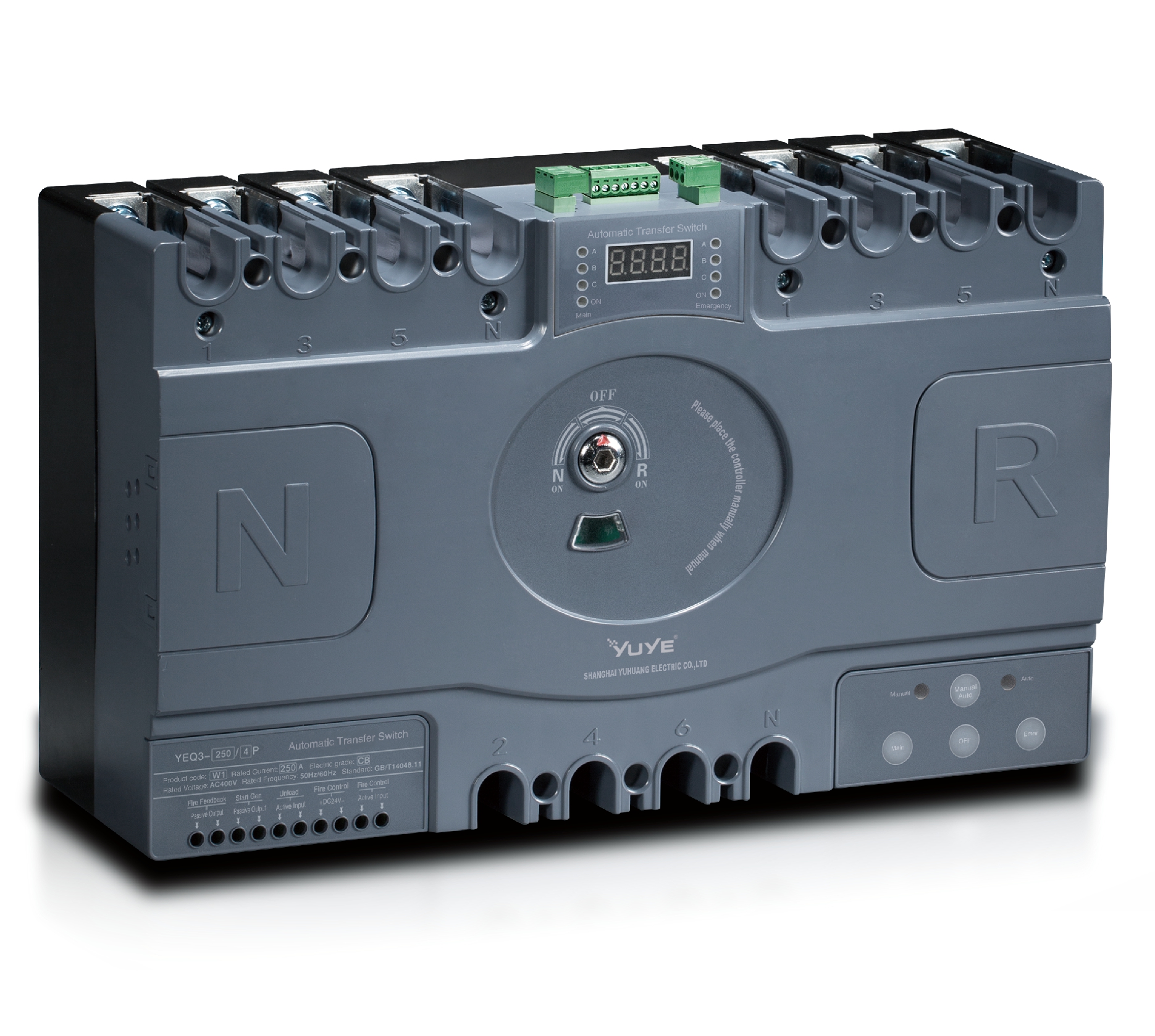 CB ATS YEQ3-125~630W1
 ATS controller Y-700
 ATS Controller Y-700N
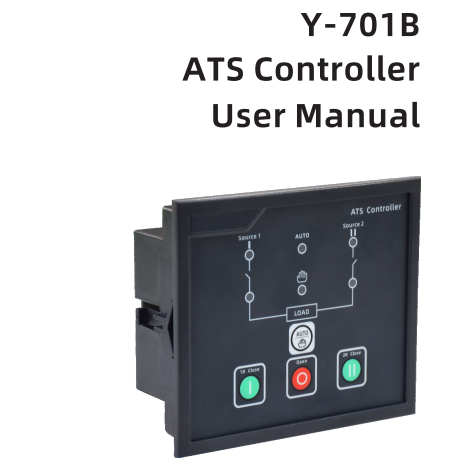
 ATS Controller Y-701B
 ATS Controller Y-703N
 ATS Controller Y-800
 ATS Controller W2/W3 Series
 ATS switch Cabinet floor-to-ceiling
 ATS switch cabinet
 JXF-225A power Cbinet
 JXF-800A power Cbinet
 YEM3-125~800 Plastic Shell Type MCCB
 YEM3L-125~630 Leakage Type MCCB
 YEM3Z-125~800 Adjustable Type MCCB
 YEM1-63~1250 Plastic Shell Type MCCB
 YEM1E-100~800 Electronic Type MCCB
 YEM1L-100~630 Leakage Type MCCB
 Air Circuit Breaker YEW1-2000~6300
 Air Circuit Breaker YEW3-1600
 Miniature circuit breaker YEMA2-6~100
 Miniature circuit breaker YEB1-3~63
 Miniature circuit breaker YEB1LE-3~63
 Miniature circuit breaker YEPN-3~32
 Miniature circuit breaker YEPNLE-3~32
 Miniature circuit breaker YENC-63~125
 Load isolation switch YGL-63~3150
 Load Isolation Switch YGL2-63~3150
 DC relay YDC-P20
 DC relay YDC-P250
 DC relay YDC-P400
 DC relay MDC-300M
 DC relay YDC-M400
 DC Isolation Switch YEGL3D-630
 YECPS2-45~125 LCD
 YECPS-45~125 Digital
 CNC Milling/Turning-OEM
Introduction
In modern industrial production, commercial operation and public infrastructure construction, stable and continuous power supply is the basic guarantee for normal operation of all electrical equipment. Power abnormalities including sudden blackouts, grid voltage fluctuations, phase loss and frequency deviation often lead to equipment shutdown, production interruption and even permanent damage to precision electrical devices, bringing huge economic losses and potential safety hazards to enterprises and public institutions. To solve the problem of unreliable single power supply, intelligent power protection equipment has become a standard configuration for high-reliability power distribution systems. As a core power switching device in emergency power supply systems, Automatic Transfer Switch and Its Controller can realize automatic switching between main power supply and standby power supply, effectively avoid power supply interruption, and build a solid safety barrier for stable operation of power distribution systems [1]. This article systematically expounds the system composition, working principle, intelligent control logic, application scenarios and operation maintenance skills of the equipment, to provide professional reference for power system configuration and daily operation management.
1. Basic Composition and Working Mechanism of ATS Automatic Transfer Switch System
1.1 Core Composition of ATS System
The complete ATS automatic power switching system adopts an integrated design of control and execution, with compact structure and clear functional division. Its core components mainly include switching execution body, intelligent control unit, power signal detection module, logic judgment module and signal feedback module. The switching body is responsible for completing physical power supply switching actions; the intelligent controller serves as the core brain of the system, undertaking real-time signal collection and operation instruction output; the detection module continuously monitors the operating state of dual power supplies; the feedback module feeds back the switching state to the upper system in real time to realize closed-loop control. All components cooperate with each other to ensure the accurate and reliable completion of power switching actions [2].
1.2 Basic Working Principle of ATS
The working logic of the ATS system follows the design specifications of international IEC 60947-6-1 and national GB/T 14048.11-2016 standards, with highly standardized and intelligent operation procedures [1]. During normal operation, the system takes the municipal main power supply as the priority power supply, and the controller monitors the voltage, current and phase sequence parameters of the main power supply in real time. Once the main power supply fails such as power outage, undervoltage or phase loss, the system will immediately trigger the fault judgment program, cut off the main power supply loop after confirming the fault, and quickly switch the load to the standby power supply loop. After the main power supply is restored to normal, the system will automatically switch back to the main power supply state according to the set delay parameters, and complete self-inspection and reset to wait for the next working cycle.
1.3 Classification of ATS Switching Modes
According to different operation logic and application scenarios, ATS switching modes are mainly divided into three types: automatic switching, manual switching and delayed switching. The automatic mode is suitable for unattended power distribution scenarios, realizing fully intelligent unmanned switching; the manual mode is mostly used for equipment maintenance, debugging and emergency manual intervention scenarios, which can manually control the switch state to avoid misoperation; the delayed switching mode is designed for power grid fluctuation scenarios, which can effectively avoid frequent switching actions caused by instantaneous power supply jitter and improve the stability of the system.
2. How ATS Controller Realizes Intelligent and Uninterrupted Power Switching
2.1 Intelligent Power Monitoring Technology
The intelligent controller is the core intelligent carrier of the ATS system, which breaks through the limitations of traditional mechanical switching equipment. It is equipped with high-precision power parameter sensing elements, which can collect real-time data of power supply voltage, current, frequency and phase sequence with high frequency. Built-in intelligent judgment algorithm can accurately identify various power abnormal states, including transient voltage drop, persistent power failure, three-phase unbalance and phase loss, and distinguish accidental power grid fluctuation and permanent power failure fault, so as to avoid invalid switching and ensure targeted power protection.
2.2 Fast and Stable Switching Execution
Different from the slow response and high error rate of manual power switching, the intelligent controller can complete fault judgment and switching instruction output in milliseconds. Through optimized mechanical coordination and electrical logic design, the switching time is greatly shortened, realizing quasi-seamless power supply switching. At the same time, the system is equipped with intelligent delay protection and anti-misoperation logic, which can lock the switch state during power grid fluctuation, prevent repeated switching impact on electrical equipment, and effectively protect the safety of rear-end load equipment.
2.3 Intelligent linkage and self-protection function
Modern ATS controllers have comprehensive self-protection and remote linkage capabilities. The system integrates overload protection, short-circuit protection and over-temperature protection functions. When the load is overloaded or the line is short-circuited, it will automatically cut off the power supply loop to avoid equipment burnout and line fire risks. In addition, it supports remote signal transmission and linkage control, which can be connected with the building power monitoring system and industrial control system, realizing remote state monitoring, fault alarm and parameter adjustment, and improving the intelligent level of power distribution operation and maintenance.
3. Core Application Scenarios of Automatic Transfer Switch in Power Protection
3.1 Industrial Production Scenarios
In industrial manufacturing scenarios such as factory production lines, precision processing equipment and industrial power distribution cabinets, continuous power supply is the key to stable production. Sudden power failure will lead to production line shutdown, product scrapping and equipment jamming, bringing direct economic losses. The ATS system can quickly switch to standby power supply when the main power supply fails, ensure the continuous operation of production equipment, avoid production interruption, and provide reliable power guarantee for industrial continuous production [3].
3.2 Commercial and Public Facility Scenarios
Key public facilities and commercial places such as hospitals, data centers, large shopping malls and office buildings have extremely high requirements for power supply continuity. Hospital emergency treatment equipment, data center server clusters and building fire emergency equipment must maintain uninterrupted operation. The ATS power protection system can effectively resist power grid faults, ensure the normal operation of key equipment in public places, avoid public safety accidents and data loss risks, and meet the power supply safety standards of high-standard public infrastructure.
3.3 Civil and Special Power Supply Scenarios
In residential emergency power supply, communication base stations, outdoor emergency facilities and fire protection power supply scenarios, ATS equipment also plays an important role. For communication base stations distributed all over the region, stable power supply is the basis of signal coverage; for residential emergency power supply, it can ensure the normal operation of emergency lighting and elevator equipment in case of power failure. The flexible and reliable switching performance of ATS fully adapts to the diversified power protection needs of civil and special scenarios.
4. Key Roles of ATS Controller in Improving Power Supply Safety and Stability
4.1 Eliminate Hidden Dangers of Manual Operation
Traditional dual-power switching relies on manual operation, which has obvious defects such as slow response speed, high human error rate and delayed operation. Manual switching is easy to cause misoperation due to human fatigue and judgment deviation, leading to power supply interruption and equipment damage. The intelligent ATS controller realizes full-automatic unattended switching, completely eliminates operational risks caused by human factors, standardizes power switching procedures, and greatly improves the safety of power distribution operation.
4.2 Improve Power Supply Continuity and Reliability
The intelligent judgment and fast response capability of the controller greatly optimizes the power switching efficiency. It can complete fault processing and power switching in the shortest time, minimize power outage duration, and realize uninterrupted power supply for important loads. For the whole power distribution system, the application of intelligent control equipment reduces the failure rate of power supply switching, improves the overall operation stability of the power grid, and provides reliable technical support for high-reliability power supply.
4.3 Extend Service Life of Electrical Equipment
Sudden power failure and instantaneous voltage impact are important factors leading to aging and damage of electrical equipment. The ATS controller can avoid sudden power off and power impact through stable switching logic and fault protection mechanism, reduce the impact of power grid abnormalities on precision electrical equipment, effectively delay equipment aging, reduce equipment failure rate and maintenance cost, and extend the overall service life of power distribution equipment and load equipment.
5. Selection Standards and Daily Maintenance Tips for Intelligent ATS Power Protection Equipment
5.1 Core Selection Standards of ATS Equipment
The selection of ATS equipment needs to comprehensively consider actual power supply scenarios, load power, switching performance and safety standards. First, the equipment power grade should match the actual load power to avoid overload operation; second, the switching speed should meet the load operation requirements, and high-precision and fast switching equipment is required for precision equipment scenarios; in addition, attention should be paid to the protection grade and standard compliance of the equipment, and products that meet IEC 60947-6-1 and national industry standards should be selected to ensure equipment safety and compatibility [7].
5.2 Daily Inspection and Maintenance Points
Daily maintenance is the key to ensure the long-term stable operation of ATS system. Operators need to regularly check the operating parameters of the controller, including voltage detection accuracy, switching delay parameters and fault alarm settings. Regularly test the switching flexibility of the switch body, check whether the line connection is loose and whether the equipment has abnormal noise and heat generation. At the same time, clean the equipment dust regularly to avoid dust accumulation affecting the sensitivity of sensing elements and switching performance, and establish a complete operation and maintenance record file.
5.3 Common Faults and Troubleshooting Methods
In the daily operation process, common faults of ATS equipment include insensitive switching, abnormal fault alarm and failed power switching. For the problem of insensitive switching, it is necessary to check whether the controller parameters are set incorrectly and whether the mechanical structure of the switch is stuck; for false alarm faults, focus on detecting whether the power detection module is abnormal and whether the line signal is interfered; for switching failure faults, check the standby power supply state and line circuit connectivity, and eliminate line faults and equipment component damage one by one to ensure the normal operation of the system.
Conclusion
As an indispensable core equipment of modern intelligent power protection system, Automatic Transfer Switch and Its Controller realizes intelligent, fast and safe dual-power switching through perfect system structure and precise control logic, effectively solves various power supply safety problems in industrial, commercial and civil scenarios, and greatly improves the stability and continuity of power supply [9]. With the continuous upgrading of power distribution intelligence technology, ATS equipment is developing towards miniaturization, remote intelligent control and high-precision protection. In the future, it will play a more important role in key infrastructure fields such as smart grid, data center and industrial intelligent manufacturing, and provide more solid guarantee for the safe and efficient operation of modern power systems. The standardized selection, scientific use and standardized maintenance of Automatic Transfer Switch and Its Controller will become an important part of power distribution system operation and maintenance management.
FAQ
Q1: What is the core difference between ATS automatic switching and traditional manual power switching?
A1: ATS features fully automatic fault judgment and fast power switching without manual operation, ensuring high efficiency and accuracy. In contrast, traditional manual switching is slow, error-prone and unable to support uninterrupted power supply for critical loads.
Q2: What scenarios are ATS equipment suitable for?
A2: ATS is applicable for scenarios requiring high power supply continuity, including data centers, hospitals, industrial production lines, commercial buildings, communication base stations and fire emergency power systems, preventing losses caused by sudden power outages.
Q3: How to judge whether the ATS equipment needs maintenance?
A3: Maintenance is required if the equipment presents abnormal noise or overheating, delayed switching, frequent false alarms or switching failure. Regular inspection is also recommended for long-term stable operation.
Q4: Will ATS frequent switching damage electrical equipment?
A4: Qualified ATS is equipped with anti-misoperation and delay protection functions to avoid invalid frequent switching. Standard switching actions will not damage equipment, but effectively protect electrical devices from power fluctuation and outage damage.
References
[1] GB/T 14048.11-2016, Low-voltage switchgear and controlgear-Part 6-1: Multiple function equipment-Transfer switching equipment[S]. Beijing: China Standards Press, 2016.
[2] Wu Jian, Huang Zhengqian. Design and Application of Automatic Transfer Switching Equipment[J]. Construction Science and Technology, 2008(20): 38-41.
[3] Hariyanto S, Lobo D, Mahmuddin F, et al. Automatic Transfer Switch (ATS) for Floating Lift Net Powered by Hybrid Energy Source[C]. E3S Web of Conferences, 2025.
[4] IEC 60947-6-1:2020, Low-voltage switchgear and controlgear – Part 6-1: Multiple function equipment – Transfer switching equipment[S]. International Electrotechnical Commission, 2020.
[5] Industry Research Institute. 2026 China Automatic Transfer Switch Market Research Report[R]. 2026.
