Looking into the 2026 Top Automatic Transfer Switch Manufacturers, this guide highlights the companies shaping reliable emergency power systems. Automatic transfer switches are a real lifesaver—they keep hospitals, data centers, factories, and commercial buildings up and running when the utility power suddenly cuts out. Sure, the switch changeover happens in just seconds, but the impact of that quick move can last for hours or more.
According to MarketsandMarkets, the global market for automatic transfer switches is expected to keep growing steadily through 2030. That’s mainly driven by the rapid expansion of data centers, boosting industrial automation, and tighter requirements for power reliability. Meanwhile, Grand View Research notes a rising demand for both low-voltage and medium-voltage transfer equipment. Both reports are helpful, but they sometimes use different boundaries to define their markets, so it’s important to keep that in mind. The numbers aren’t always directly comparable, and that’s okay.
Power-resilience expert Dr. Paul A. Schell once said, “A transfer switch only proves itself when it can transfer under load, again and again, without fail.” That straightforward test really shows what these switches are made of. A serious manufacturer of automatic transfer switches should be able to demonstrate fast switching, handle short circuits safely, provide bypass options, monitor functions, and have documented factory testing to back it up. And don’t overlook field service—imagine getting a controller failure at 2 a.m., right in the middle of the night. That’s when true support makes all the difference.
This review takes a closer look at major players like Schneider Electric, Eaton, ABB, Vertiv, Generac, Cummins, ASCO Power Technologies, and Socomec. It compares their product ranges, certifications, customization options, digital monitoring, ease of installation, and after-sales support. The Uptime Institute’s annual data center research emphasizes that resilience isn’t just about hardware—it also depends on good maintenance, operational discipline, and human factors. If all you’re relying on is hardware, you’re missing a big part of the puzzle.
And remember, the biggest manufacturer isn’t always the best choice. Sometimes local support and service can make all the difference. Mistakes can happen, so smart buyers should do their homework: double-check current specs, regional approvals, service coverage, and overall ownership costs before choosing a supplier. Picking the right partner is about more than just the size or brand—it’s about confidence and support in the long run.

Automatic Transfer Switches: Definition, Purpose, and Operating Principles
Automatic Transfer Switches: Definition, Purpose, and Operating Principles
An automatic transfer switch (ATS) is an electrical device that moves selected loads between two power sources. Usually, these sources are utility power and a standby generator. The switch monitors voltage, frequency, and phase conditions through internal sensors. When the primary source fails, the controller sends a start signal to the generator. After stable power appears, the ATS transfers the load.
Transfer Mechanism and Transition Types
The transfer mechanism uses electrically operated contacts and mechanical interlocks. These controls prevent both sources from connecting at the same time. In an open-transition system, the original source disconnects before the alternate source connects. This brief interruption protects equipment from source overlap. Closed-transition designs may reduce interruption, but they require stricter synchronization and installation controls. The choice depends on load sensitivity, local electrical rules, and system design.
Purpose, Sizing, and Maintenance
Purpose matters more than appearance. An ATS can protect emergency lighting, pumps, medical equipment, communication systems, and industrial controls. Correct sizing requires attention to continuous current, motor starting current, fault ratings, and enclosure conditions.
Field testing should include simulated utility failure, generator warm-up, transfer timing, and retransfer behavior. Maintenance teams should inspect terminals, control wiring, contact wear, and battery performance.
Small errors matter. A poorly adjusted delay may cause nuisance transfers or leave equipment without power. Specifications can also look complete while missing neutral switching requirements. That detail deserves careful review by a qualified electrical professional.
How the 2026 Manufacturer Ranking Is Evaluated
How the 2026 Manufacturer Ranking Is Evaluated
The 2026 ranking measures more than product availability. It examines engineering depth, verified performance, and dependable after-sales support. Our evaluation begins with documented transfer times, switching capacity, fault tolerance, and controller stability. Test results must match the product’s published specifications. Unsupported claims receive lower scores.
Factory audits provide practical evidence. Reviewers examine production controls, wiring quality, calibration records, and final inspection procedures. We also compare laboratory reports with field feedback from hospitals, data centers, factories, and commercial buildings. A switch may perform well on a test bench but fail during poor maintenance or unstable power conditions. That gap matters.
Safety and compliance receive significant weight. Evaluators check certification scope, protection features, enclosure quality, and instructions for installation and servicing. Certification alone is not enough. Clear documentation and trained technical support improve reliability over time. We assess response speed, spare-part access, warranty terms, and repair procedures. Regional service capability is also considered.
The scoring model uses weighted categories, not simple popularity.
Performance accounts for 30 percent, safety and compliance for 25 percent, manufacturing consistency for 20 percent, service for 15 percent, and innovation for 10 percent. These weights may need refinement. Innovation can be difficult to measure fairly, especially when proven simplicity is more valuable than new features. Independent testing reduces bias, but no ranking is perfectly complete. Field conditions remain unpredictable.
Leading Automatic Transfer Switch Manufacturers in 2026
Leading automatic transfer switch manufacturers in 2026 are defined by more than production capacity. Their reputation depends on dependable switching, tested protection, and clear technical support. Experienced manufacturers design equipment for hospitals, data centers, factories, and commercial buildings where power interruptions cause immediate damage.
Modern transfer switches monitor voltage, frequency, phase loss, and source availability. High-quality units can transfer essential loads within seconds. Manufacturers should provide documented testing under realistic electrical conditions. Look for thermal performance data, short-circuit ratings, maintenance guidance, and compatibility with generators and building controls. These details matter during a noisy generator test at 2 a.m.
Reliability also depends on installation and service. Leading manufacturers offer precise wiring diagrams, accessible components, and replacement parts with stable availability. Remote monitoring is useful, but it cannot replace physical inspections. A sensor may report normal conditions while a loose connection slowly overheats. That risk is easy to overlook.
Manufacturers with strong engineering teams usually support customized configurations without compromising safety. They also update firmware and technical documents as standards change. Still, product claims deserve careful review. Marketing language can sound stronger than field evidence. Buyers should compare independent test reports, warranty terms, service response times, and user feedback from similar facilities. Even a well-designed switch can fail when maintenance schedules are ignored. That is an uncomfortable, but necessary, lesson.
2026 Top Automatic Transfer Switch Manufacturers
Leading Automatic Transfer Switch Manufacturers in 2026
The expansion of data-center electricity demand is a major infrastructure driver for automatic transfer switches, which help maintain continuity between primary and backup power sources. Global data-center electricity consumption reached approximately 415 TWh in 2024 and is projected to approach 945 TWh by 2030, according to the International Energy Agency. These figures provide market context without comparing individual manufacturers or brands.
Source: International Energy Agency, “Energy and AI,” 2025. 2030 value is a projection.
Key Product Technologies and Performance Differences
2026 Top Automatic Transfer Switch Manufacturers: Key Product Technologies and Performance Differences
Automatic transfer switches now face tighter power demands. The IEA Electricity 2024 report estimates that data centers, artificial intelligence, and cryptocurrency consumed about 460 TWh globally in 2022. Demand could exceed 1,000 TWh by 2026. This growth makes transfer speed, sensing accuracy, and thermal endurance more important than cabinet appearance.
Open-transition switches remain common in hospitals and commercial buildings. They briefly disconnect loads before connecting the alternate source. Closed-transition designs overlap sources for a controlled interval, reducing interruption risk. However, they require careful synchronization and stronger system coordination. Bypass-isolation models simplify maintenance, but they add cost and installation space. In field testing, controllers with phase, voltage, and frequency monitoring usually provide better fault discrimination. Yet fast switching alone does not guarantee reliable power. Poor generator response can still create a second interruption.
Tips: Check IEC 60947-6-1 compliance, short-circuit withstand ratings, neutral switching, and operating temperature. Compare real transfer time, not only advertised sensing time. Ask for test records under generator load. A smaller enclosure may look efficient, but cramped wiring can slow maintenance and increase heat. That trade-off is easy to miss. Uptime Institute survey data also shows that power-related failures remain a major data-center concern, so lifecycle service deserves equal weight with purchase price. Manufacturers with clear diagnostics, replaceable controls, and documented factory testing offer stronger evidence of reliability.
2026 Top Automatic Transfer Switch Manufacturers - Key Product Technologies and Performance Differences
| ATS technology |
Switching element |
Transfer behavior |
Typical strengths |
Key considerations |
Common applications |
| Contactor-based ATS |
Electrically operated contactors with mechanical or electrical interlocking |
Usually open transition: the load is disconnected from one source before connection to the other. Transfer time depends on sensing, programmed delays, and mechanism operation. |
Straightforward operation, compact construction, and generally lower switching complexity. |
Verify short-circuit withstand and closing ratings, load type, and the required service and maintenance arrangements. |
Commercial buildings, small-to-medium backup systems, and general-purpose standby power. |
| Molded-case circuit-breaker ATS |
Motor-operated molded-case circuit breakers, typically with a mechanical interlock |
Typically open transition. Breakers provide an interrupting function; transfer sequence and interruption depend on the specific breaker and controller. |
Combines source transfer with circuit-breaker protection and can support coordination with the distribution system. |
Check trip settings, interrupting rating, coordination, and whether the selected assembly is listed or certified for transfer-switch use. |
Building distribution, generator-backed services, and installations where breaker-based protection is preferred. |
| Power-breaker ATS |
Draw-out or fixed power circuit breakers with an automatic transfer controller |
Usually open transition; closed-transition operation may be available in purpose-designed systems with the required controls and approvals. |
Suitable for larger distribution systems and can provide advanced protection, monitoring, and maintainability features. |
Requires attention to switchboard integration, protection coordination, installation space, and maintenance procedures. |
Large facilities, industrial power systems, and critical distribution equipment. |
| Static ATS |
Power semiconductors, commonly SCRs, controlled by electronic sensing and logic |
Can transfer between acceptable sources within a few milliseconds in suitable designs; transfer is generally break-before-make, not a mechanical paralleling operation. |
Very fast transfer and no mechanical contact movement during normal source switching. |
Requires compatible source voltage, frequency, and phase conditions. Semiconductor losses, heat dissipation, overload behavior, and bypass arrangements matter. |
Sensitive electronic loads, data-processing equipment, and other applications requiring rapid source transfer. |
Note: These are technology-level comparisons, not manufacturer-specific specifications. Actual transfer performance, current ratings, short-circuit ratings, transition modes, and certifications vary by model and system design. Confirm the applicable requirements and product documentation; relevant standards include IEC 60947-6-1 and UL 1008.
Industry Applications, Certifications, and Safety Requirements
For 2026, leading automatic transfer switch manufacturers should be judged by application control, certification depth, and field reliability. Data centers, hospitals, factories, airports, and high-rise buildings require different transfer strategies. Uptime Institute’s 2024 Global Data Center Survey reported that more than half of respondents experienced an outage during the previous three years.
Power switching still deserves serious attention.
An ATS used in a hospital must support emergency circuits, generator coordination, and documented testing. NFPA 110 defines performance requirements for emergency power supply systems, while NFPA 99 adds healthcare-specific electrical guidance. IEC 60947-6-1 addresses transfer switching equipment for international projects. In North American markets, certification to UL 1008 is often required. Requirements vary by jurisdiction.
A reliable manufacturer should provide short-circuit ratings, temperature-rise data, controller logs, and clear maintenance intervals. Field commissioning should verify phase rotation, sensing delays, bypass operation, and generator start signals. Small errors matter. Certification marks do not guarantee a safe installation. Poor cable termination, blocked ventilation, or an incorrect neutral arrangement can still cause failure. This is where supplier documentation and technician training become practical evidence of quality. ISO 9001-based production controls can support consistency, but they cannot replace site testing. A stronger 2026 evaluation should examine test records, local compliance experience, spare-part access, and response procedures under real load conditions.
How to Compare Manufacturers and Select the Right ATS Supplier
Selecting an automatic transfer switch manufacturer requires more than comparing product prices. Start with your site conditions, including voltage, current, fault level, enclosure location, and generator capacity. A supplier should explain how its ATS handles utility failure, voltage recovery, and frequent switching. Ask for tested transfer times, temperature ratings, wiring diagrams, and installation clearances. Practical details matter.
Review the manufacturer’s quality process carefully. Request factory test records, inspection procedures, certification documents, and traceable component information. Reliable suppliers provide clear manuals, realistic delivery dates, spare parts, and trained technical support. Check whether service engineers can respond during commissioning and later maintenance. Ask difficult questions.
Experience often appears in small details. A knowledgeable supplier may identify nuisance transfers caused by unstable voltage or incorrect sensing settings. It should also recommend bypass isolation equipment when maintenance continuity matters. Compare warranty terms, firmware control, communication options, and replacement procedures. An impressive brochure proves very little.
I have seen procurement teams choose the lowest quotation, then discover costly delays during installation. A perfect spreadsheet can still mislead. Request references from facilities with similar loads and operating environments. If possible, inspect a production facility or witness a functional test. The right ATS supplier should welcome technical scrutiny, admit product limitations, and document every assumption before approval.
FAQS
An automatic transfer switch moves selected electrical loads between two power sources. Usually, one source is utility power, and the other is a standby generator. It monitors voltage, frequency, and phase conditions through internal sensors.
The controller detects the failure and sends a start signal to the generator. After stable generator power appears, the switch transfers the connected load. The process may take several seconds.
Electrically operated contacts and mechanical interlocks control the transfer. These features prevent both power sources from connecting simultaneously. Small timing errors can still cause problems.
Open-transition systems disconnect the original source before connecting the alternate source. This creates a brief interruption. Closed-transition systems can reduce interruption, but they require accurate synchronization and stricter installation controls.
It can support emergency lighting, pumps, medical equipment, communication systems, and industrial controls. A hospital corridor may need lighting during a generator startup. A factory controller may also require stable transfer timing.
Review continuous current, motor starting current, fault ratings, and enclosure conditions. Generator compatibility also matters. A switch can appear correctly rated while missing neutral switching requirements.
Testing should simulate utility failure, generator warm-up, transfer timing, and retransfer behavior. Maintenance teams should inspect terminals, control wiring, contact wear, and battery performance. A loose terminal can slowly overheat.
Evaluation may include transfer times, switching capacity, fault tolerance, controller stability, factory controls, and service support. Reviewers should compare test reports with field feedback. A ranking is never perfectly complete.
Check technical response times, spare-part access, warranty terms, repair procedures, and regional support. Clear wiring diagrams are valuable during a late-night generator test. Remote monitoring helps, but it cannot replace physical inspection.
No. Published claims should match independent testing, field evidence, and realistic maintenance conditions. Even a well-designed switch can fail when inspections are ignored. That lesson is easy to underestimate.
Conclusion
This guide to the 2026 top Automatic Transfer Switch manufacturers explains how ATS equipment automatically transfers electrical loads between primary and backup power sources when an interruption or abnormal condition occurs. It covers the basic definition, purpose, operating principles, and the criteria used to evaluate manufacturers, including product reliability, switching speed, control systems, customization, testing capabilities, service support, and overall value.
The article also compares key technologies and performance differences, such as open, closed, and delayed transition designs, monitoring functions, communication interfaces, and fault protection. It reviews important applications in data centers, healthcare, industrial facilities, commercial buildings, and infrastructure, while highlighting relevant certifications and safety requirements. For buyers searching for an Automat Transfer Switch Manufactur, the guide provides a practical framework for comparing suppliers, assessing technical compatibility, verifying quality and compliance, and selecting an ATS solution that supports dependable, safe, and efficient power continuity.

 PC ATS YECT1-2000G
 PC ATS YES2-63~250GN1
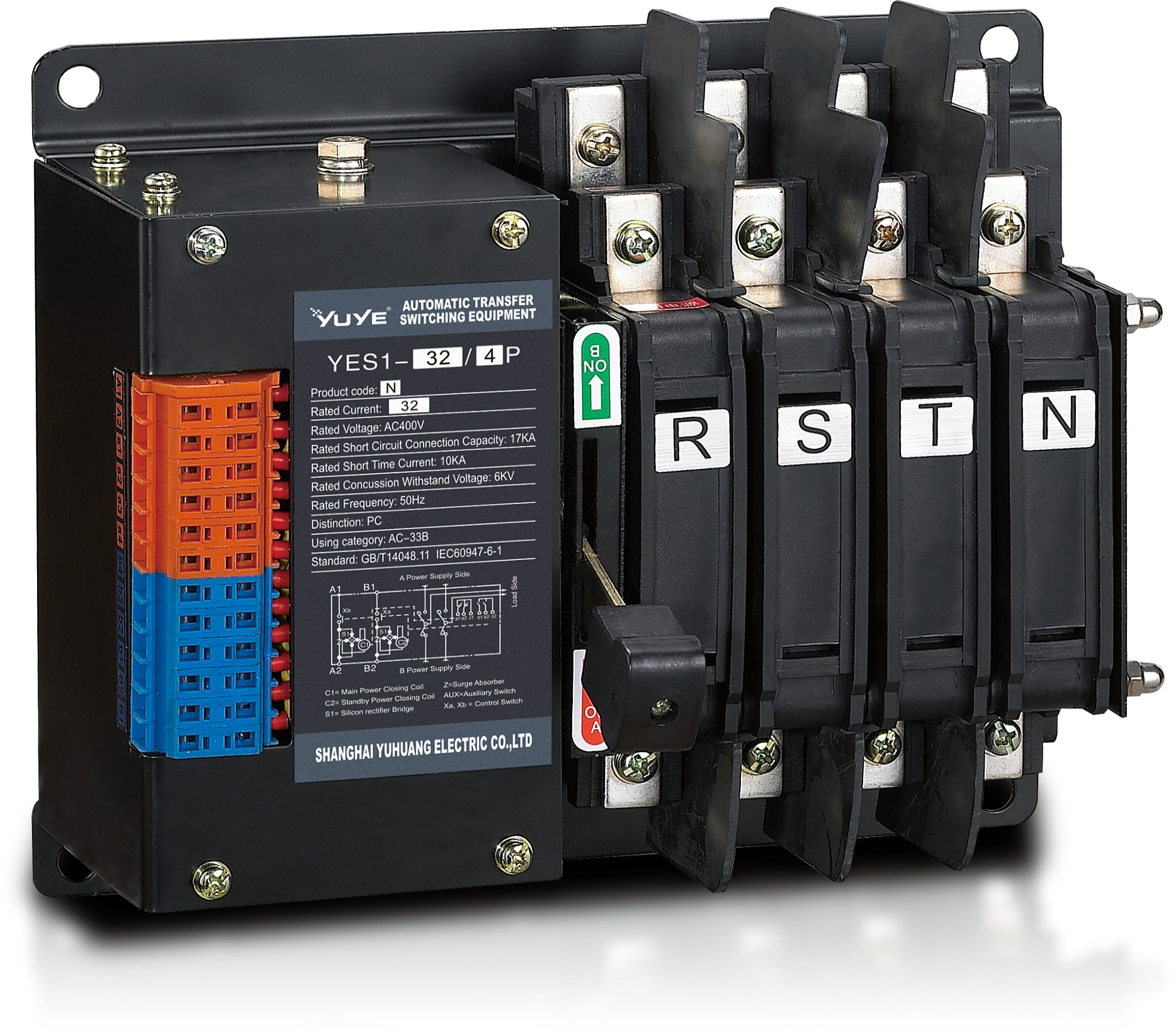 Solenoid-type ATS YES1-32~125N
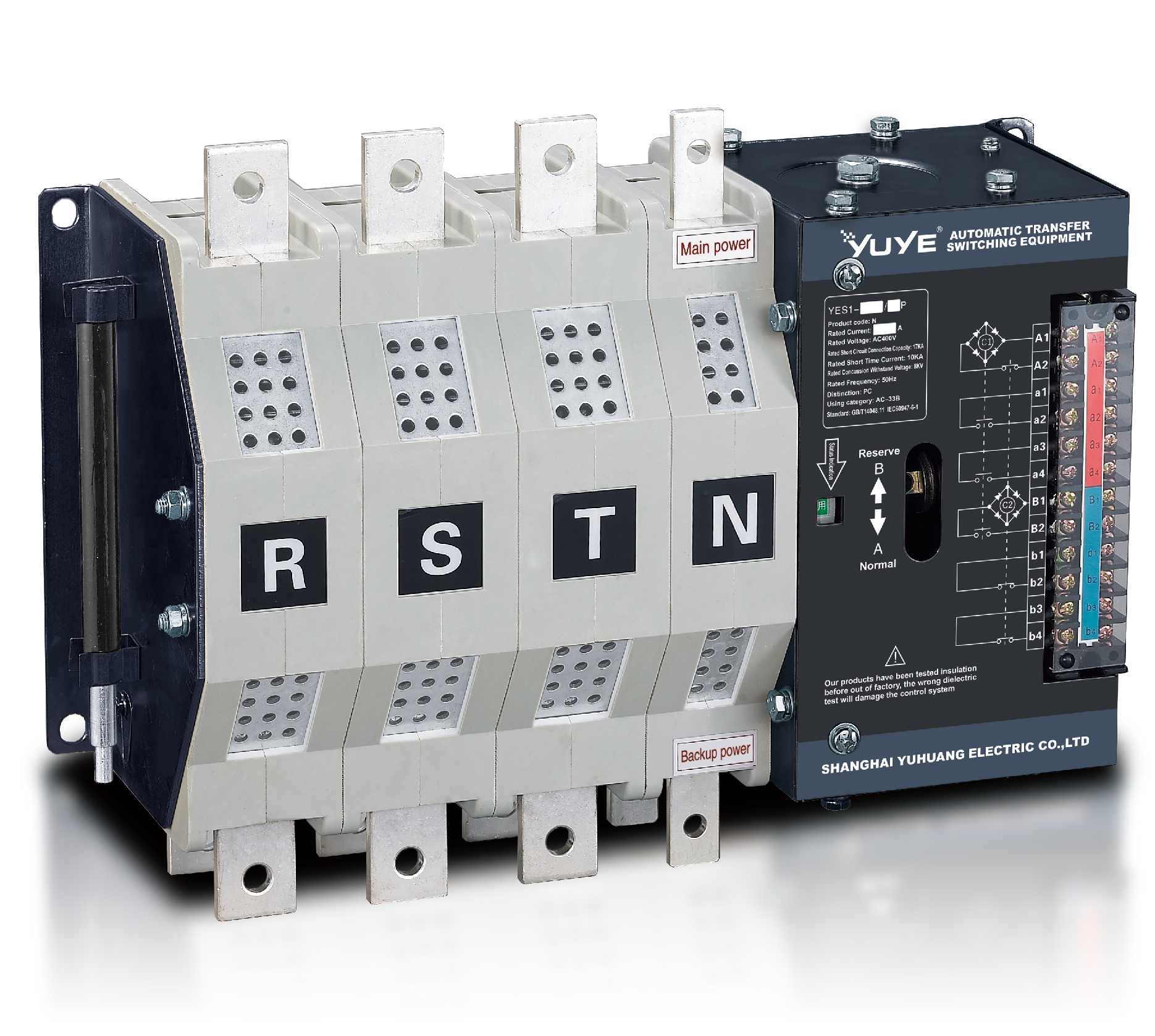 Solenoid-type ATS YES1-250~630N/NT
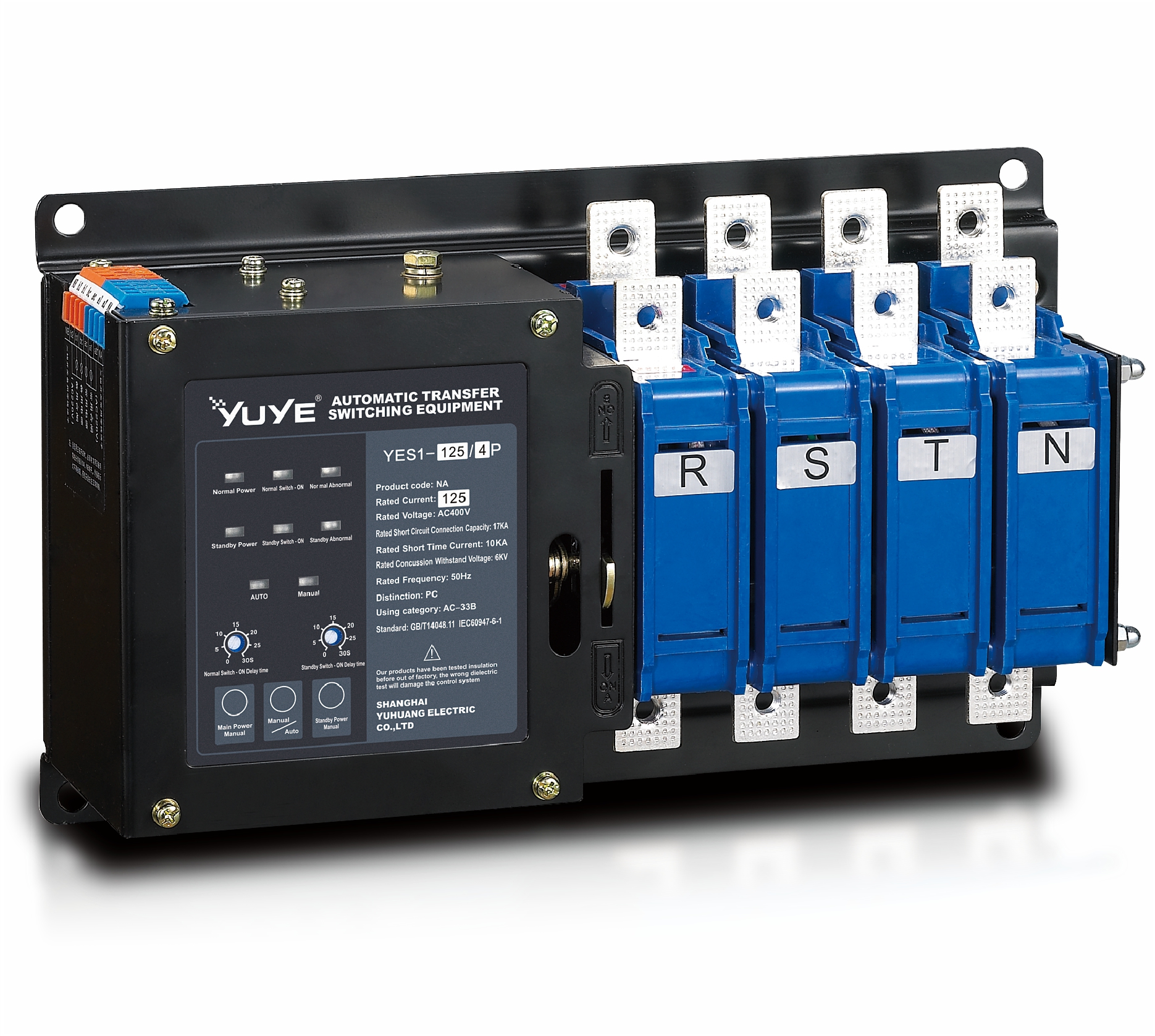 Solenoid-type ATS YES1-32~125NA
 Solenoid-type ATS YES1-63~630SN
 Solenoid-type ATS YES1-1250~4000SN
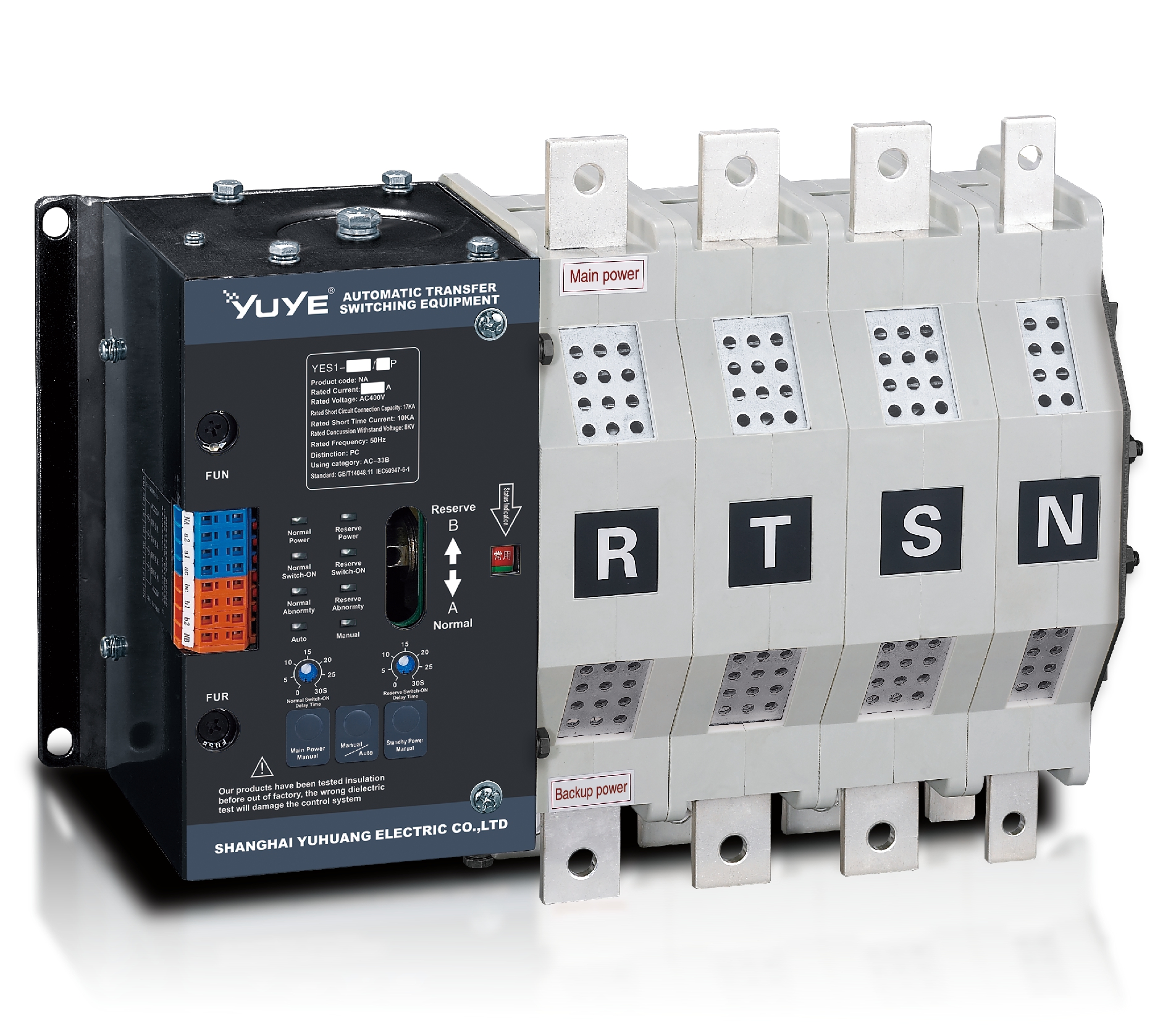 Solenoid-type ATS YES1-250~630NA/NAT
 Solenoid-type ATS YES1-63NJT
 PC ATS YES1-100~1600GN1/GN/GNF
 PC ATS YES1-2000~3200GN/GNF
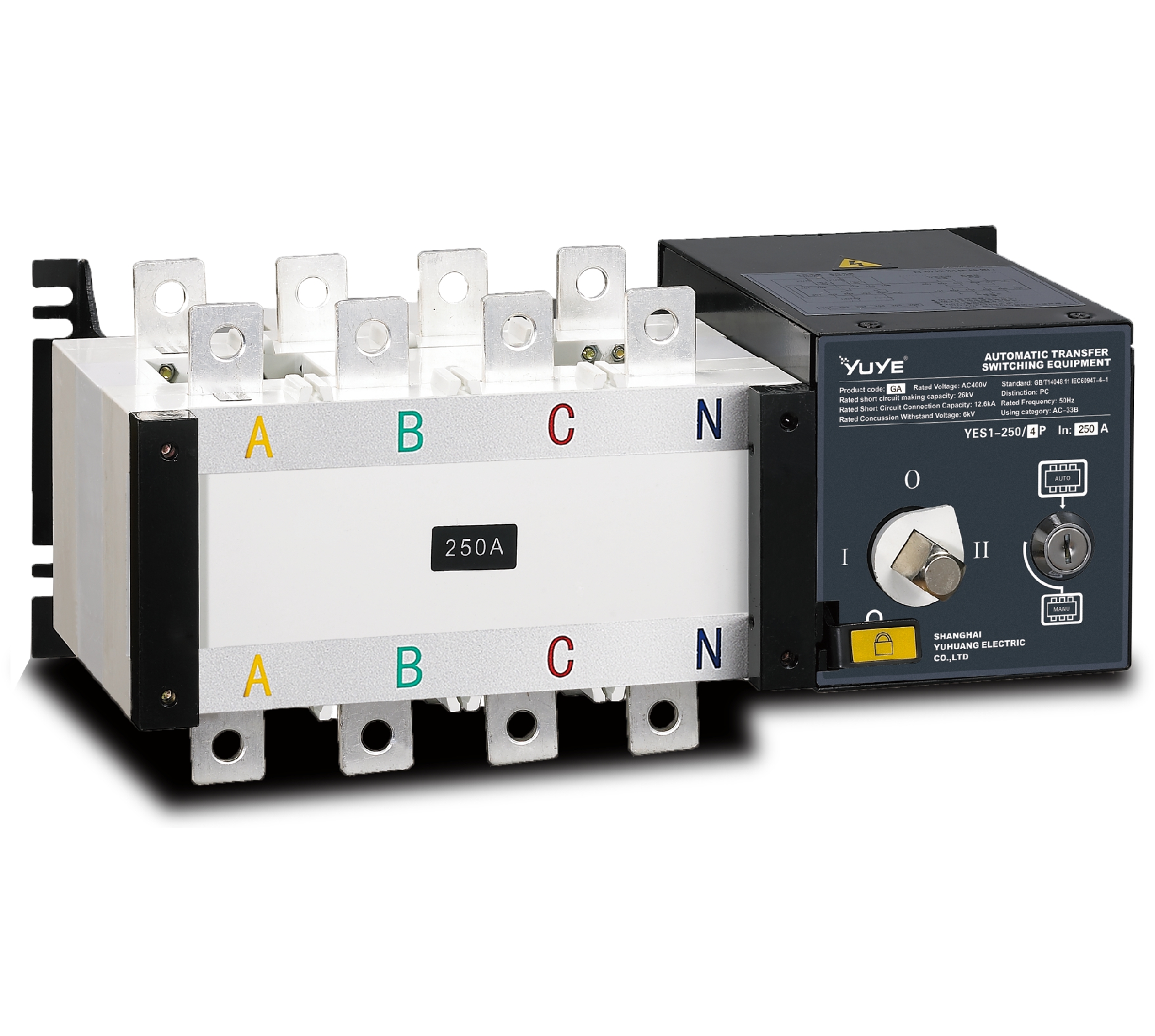 PC ATS YES1-100~3200GA1/GA
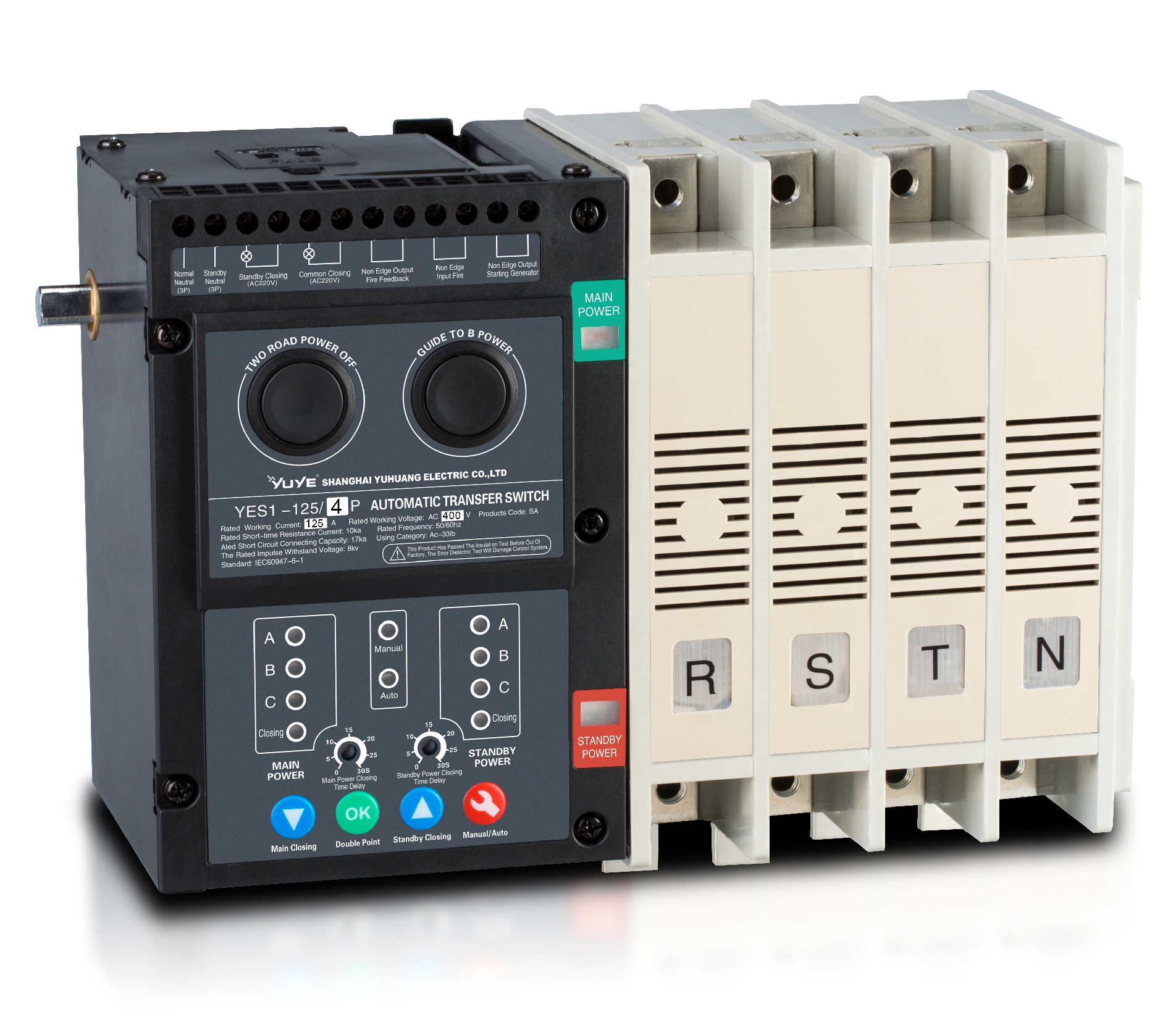 Solenoid-type ATS YES1-63~630SA
 Solenoid-type ATS YES1-63~630L/LA
 Solenoid-type ATS YES1-63~630LA3
 Solenoid-type ATS YES1-63MA
 PC ATS YES1-630~1600M
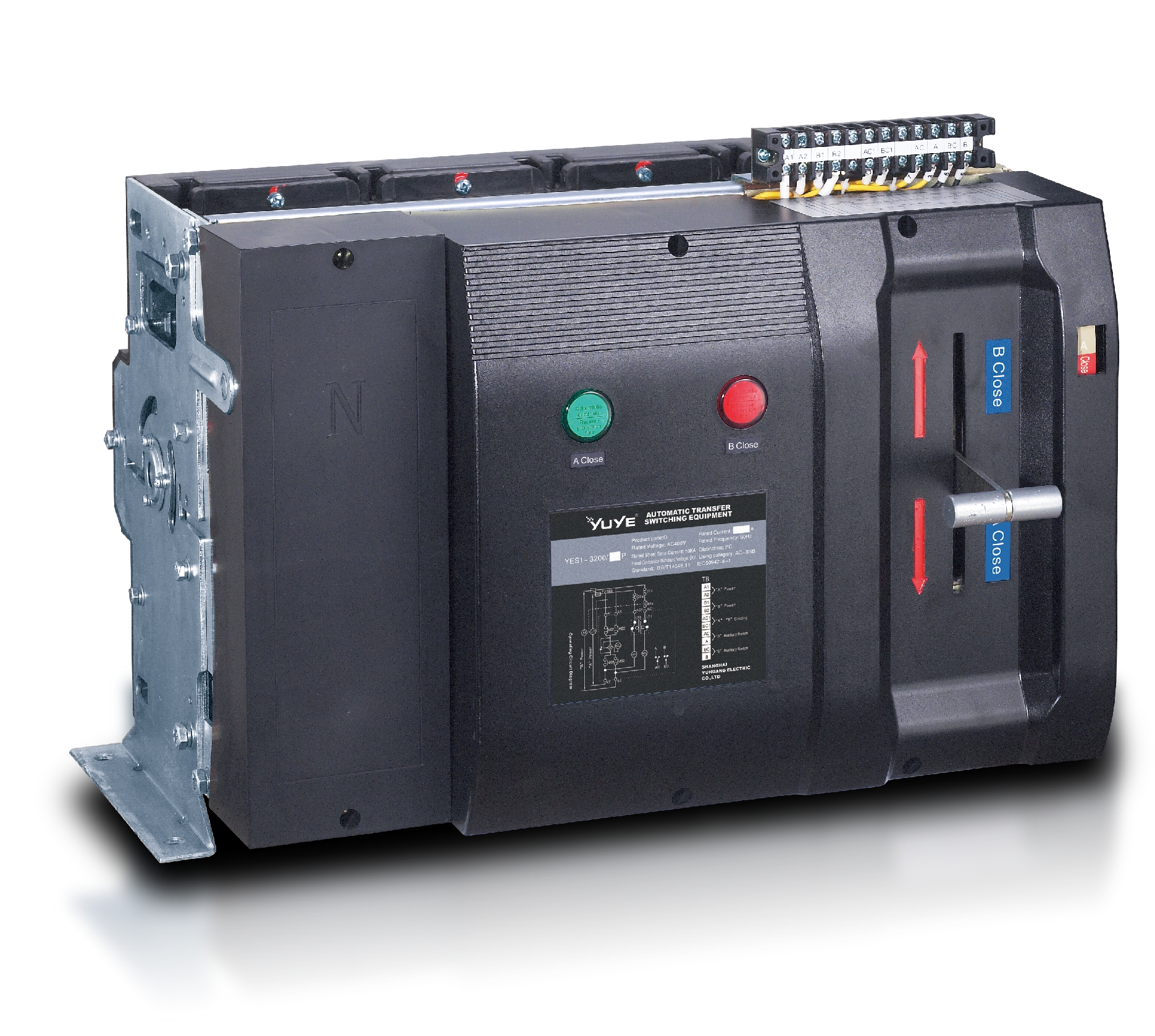 PC ATS YES1-3200Q
 Solenoid-type ATS YES1-4000~6300Q
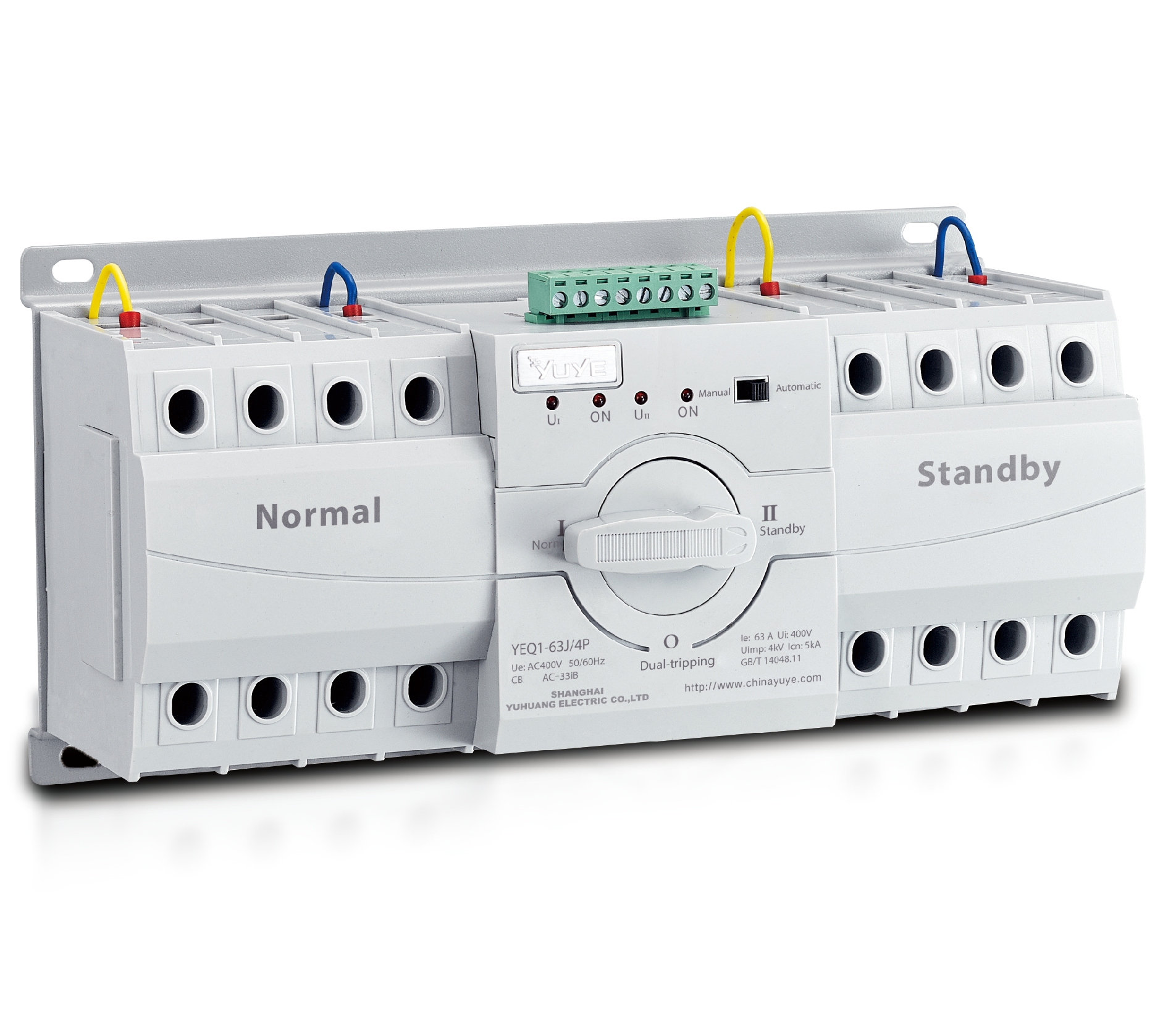 CB ATS YEQ1-63J
 CB ATS YEQ2Y-63
 CB ATS YEQ3-63W1
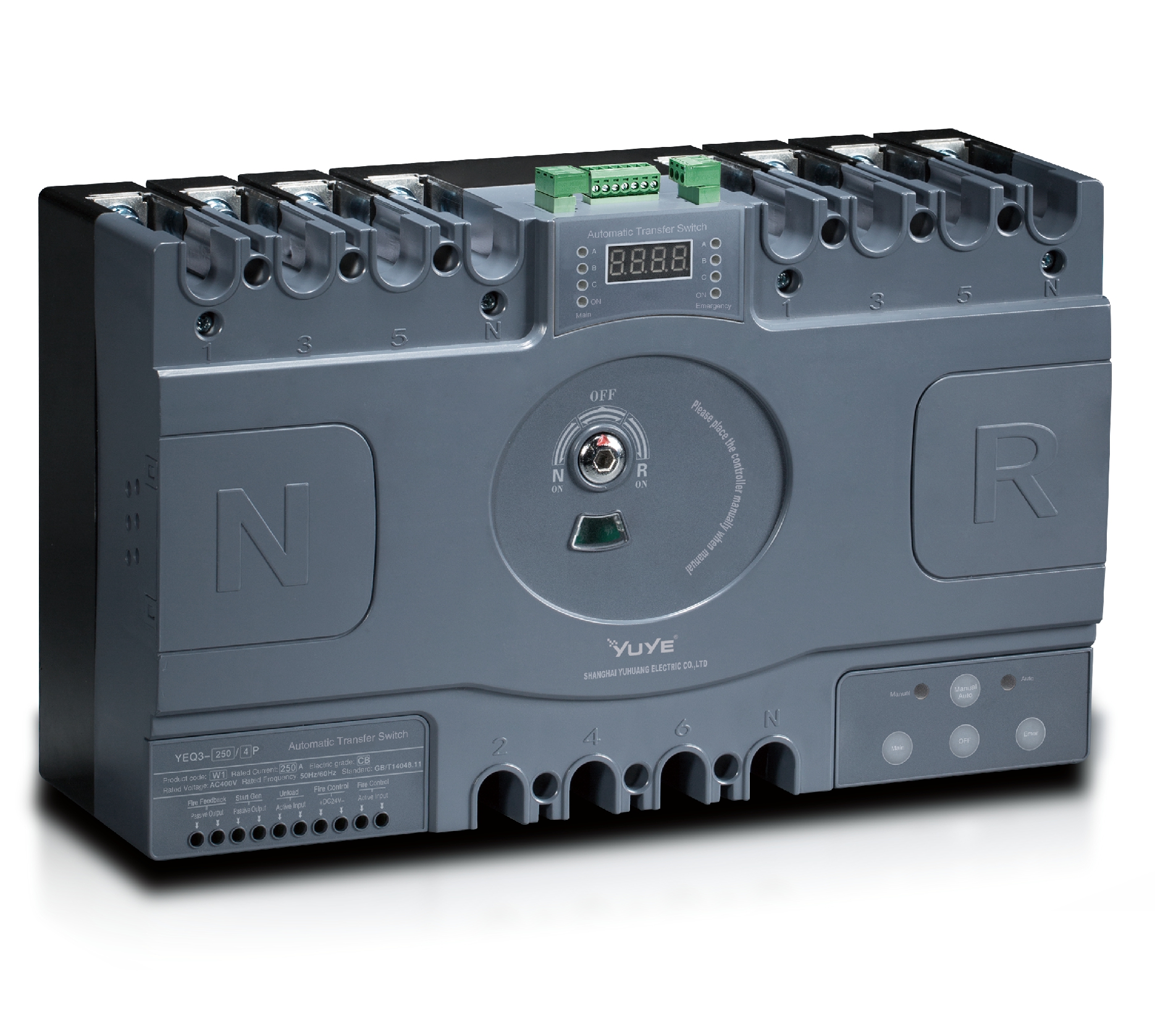 CB ATS YEQ3-125~630W1
 ATS controller Y-700
 ATS Controller Y-700N
 ATS Controller Y-701B
 ATS Controller Y-703N
 ATS Controller Y-800
 ATS Controller W2/W3 Series
 ATS switch Cabinet floor-to-ceiling
 ATS switch cabinet
 JXF-225A power Cbinet
 JXF-800A power Cbinet
 YEM3-125~800 Plastic Shell Type MCCB
 YEM3L-125~630 Leakage Type MCCB
 YEM3Z-125~800 Adjustable Type MCCB
 YEM1-63~1250 Plastic Shell Type MCCB
 YEM1E-100~800 Electronic Type MCCB
 YEM1L-100~630 Leakage Type MCCB
 Air Circuit Breaker YEW1-2000~6300
 Air Circuit Breaker YEW3-1600
 Miniature circuit breaker YEMA2-6~100
 Miniature circuit breaker YEB1-3~63
 Miniature circuit breaker YEB1LE-3~63
 Miniature circuit breaker YEPN-3~32
 Miniature circuit breaker YEPNLE-3~32
 Miniature circuit breaker YENC-63~125
 Load isolation switch YGL-63~3150
 Load Isolation Switch YGL2-63~3150
 DC relay YDC-P20
 DC relay YDC-P250
 DC relay YDC-P400
 DC relay MDC-300M
 DC relay YDC-M400
 DC Isolation Switch YEGL3D-630
 YECPS2-45~125 LCD
 YECPS-45~125 Digital
 CNC Milling/Turning-OEM


