
 PC ATS YECT1-2000G
 PC ATS YES2-63~250GN1
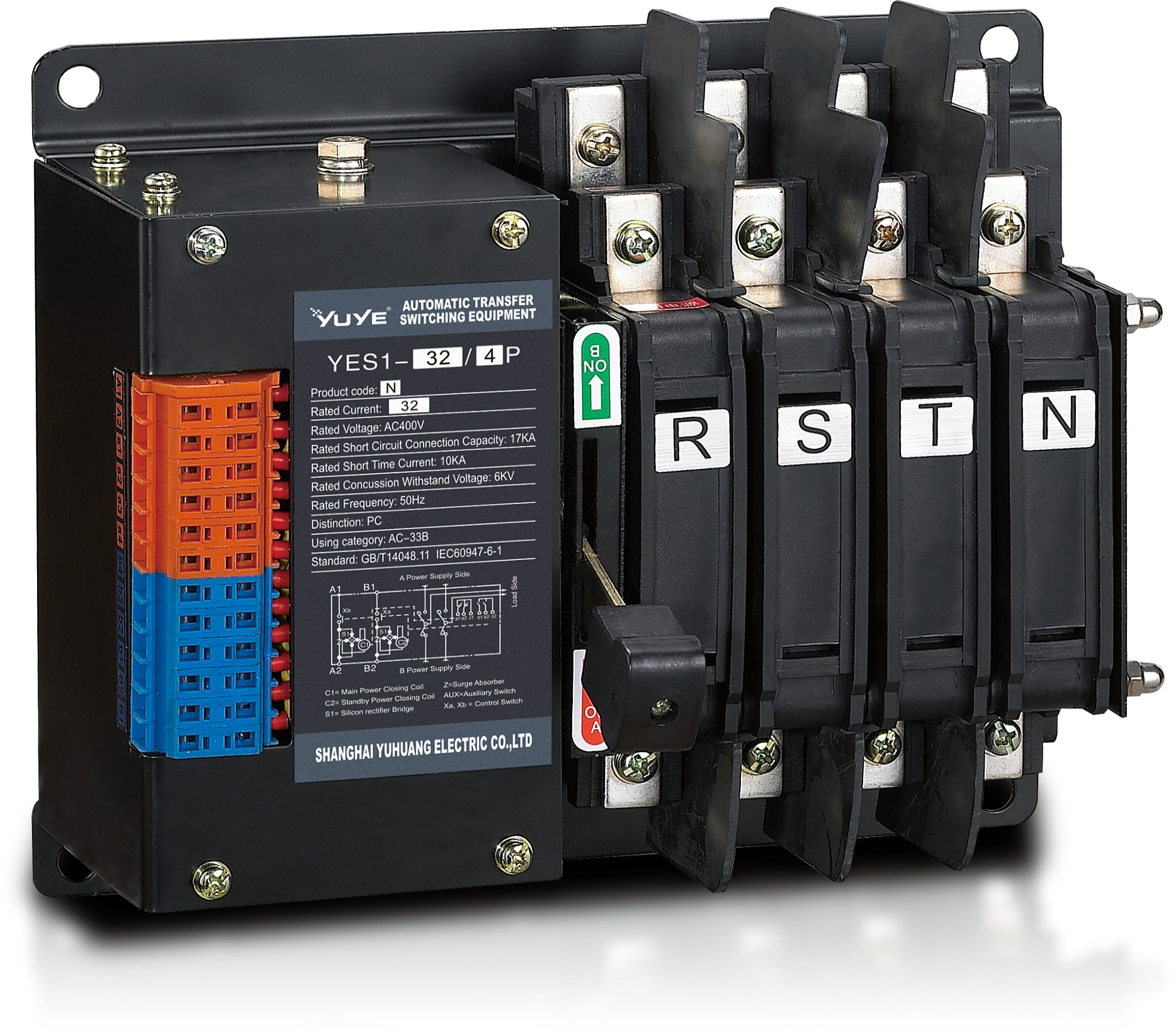 Solenoid-type ATS YES1-32~125N
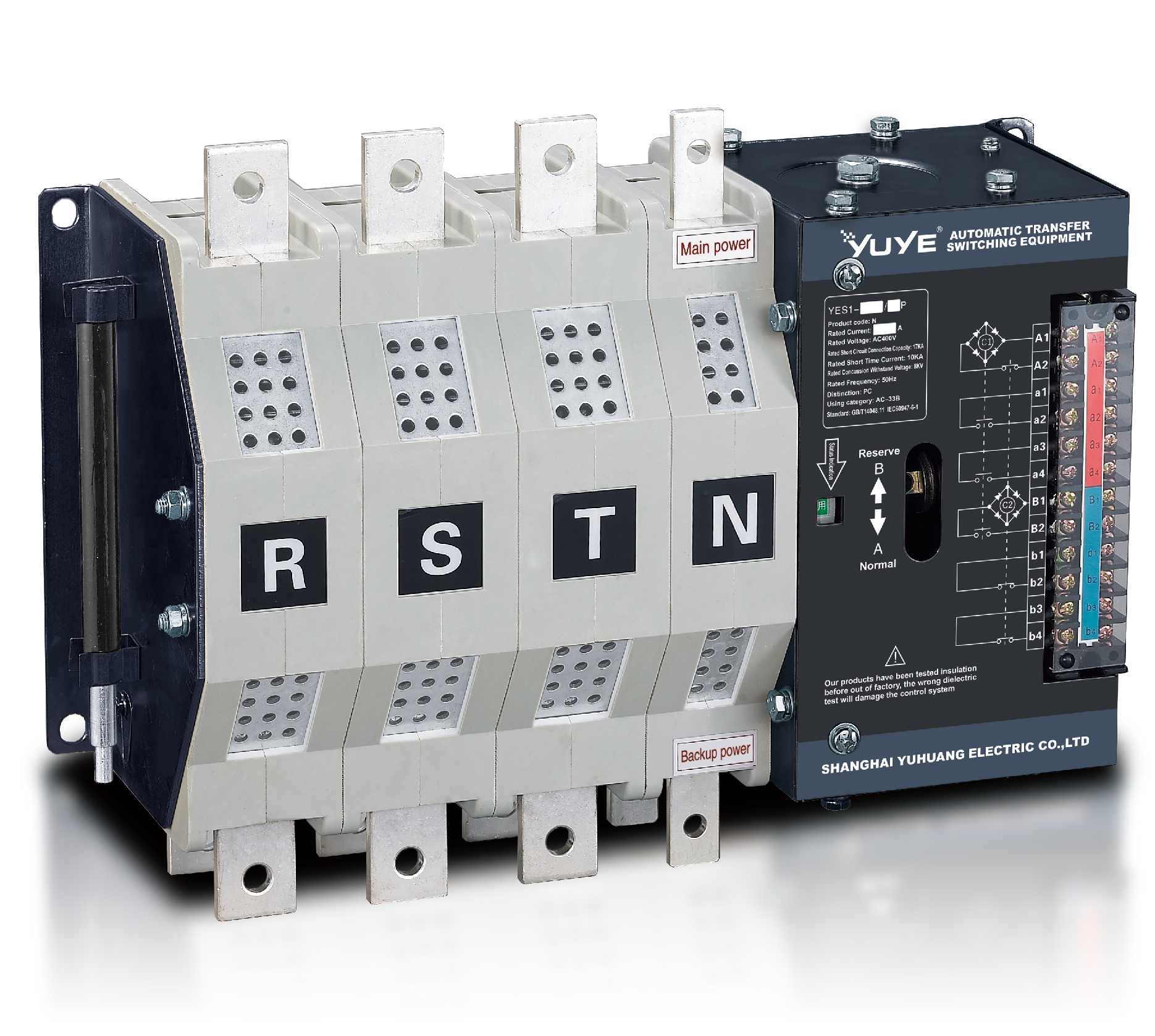 Solenoid-type ATS YES1-250~630N/NT
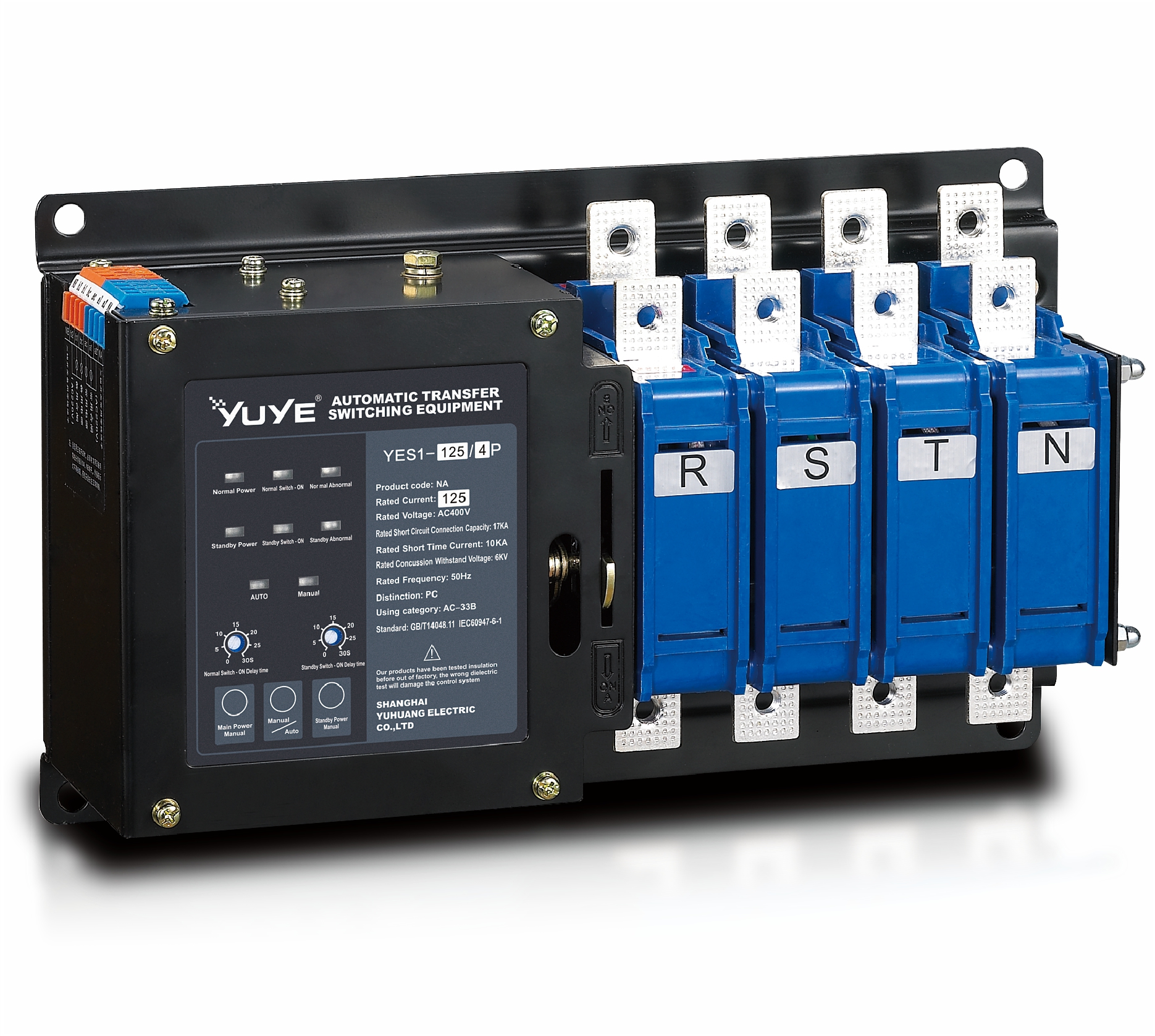 Solenoid-type ATS YES1-32~125NA
 Solenoid-type ATS YES1-63~630SN
 Solenoid-type ATS YES1-1250~4000SN
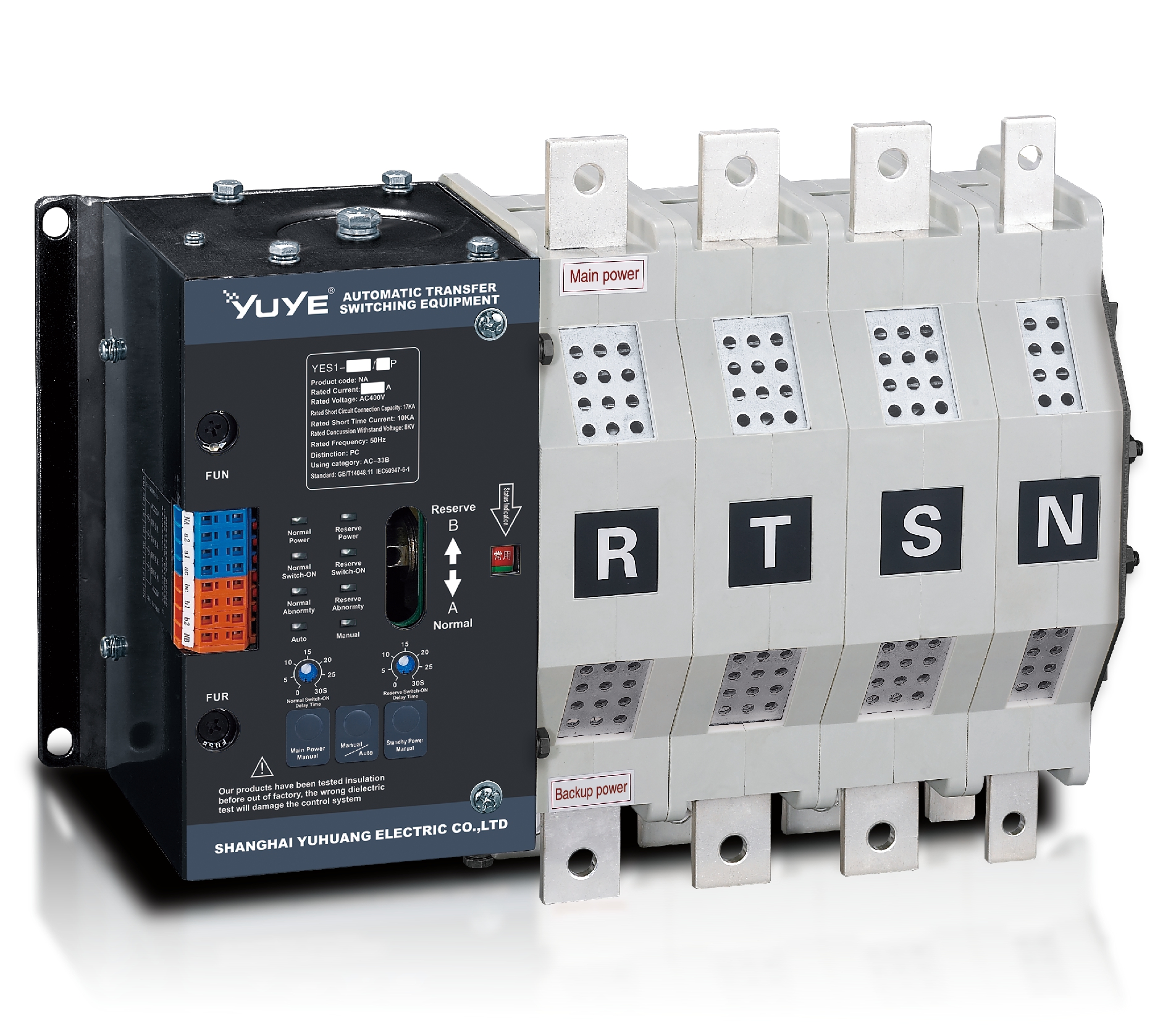 Solenoid-type ATS YES1-250~630NA/NAT
 Solenoid-type ATS YES1-63NJT
 PC ATS YES1-100~1600GN1/GN/GNF
 PC ATS YES1-2000~3200GN/GNF
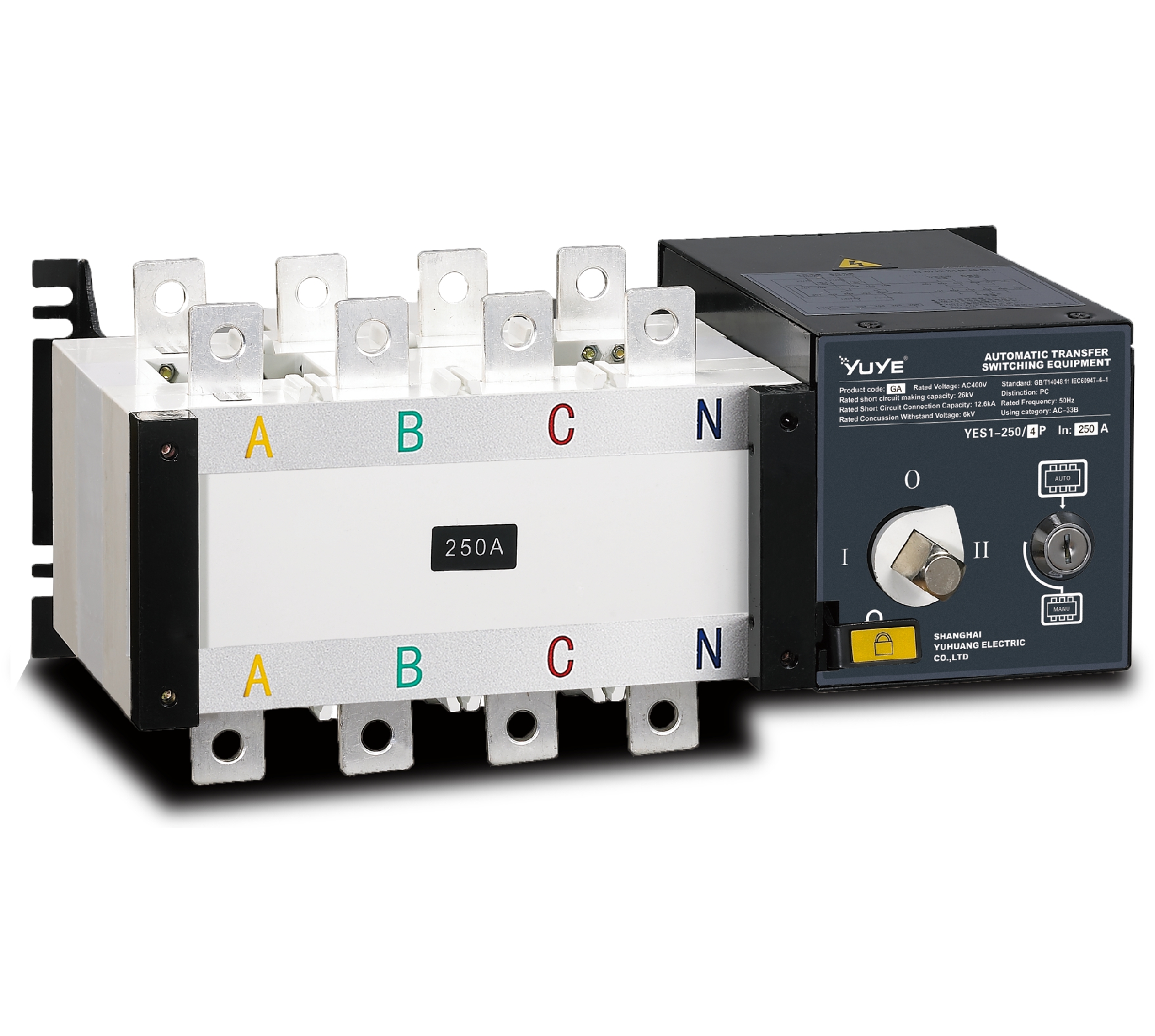 PC ATS YES1-100~3200GA1/GA
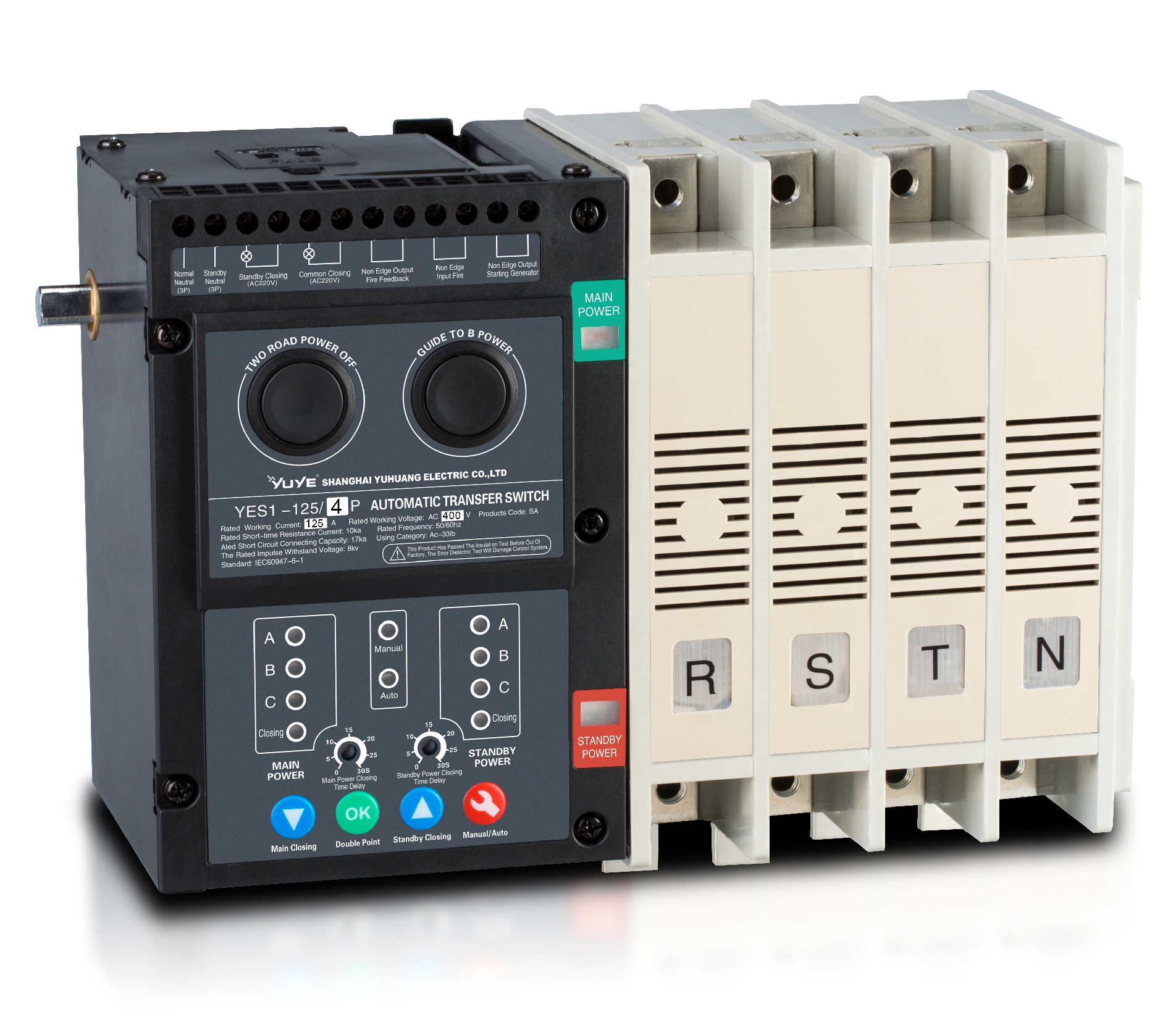 Solenoid-type ATS YES1-63~630SA
 Solenoid-type ATS YES1-63~630L/LA
 Solenoid-type ATS YES1-63~630LA3
 Solenoid-type ATS YES1-63MA
 PC ATS YES1-630~1600M
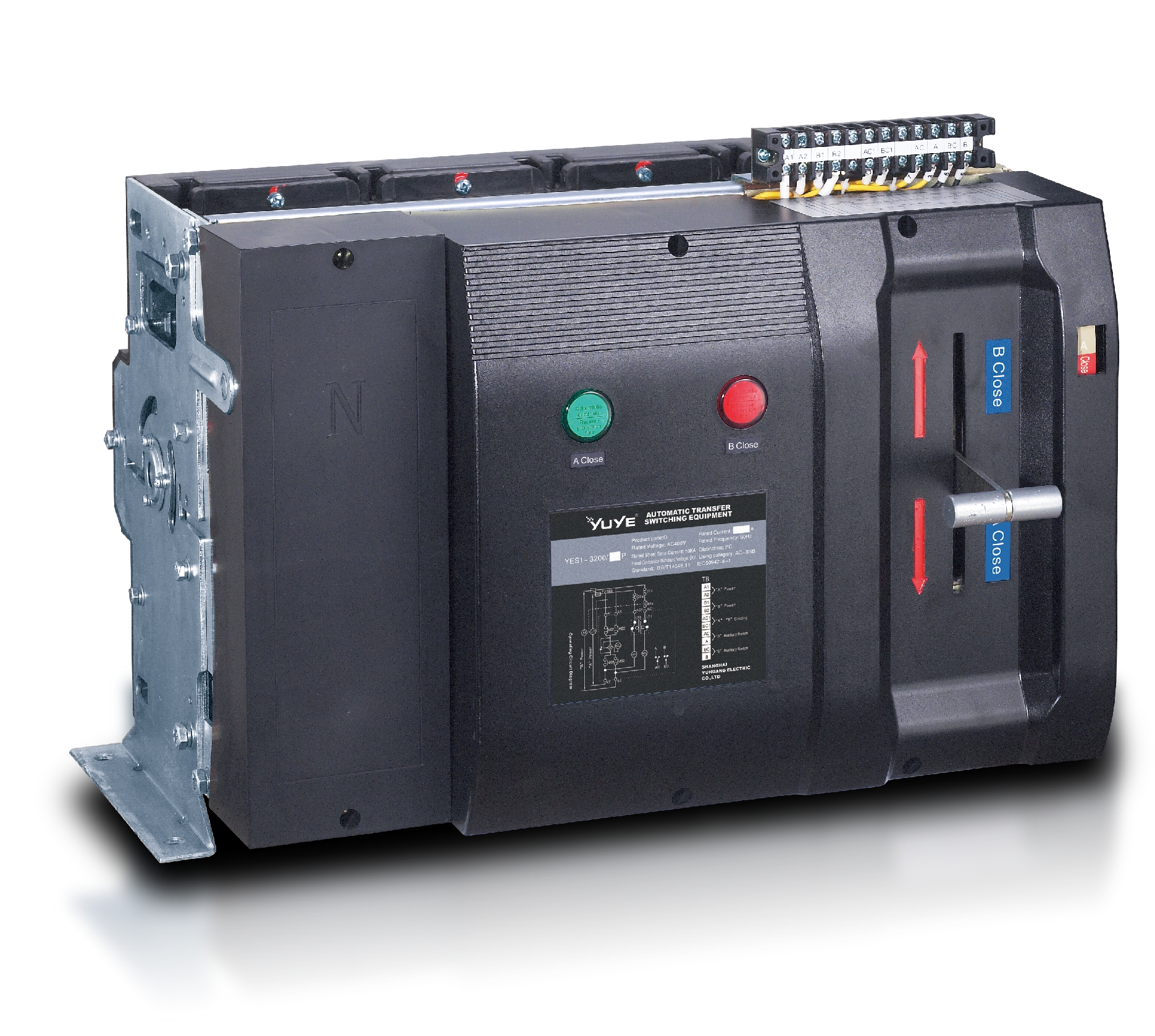 PC ATS YES1-3200Q
 Solenoid-type ATS YES1-4000~6300Q
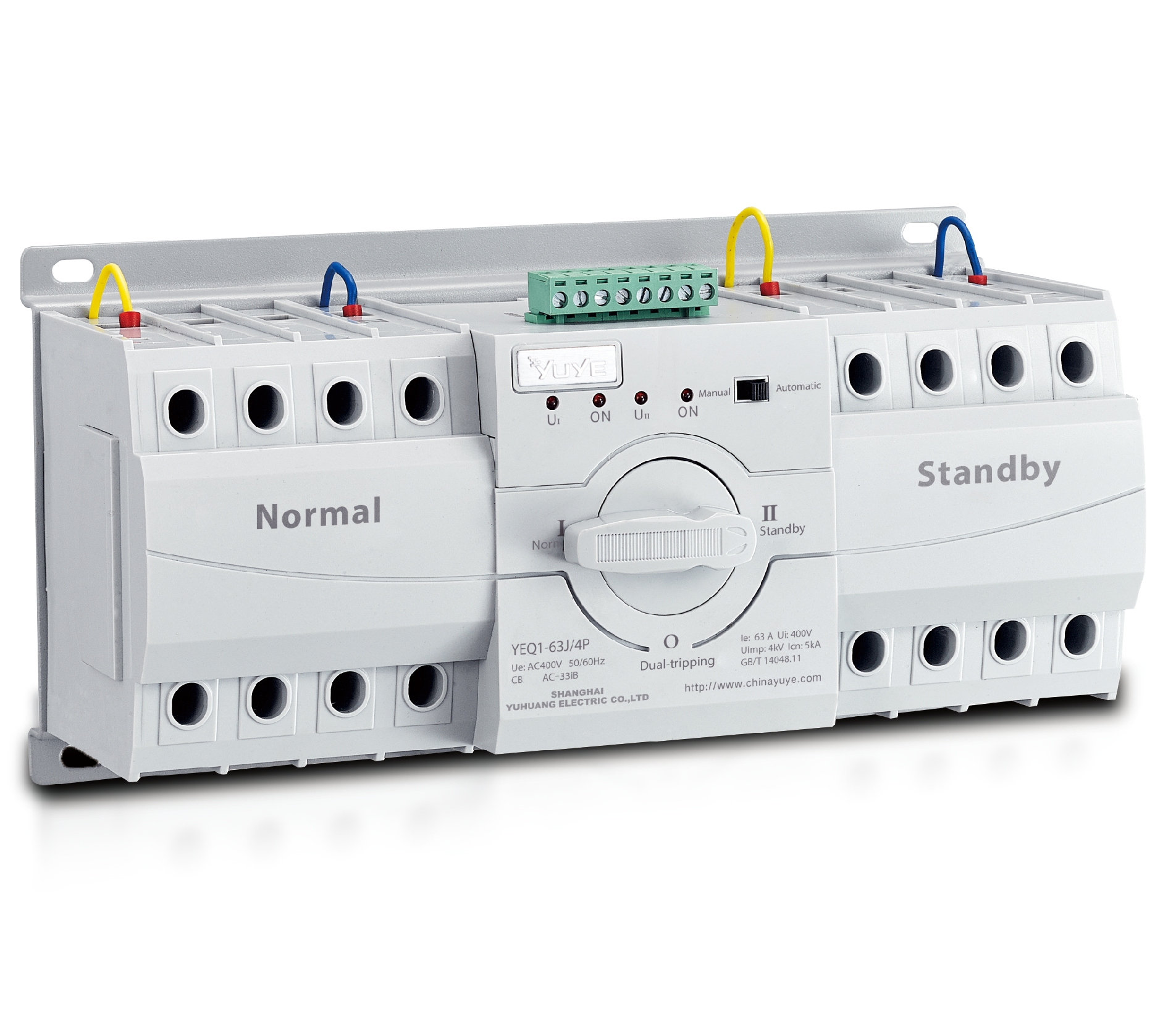 CB ATS YEQ1-63J
 CB ATS YEQ2Y-63
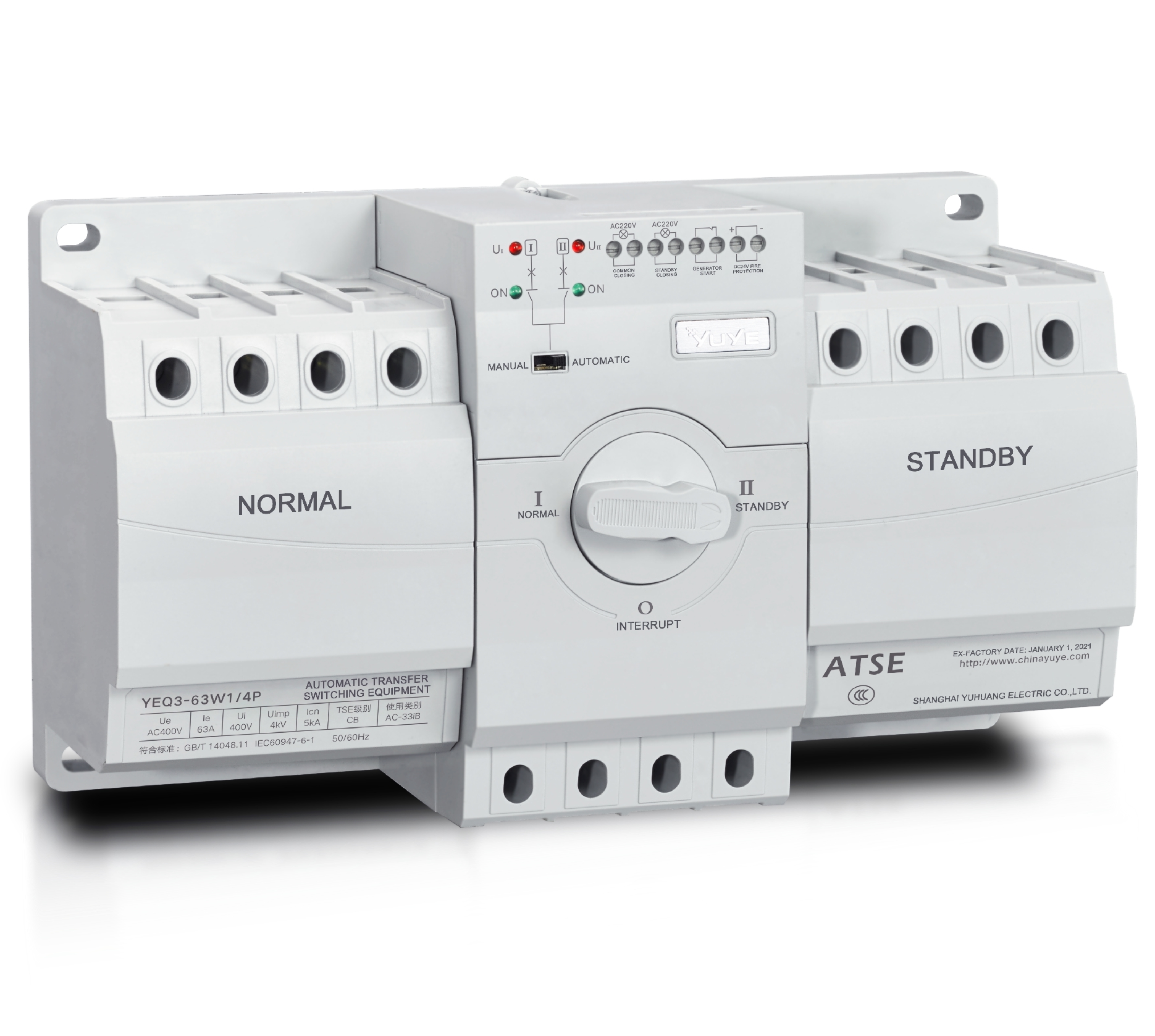 CB ATS YEQ3-63W1
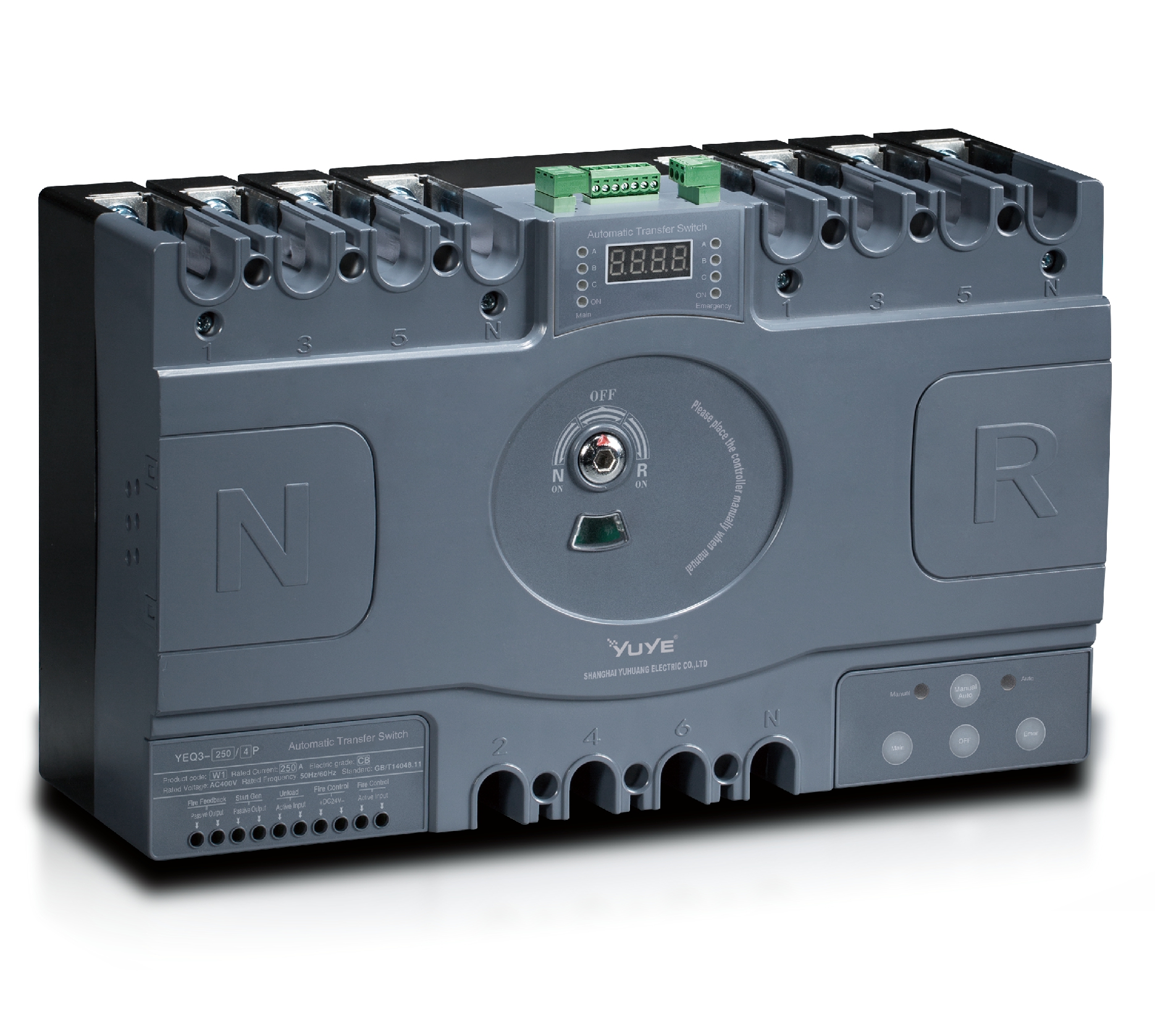 CB ATS YEQ3-125~630W1
 ATS controller Y-700
 ATS Controller Y-700N
 ATS Controller Y-701B
 ATS Controller Y-703N
 ATS Controller Y-800
 ATS Controller W2/W3 Series
 ATS switch Cabinet floor-to-ceiling
 ATS switch cabinet
 JXF-225A power Cbinet
 JXF-800A power Cbinet
 YEM3-125~800 Plastic Shell Type MCCB
 YEM3L-125~630 Leakage Type MCCB
 YEM3Z-125~800 Adjustable Type MCCB
 YEM1-63~1250 Plastic Shell Type MCCB
 YEM1E-100~800 Electronic Type MCCB
 YEM1L-100~630 Leakage Type MCCB
 Air Circuit Breaker YEW1-2000~6300
 Air Circuit Breaker YEW3-1600
 Miniature circuit breaker YEMA2-6~100
 Miniature circuit breaker YEB1-3~63
 Miniature circuit breaker YEB1LE-3~63
 Miniature circuit breaker YEPN-3~32
 Miniature circuit breaker YEPNLE-3~32
 Miniature circuit breaker YENC-63~125
 Load isolation switch YGL-63~3150
 Load Isolation Switch YGL2-63~3150
 DC relay YDC-P20
 DC relay YDC-P250
 DC relay YDC-P400
 DC relay MDC-300M
 DC relay YDC-M400
 DC Isolation Switch YEGL3D-630
 YECPS2-45~125 LCD
 YECPS-45~125 Digital
 CNC Milling/Turning-OEM
Meta‑description
Automatic Transfer Switch (ATS) practical guide: PC‑type vs CB‑type selection, load‑based sizing, installation safety notes. Understand ATS is not UPS; design IT & medical loads per permissible break time. Follow IEC 60947‑6‑1 and manufacturer specifications.
Article opening abstract
This field‑oriented guide covers automatic transfer switch (ATS) working principles, type classification, specification selection, installation and safety best practices. Important clarification: an ATS performs power source switching and creates momentary break during transfer; it is not equivalent to a UPS which delivers true uninterrupted power. Mission‑critical IT and medical loads shall be engineered against their maximum permissible power‑interruption duration. Sizing and maintenance shall follow real‑world load calculation and OEM requirements instead of generic fixed rules. Reference standard: IEC 60947‑6‑1.
If you’ve managed power systems long enough, you know outages always strike at the worst time. Some sites cannot afford to go dark at all. That’s why many contractors build dual‑power supply schemes, and Electrical Switch ATS is the hardware that makes this backup concept functional. This is not polished sales copy. It’s the kind of notes I share with installers who ask me what to watch out for on ATS jobs.
1.What Is an Electrical Switch ATS and How Does It Work
An Electrical Switch ATS is an electromechanical switch built for dual power circuits. It bridges two separate power feeds. Usually, one feed is utility grid power, the other comes from a generator or battery storage bank. Its job is to send power to your loads safely.
Critical note: ATS is NOT equivalent to UPS. An ATS creates a brief power break during source transition. It cannot deliver zero‑break power like a UPS unit. For IT infrastructure and medical loads, system design must be carried out according to each load’s permissible power‑interruption time, to confirm whether an ATS‑only scheme is sufficient or additional UPS equipment is required.
There’s a controller inside that keeps checking the two incoming lines. Voltage, frequency, phase — all these readings get sampled nonstop. When mains power drops, the controller won’t flip immediately. Have you ever seen tiny voltage dips that last less than a second? Those are not real outages. The delay setting filters these false triggers out. Only after confirming a real blackout does the ATS act. It opens the main circuit first. Then it closes the backup circuit. This break‑before‑make rule is not optional. Skip it, and you get backfeed, which is extremely dangerous. When grid power comes back and stays stable for a while, the ATS transfers loads back again. It then goes back to monitoring mode. Mechanical and electrical interlocks are fitted, so both sides cannot close together. That’s a hard safety lock.
2.Key Benefits of Installing an Automatic Transfer Switch for Dual Power
Let’s talk about real advantages instead of marketing buzzwords. The biggest one is unattended operation. Think of remote sites: telecom cabinets, cold storage yards, off‑grid solar farms. You can’t send someone rushing over every time the power cuts out. ATS handles the transfer without human input.
It also protects your equipment. Abrupt power loss and messy reconnection can wreck servers, sensitive lab gear and industrial motors. A properly tuned ATS makes the handover smoother. For solar plus generator hybrid builds, it helps you get more use out of your renewable setup. It switches between solar output and generator power as conditions change. Safety is another big plus. No more live generator hookups during blackouts, a task that used to put electricians at risk.
3.Main Types of Electrical Switch ATS for Industrial and Residential Applications
Most people will run into two main categories: PC‑type and CB‑type ATS. PC‑type units only do switching. They can survive short‑circuit current, but they cannot clear faults by themselves. That means upstream breakers or fuses are mandatory. They are small, affordable and common for home backup, small shops and solar combiner boxes.
CB‑type ATS builds molded case breakers into the unit itself. It can switch power and provide overcurrent and short‑circuit protection in one package. Industrial sites, hospital backup circuits and small data centers often pick this variant because fault protection is built in.
You also have automatic and semi‑automatic versions. Semi‑automatic ATS needs a person to approve the switch. Factories sometimes prefer this, where operators want to stay in control of power sources. Home projects usually pair ATS with portable generators. Larger industrial panels connect to fixed gensets and grid‑tied solar backup arrays.
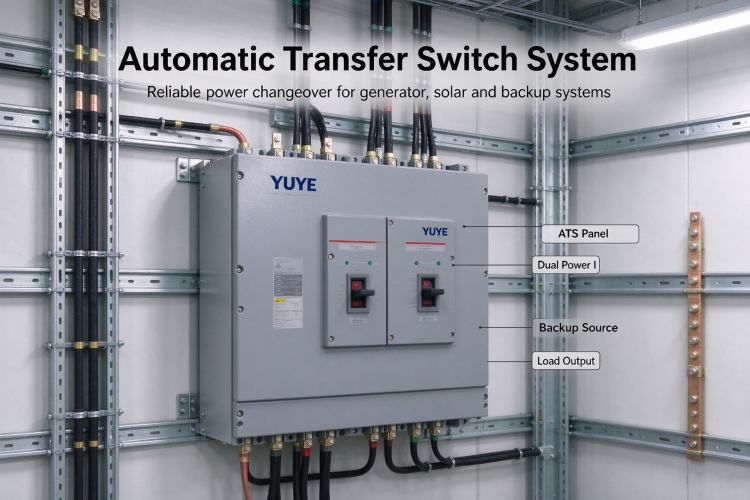
4.Critical Specifications to Check When Choosing a Reliable ATS Unit
Rated current is where you start. Do not rely on generic fixed percentage margin rules. Calculate the actual load profile including motor inrush current and cabinet thermal derating effects, then determine the appropriate ATS rated current based on your computed load result. Rated voltage must match local standards, like 230V single‑phase or 400V three‑phase.
Transfer time is easy to overlook, but it matters a lot. IT and medical equipment need very fast switching; evaluate if the ATS transfer gap falls within load‑tolerable interruption limits. Large water pumps? You can set a longer delay, so they don’t cycle on and off nonstop. Short‑circuit withstand rating tells you if the switch can hold up during a fault before upstream protection trips. Other things to check: pole count (2P,3P,4P), protection features, generator control terminal compatibility and remote monitoring ports. Always cross‑check specs against IEC 60947‑6‑1 or local electrical codes before ordering. I’ve seen projects delayed because this step was skipped.
5.Common Installation and Safety Tips for Dual Power ATS Systems
Only a licensed electrician should install and commission this gear. Before touching any wiring, lock out both power sources and confirm zero voltage with a multimeter. Never assume the lines are dead.Mount the ATS cabinet vertically in dry, ventilated space. Keep it away from corrosive vapors and heavy machine vibration. The enclosure and frame must be properly grounded to avoid leakage risks.After wiring is complete, run a full test sequence: automatic transfer, manual transfer, retransfer and fault alarm tests. Adjust delay timers to match how fast your generator can crank up.
Maintenance guidance: Do not apply universal fixed‑interval maintenance rules. Inspection cycle, terminal‑torque retightening requirements and component wear‑check items shall strictly comply with the product manufacturer’s official operation & maintenance documentation.
If you see overheating, weird buzzing or wrong indicator lights? Kill both power feeds right away and troubleshoot. Never remove or bypass the interlock just to switch faster. That shortcut can get someone hurt.Closing When building a dependable dual power backup system, selecting an appropriately sized, correctly rated Electrical Switch ATS creates a vital safety buffer between power sources and your valuable loads. Whether you are upgrading a commercial backup system or designing a solar‑generator hybrid setup, matching ATS style and parameters to your actual load profile is the core rule. Reach out to our team if you need custom ATS configuration and technical support for your project.
Article Source
This guide draws content from low‑voltage switchgear technical manuals, IEC 60947‑6‑1 international standard, industry ATS selection whitepapers and on‑site dual power distribution installation notes. All operational guidance follows common global electrical installation practices for transfer switches. For maintenance parameters, always prioritize the original equipment manufacturer’s published documentation.
FAQ
Q: Can I install ATS by myself?
A: Honestly, I would not recommend it. ATS connects directly to mains and backup power. Bad wiring causes backfeed, shorts and electric shock hazards. Most local codes require a licensed electrician to sign off on installation and testing.
Q: What’s the practical difference between PC‑class and CB‑class ATS? A: PC‑class ATS only switches power; it relies on upstream breakers for fault protection. CB‑class has built‑in MCCB protection and short‑circuit breaking capacity. It’s the go‑to option for critical industrial loads.
Q: Will a standard ATS shield my devices from lightning surges?
A: No. Basic ATS does not include surge protection. If lightning is common at your location, add separate SPD devices on the incoming lines alongside the ATS.
Q: Does the ATS automatically switch back to grid power once power returns?
A: Most models do, after a preset stable delay. You can also lock it into manual retransfer mode, which some industrial sites use so an operator approves the switch back.
Q: Can one ATS work with two power sources at different voltage levels?
A: I’d avoid this setup. The controller compares voltage signals from both sides to judge power health. Mismatched voltages break its logic. If you really need to do this, fit transformers to match voltage before the ATS.
