
 PC ATS YECT1-2000G
 PC ATS YES2-63~250GN1
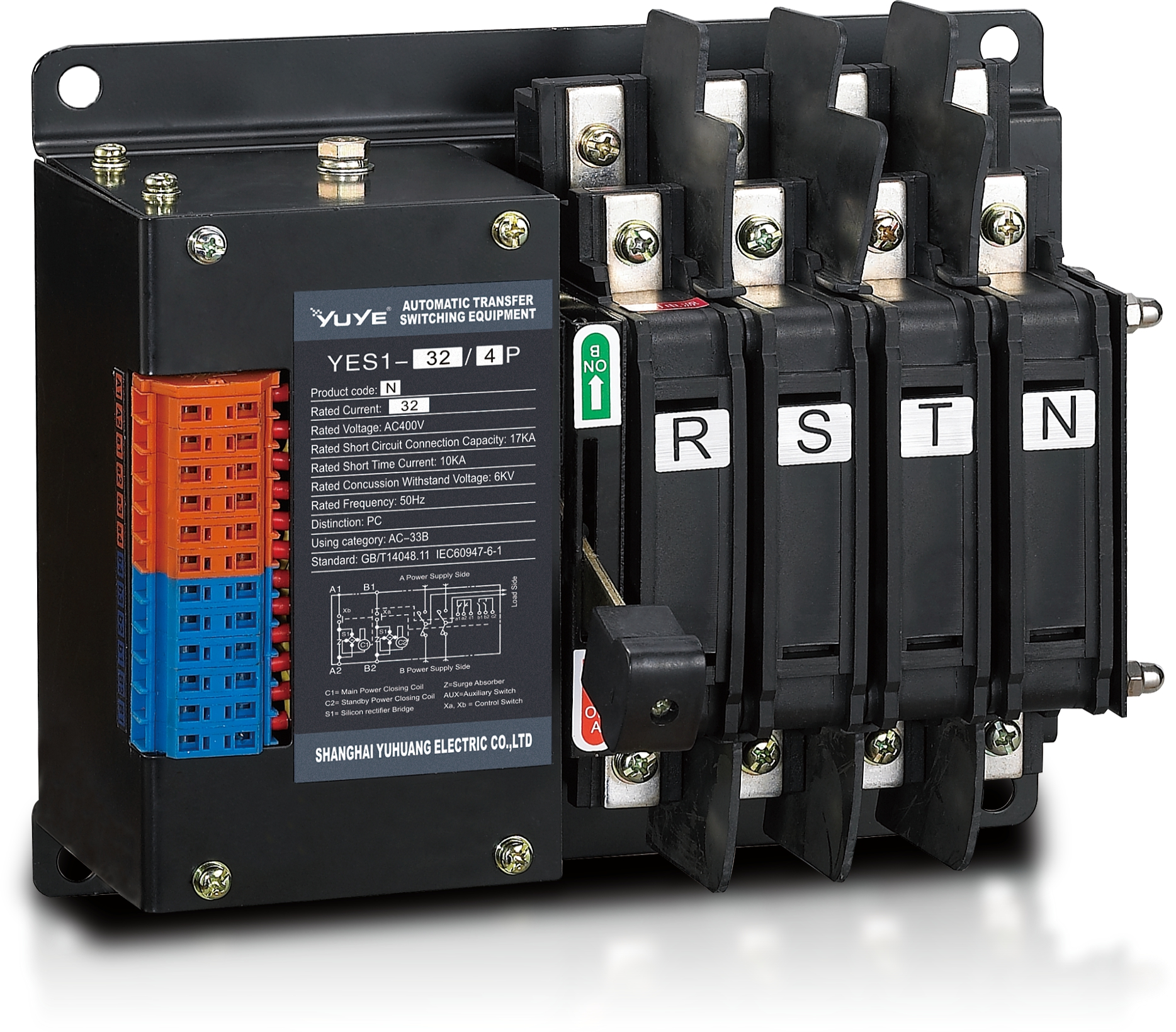 Solenoid-type ATS YES1-32~125N
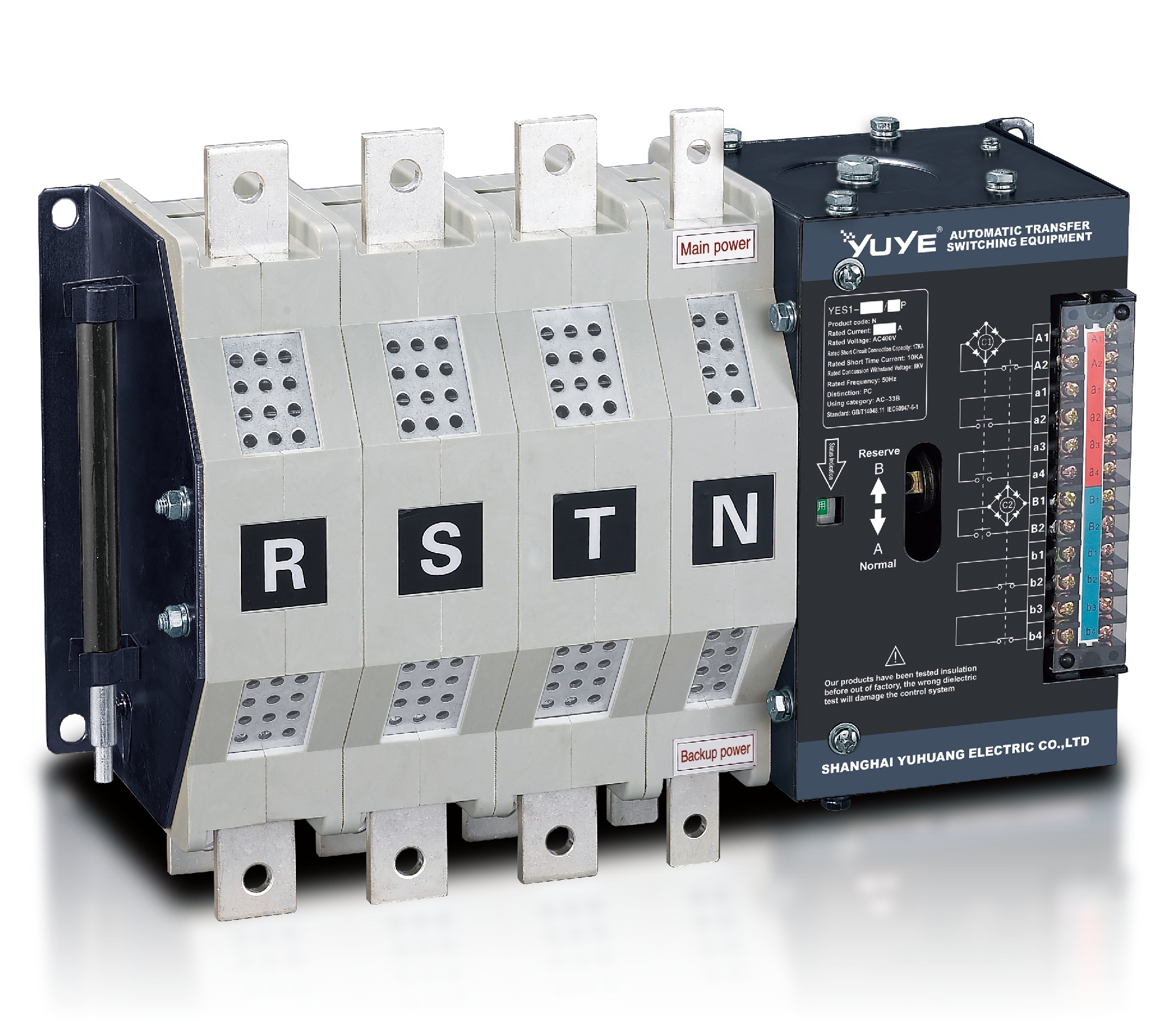 Solenoid-type ATS YES1-250~630N/NT
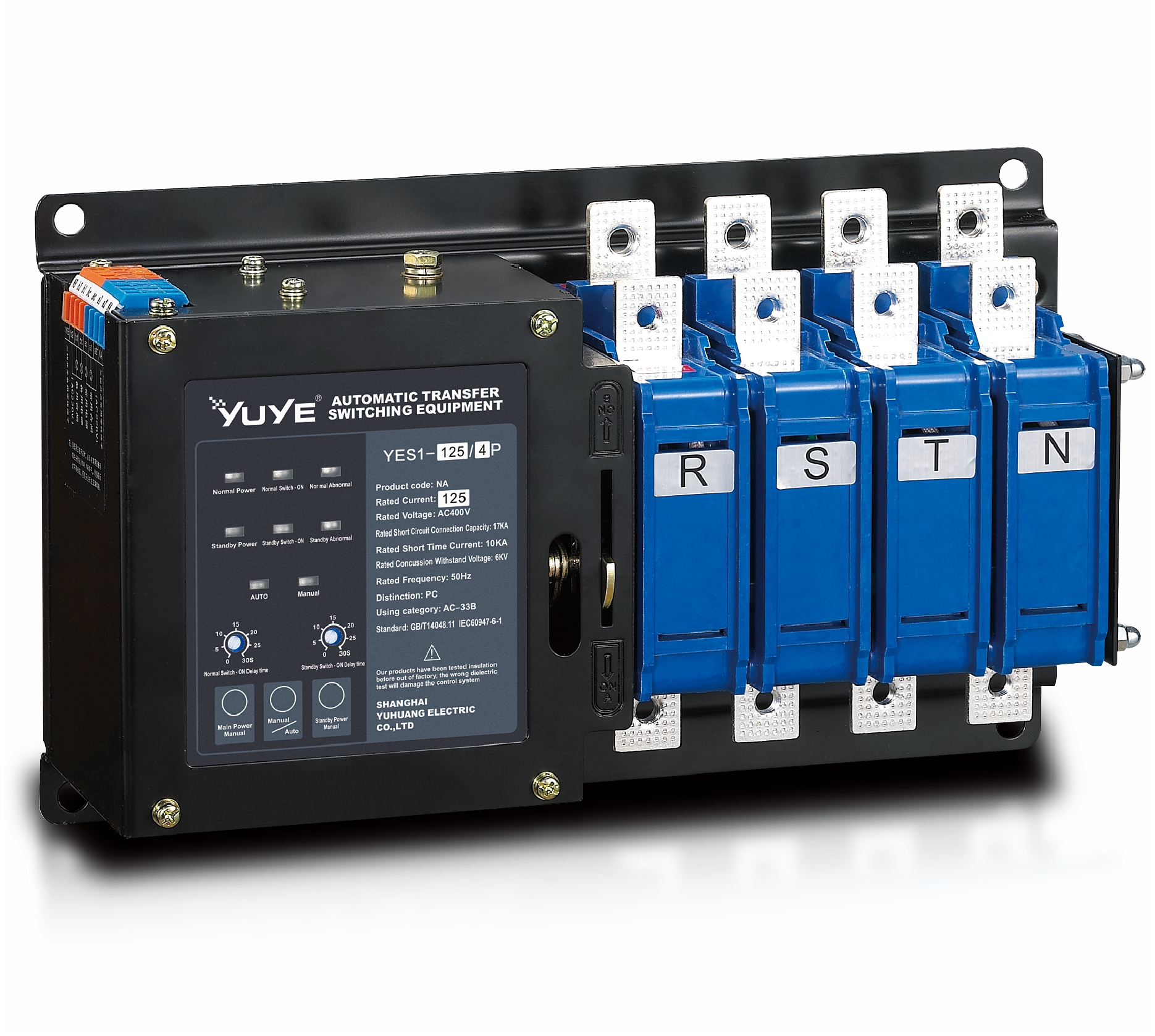 Solenoid-type ATS YES1-32~125NA
 Solenoid-type ATS YES1-63~630SN
 Solenoid-type ATS YES1-1250~4000SN
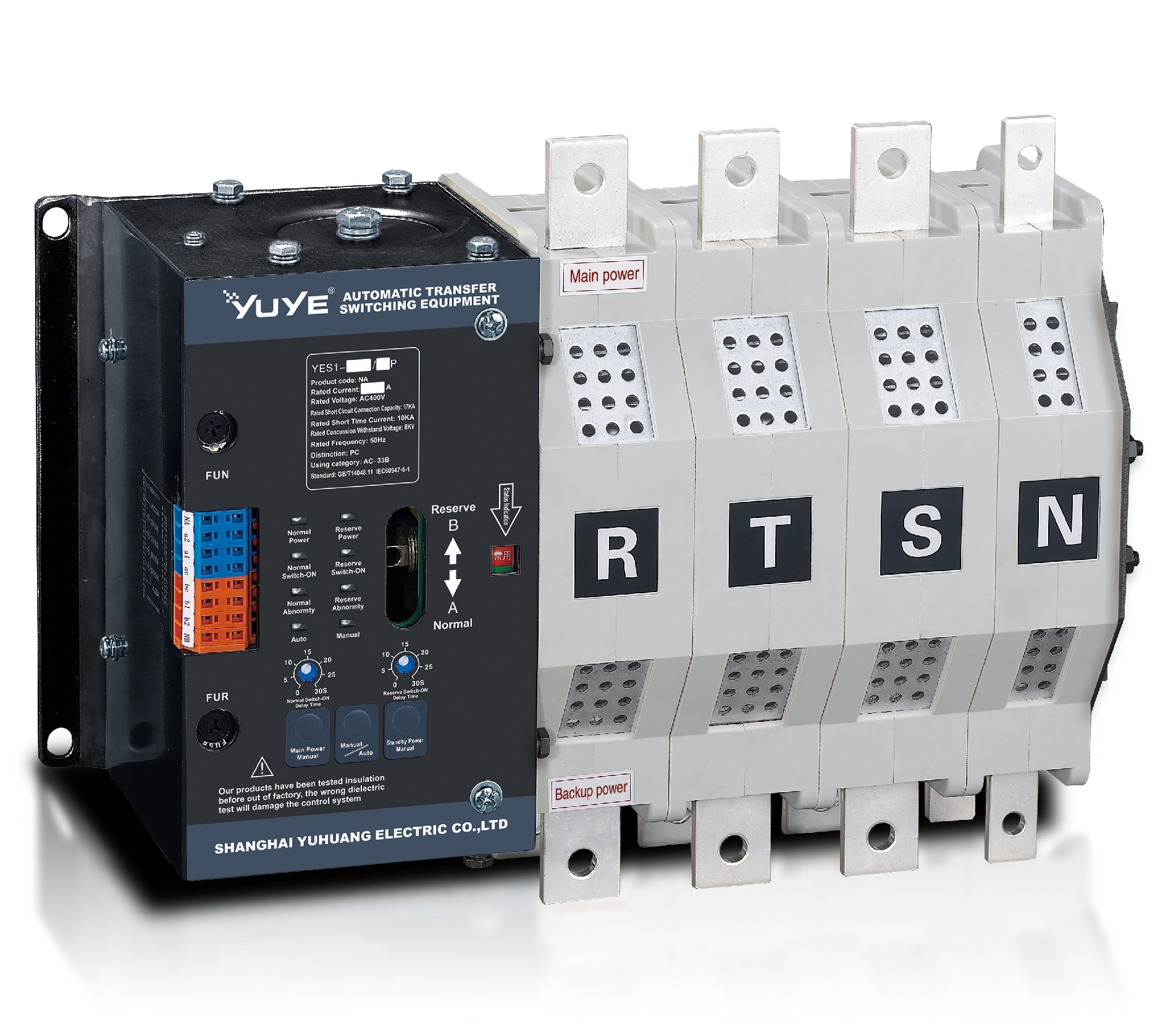 Solenoid-type ATS YES1-250~630NA/NAT
 Solenoid-type ATS YES1-63NJT
 PC ATS YES1-100~1600GN1/GN/GNF
 PC ATS YES1-2000~3200GN/GNF
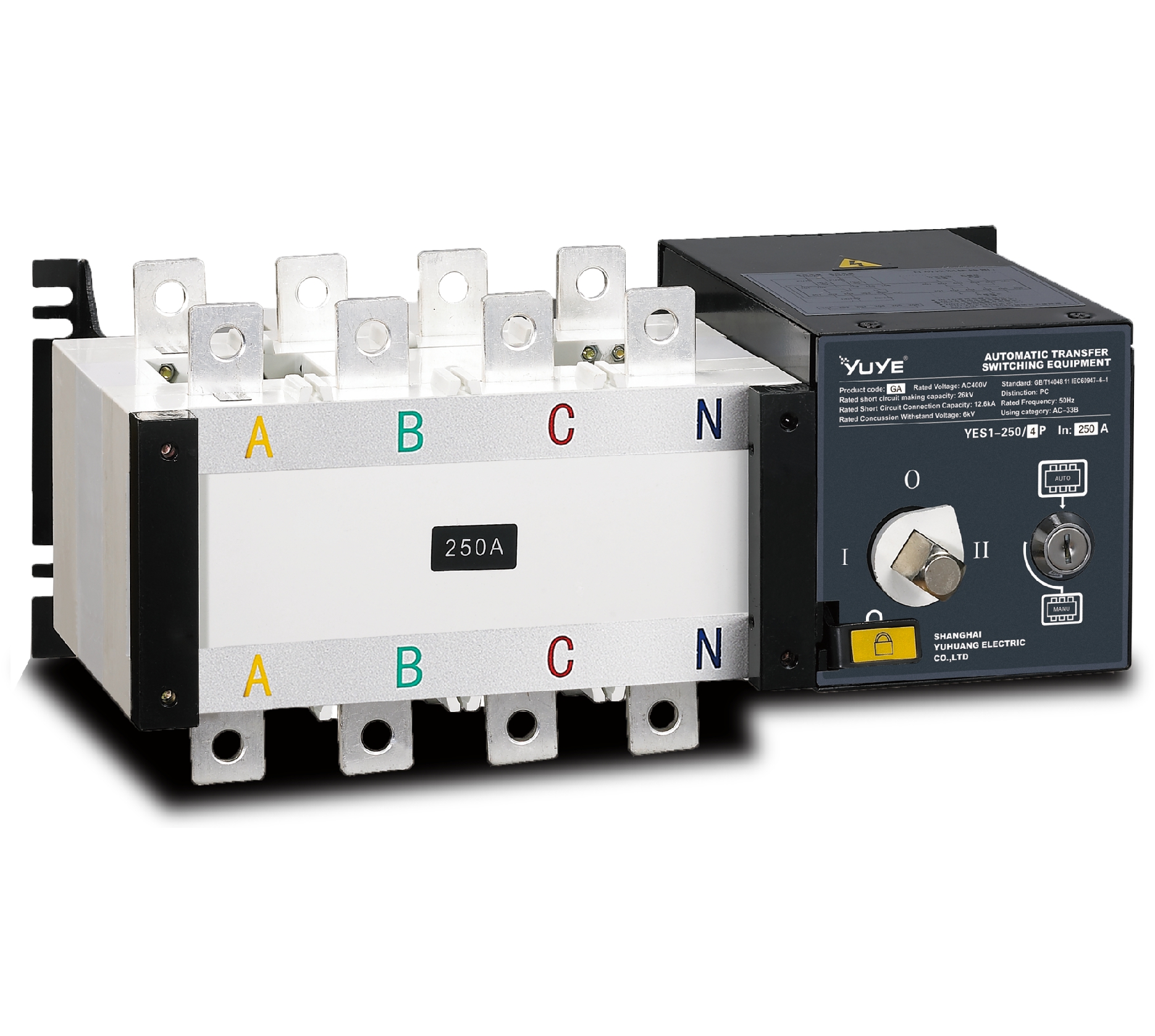 PC ATS YES1-100~3200GA1/GA
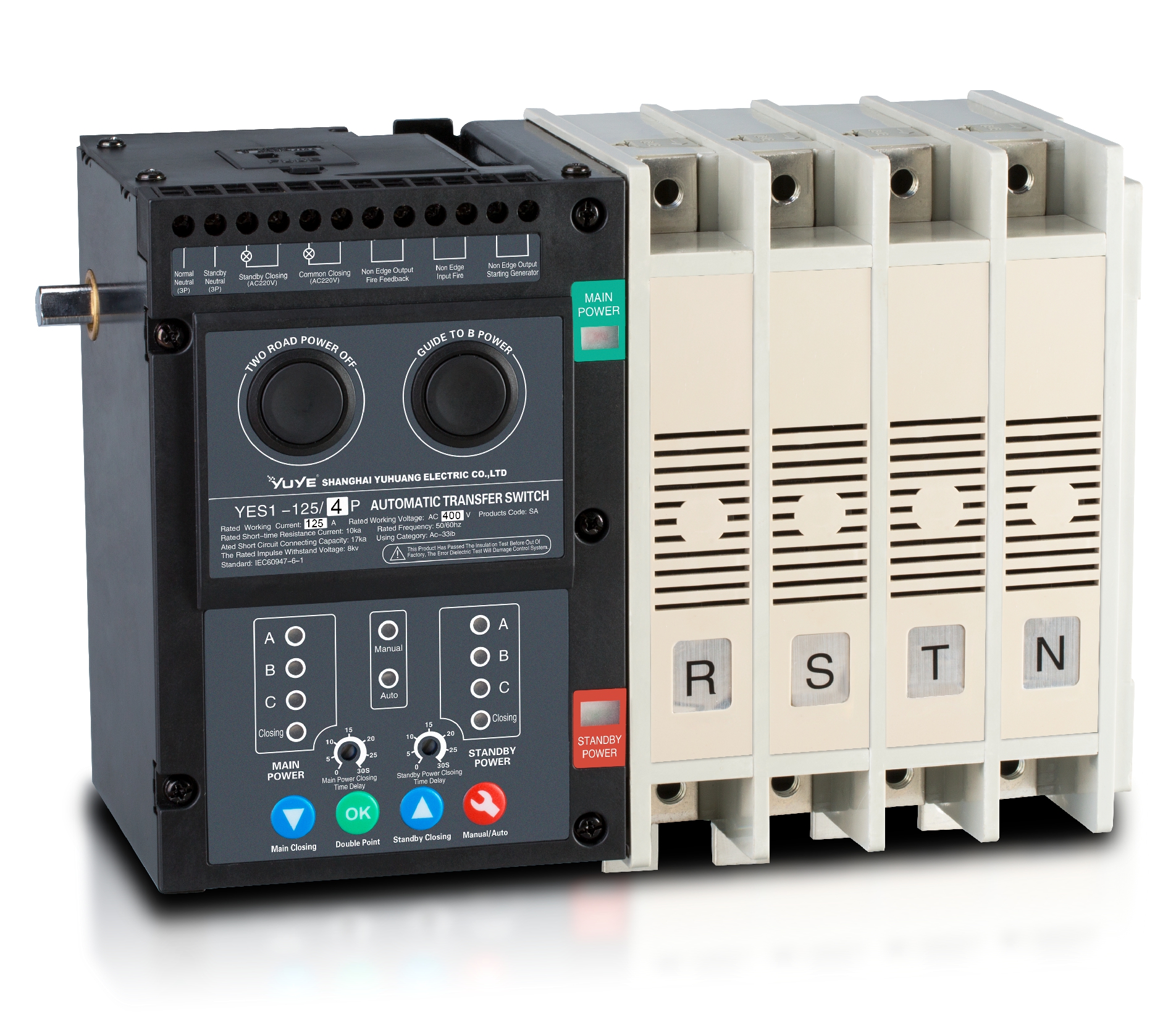 Solenoid-type ATS YES1-63~630SA
 Solenoid-type ATS YES1-63~630L/LA
 Solenoid-type ATS YES1-63~630LA3
 Solenoid-type ATS YES1-63MA
 PC ATS YES1-630~1600M
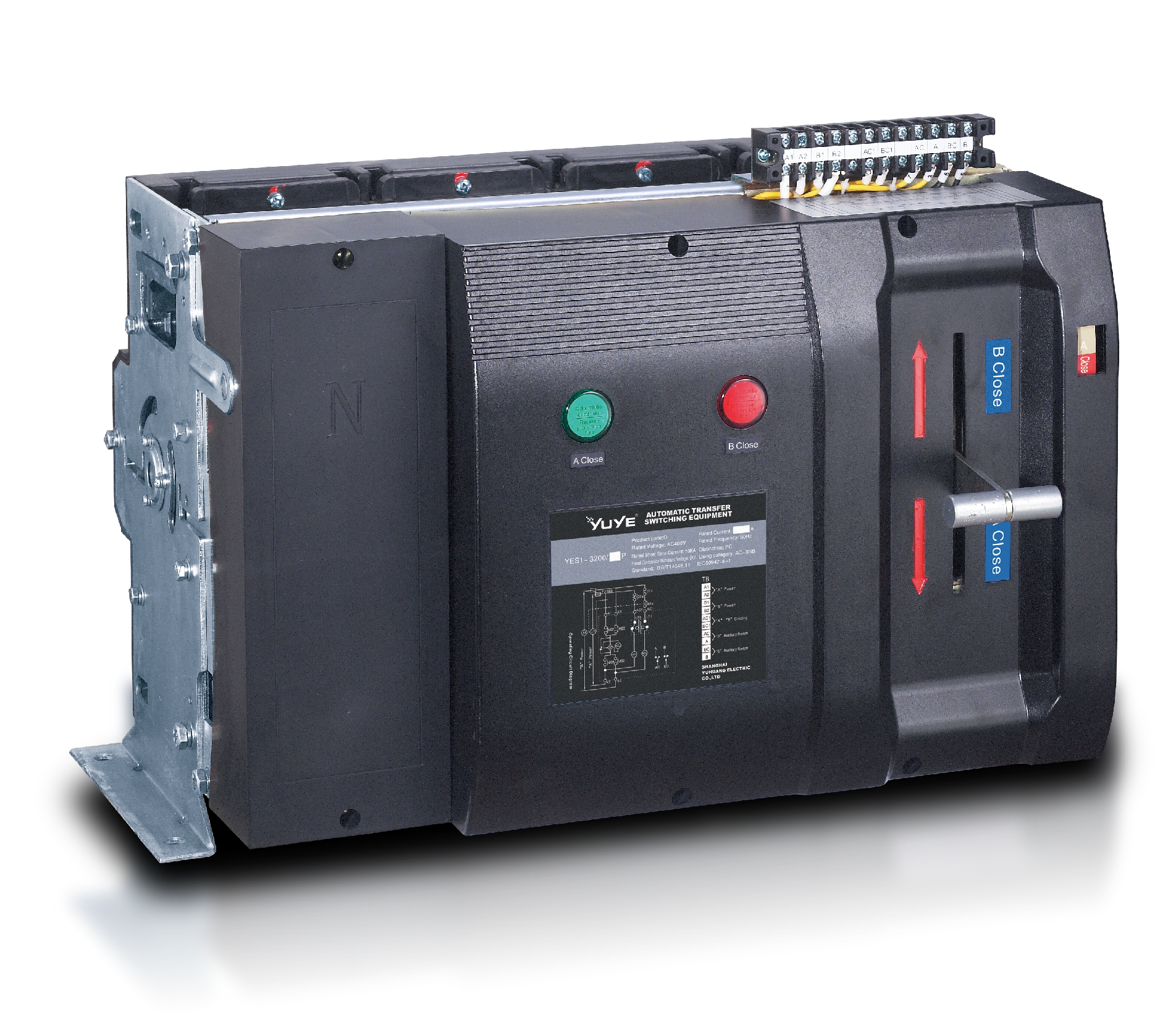 PC ATS YES1-3200Q
 Solenoid-type ATS YES1-4000~6300Q
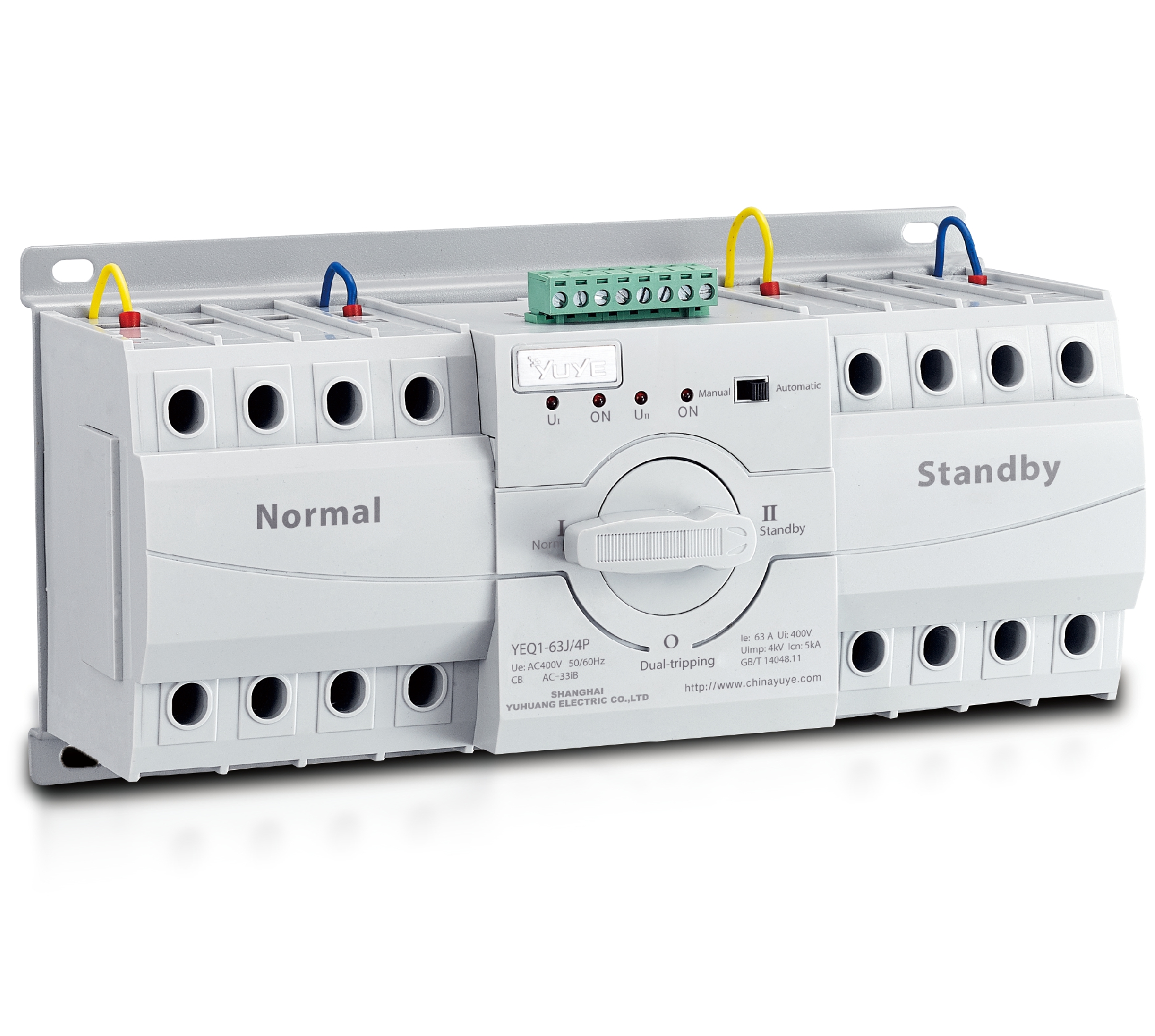 CB ATS YEQ1-63J
 CB ATS YEQ2Y-63
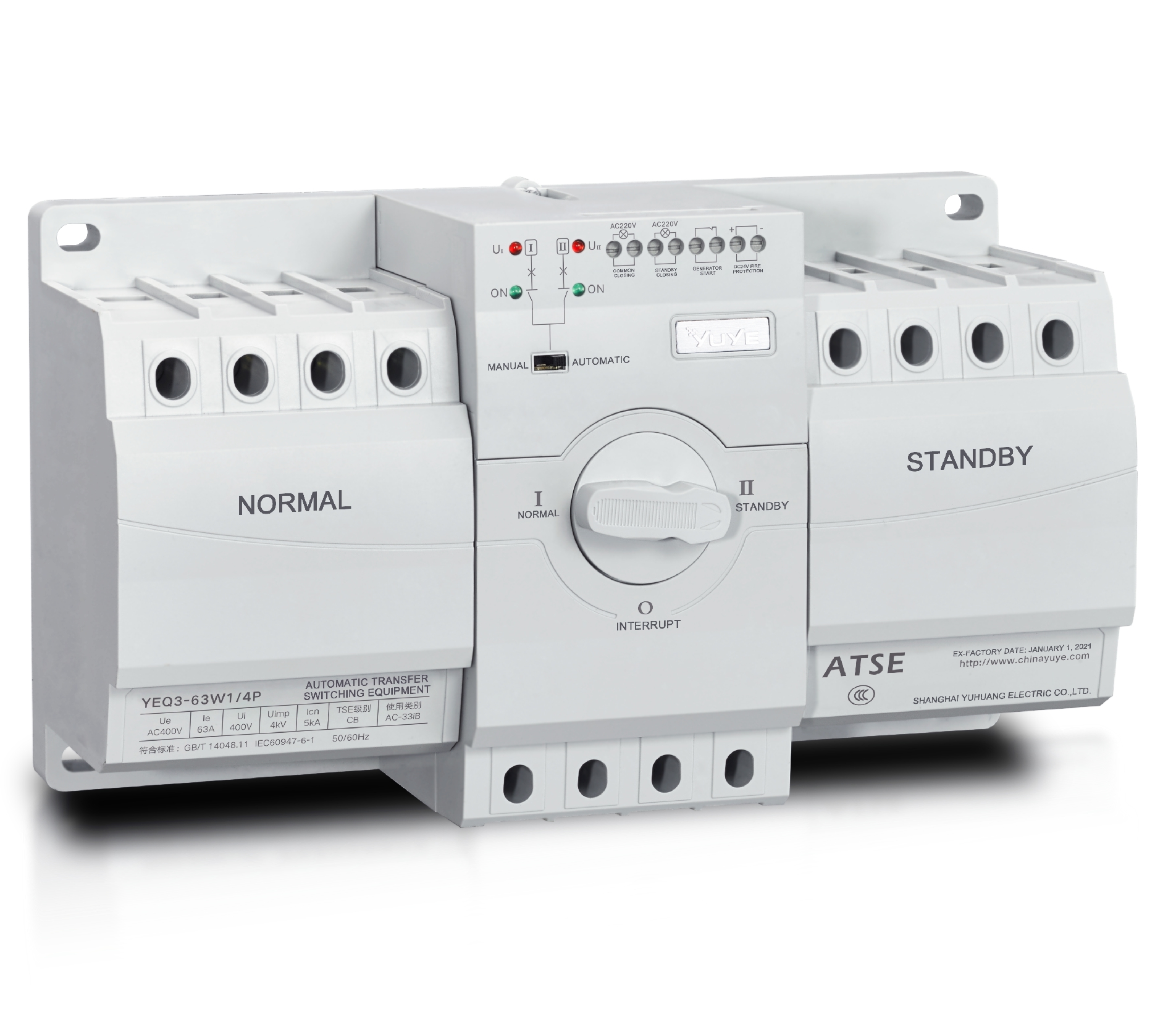 CB ATS YEQ3-63W1
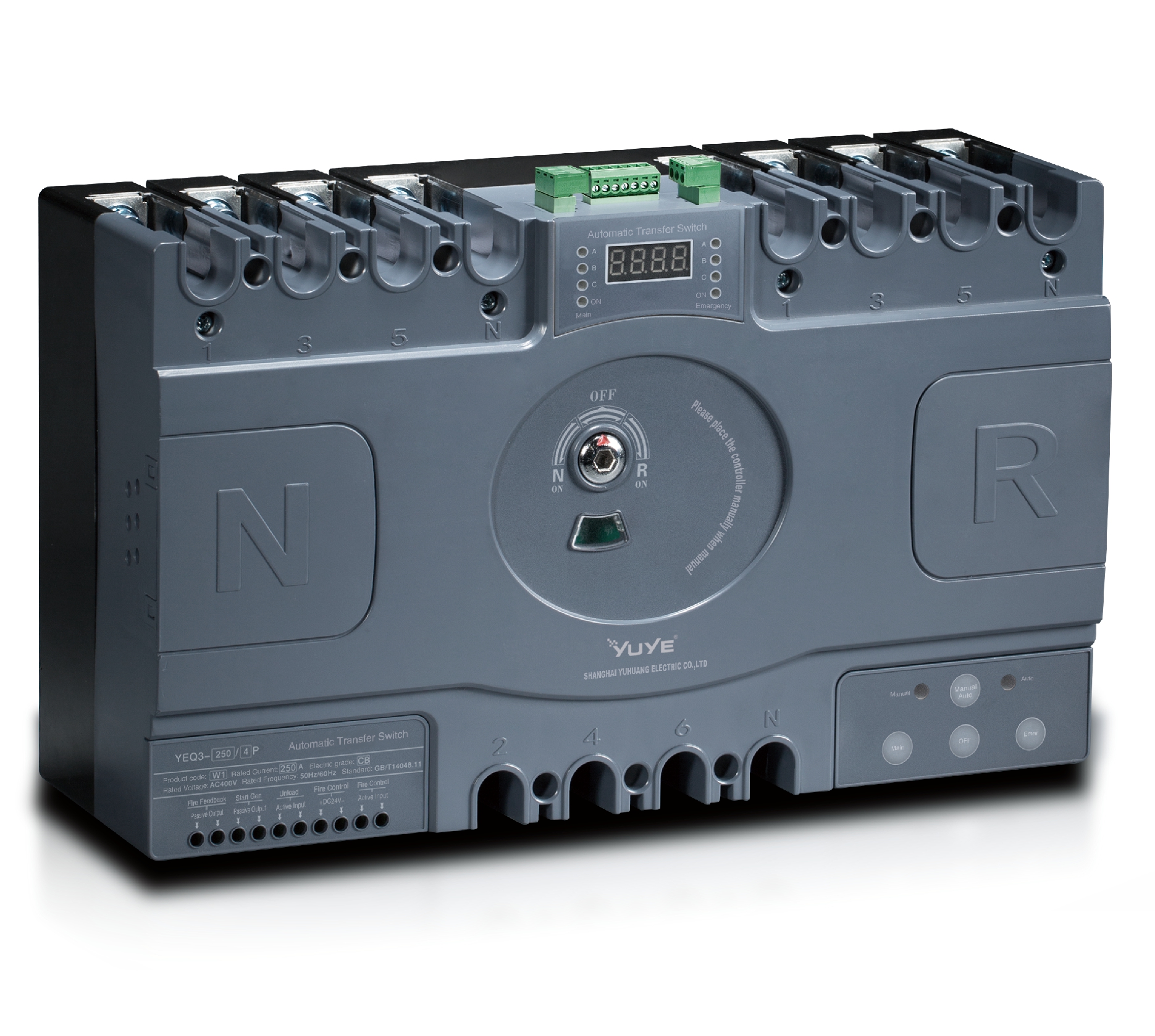 CB ATS YEQ3-125~630W1
 ATS controller Y-700
 ATS Controller Y-700N
 ATS Controller Y-701B
 ATS Controller Y-703N
 ATS Controller Y-800
 ATS Controller W2/W3 Series
 ATS switch Cabinet floor-to-ceiling
 ATS switch cabinet
 JXF-225A power Cbinet
 JXF-800A power Cbinet
 YEM3-125~800 Plastic Shell Type MCCB
 YEM3L-125~630 Leakage Type MCCB
 YEM3Z-125~800 Adjustable Type MCCB
 YEM1-63~1250 Plastic Shell Type MCCB
 YEM1E-100~800 Electronic Type MCCB
 YEM1L-100~630 Leakage Type MCCB
 Air Circuit Breaker YEW1-2000~6300
 Air Circuit Breaker YEW3-1600
 Miniature circuit breaker YEMA2-6~100
 Miniature circuit breaker YEB1-3~63
 Miniature circuit breaker YEB1LE-3~63
 Miniature circuit breaker YEPN-3~32
 Miniature circuit breaker YEPNLE-3~32
 Miniature circuit breaker YENC-63~125
 Load isolation switch YGL-63~3150
 Load Isolation Switch YGL2-63~3150
 DC relay YDC-P20
 DC relay YDC-P250
 DC relay YDC-P400
 DC relay MDC-300M
 DC relay YDC-M400
 DC Isolation Switch YEGL3D-630
 YECPS2-45~125 LCD
 YECPS-45~125 Digital
 CNC Milling/Turning-OEM
Introduction
Backup power systems are essential for resisting sudden grid outages in residential, commercial and industrial scenarios. Dual-power switching equipment ensures smooth conversion between utility power and standby power, avoiding equipment shutdown and economic losses. As a cost-effective and reliable power switching device, Manual Transfer Switch provides safe manual power conversion for non-seamless power supply scenarios, widely used in various low-voltage backup power systems. This article briefly explains its working principle, parameters, pros and cons, application scenarios and operation specifications to help users with accurate product selection and standardized use.
1. Working Principle and Main Structure
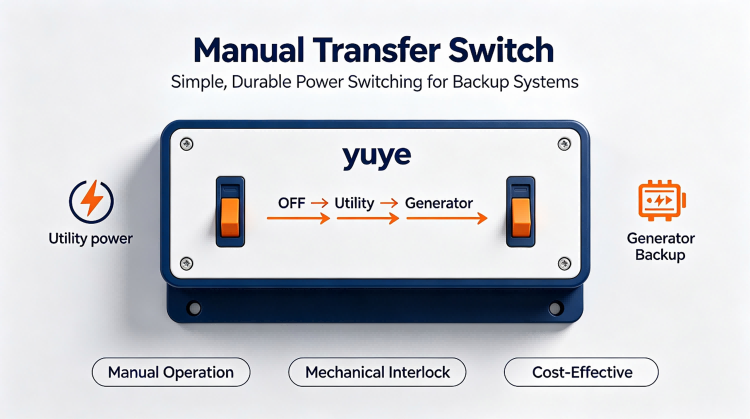
The device relies on pure mechanical structure for manual switching operation. Users toggle the operating handle to switch the load circuit among three states: OFF, utility power and generator standby power. Built-in mechanical interlock design strictly prevents simultaneous connection of two power sources, effectively avoiding current backflow and short-circuit risks .
Its core structures include insulated enclosure, manual operating mechanism, alloy contact assembly and standardized terminal groups. The overall structure is simple without complex electronic components, realizing safe and stable power switching through physical mechanical action.
2. Core Technical Parameters and Selection Criteria
Key parameters determine the equipment’s applicability, covering voltage grade, rated current, pole number and protection level. Common specifications include 120/240V single-phase and 480V three-phase, with current ranging from 30A to 1200A, adapting to different load demands.
For selection, users need to match pole numbers according to power system types and choose NEMA 1 indoor or NEMA 3R outdoor enclosure based on installation environment. Meanwhile, the equipment shall comply with IEC and NEC industry standards, and select corresponding models according to actual load capacity and generator matching requirements .
3. Advantages and Limitations
Core Advantages
Compared with automatic switching equipment, this mechanical switch has lower procurement cost and simpler structure. It requires no auxiliary power supply, features low failure rate and long service life, and needs minimal daily maintenance. The whole switching process is manually controlled, allowing users to flexibly adjust the switching timing .
Main Limitations
The biggest limitation is manual operation dependence, requiring on-site personnel to complete switching during power outages. Short power interruption is inevitable during conversion, so it is not applicable for critical loads requiring uninterrupted power supply. Standard operating procedures must be followed to prevent safety hazards such as power backfeeding.
4. Typical Application Scenarios
The equipment is suitable for most conventional backup power scenarios with low continuity requirements. In residential scenarios, it matches portable generators to provide emergency power for household loads. In small commercial scenarios such as shops, offices and warehouses, it serves as low-cost backup power switching equipment.
In addition, it is widely used in farm equipment, construction site temporary power distribution, RV and marine shore power switching. It is the most cost-effective power backup solution for non-critical power consumption scenarios.
5. Installation, Operation and Safety Precautions
The installation must be completed by qualified electricians, complying with local electrical codes. During construction, ensure standardized wiring of utility power, standby power and load circuits, with reliable grounding and firm wiring terminals.
In daily operation, cut off the load properly before switching power sources to avoid arc damage. Regularly check the flexibility of the operating mechanism and the tightness of wiring terminals. Strictly implement lockout and tagout procedures during maintenance to eliminate electrical risks .
6. Conclusion
Manual Transfer Switch is a simple, durable and cost-efficient dual-power switching device. Although it cannot realize fully automatic seamless switching, its high stability and low maintenance cost make it ideal for ordinary residential and small commercial backup power systems. Reasonable selection, standardized installation and correct operation can maximize its service value and provide reliable safety guarantee for daily emergency power consumption. For scenarios without strict uninterrupted power supply requirements, it is one of the most practical power backup solutions in the industry.
7.Reference Sources
[1] IEC 60947-6-1, Low-voltage switchgear and controlgear – Transfer switching equipment, 2025.
[2] NEC Article 702, Standard for Emergency and Standby Power Systems, 2024.
[3] UL 1008, Safety Standard for Transfer Switching Equipment, 2025.
[4] Industry Technical Manual: Manual Transfer Switch Installation & Operation Guidelines.
8.FAQ
Q1: What is the main difference between a manual and automatic transfer switch?
A1: Manual Transfer Switch relies on manual operation while ATS works automatically, making it more economical for non-critical power scenarios.
Q2: Can I install a manual transfer switch myself?
A2: Professional electrician installation is required to meet electrical code standards and ensure operational safety.
Q3: How to select the right size of manual transfer switch?
A3: Match the switch current and voltage specifications according to the total load power and generator parameters.
Q4: What is the service life of a manual transfer switch?
A4: With regular simple maintenance, the mechanical switch can maintain stable performance for more than 10 years.
Q5: Is it safe to use with portable generators?
A5: It is the standard and safe matching device for portable generator emergency power supply.
