Picking out a 100A Automatic Transfer Switch can really boost power reliability for your home, workshop, or small business setup. Basically, it keeps an eye on your main utility power and switches over to a backup generator quickly if the voltage drops or there's an outage. And the switch usually kicks in within seconds—giving you peace of mind. That quick changeover is super important, especially when you’ve got fridges, pumps, security systems, or network gear that can't handle long power interruptions.
But here’s the thing — in real-world wiring, the 100A rating isn’t the only thing that matters. An experienced electrician or engineer should look at how the switch matches up with your actual load, your generator’s capacity, fault-current limits, and how your system is wired—like phase and neutral setup. Also, where you put the switch matters. If it’s in a dusty workshop or a clean indoor room, that affects how much protection it needs. Features like mechanical interlocks, clear terminal labels, and a visible status indicator make things easier and safer during inspections or troubleshooting.
When choosing a 100A Automatic Transfer Switch, you also want to think about how it switches between power sources, how smooth the transition is, how easy it is to access for maintenance, and whether it plays nice with your generator controller. From real-world experience, rushing to install it or not sizing your cabling properly can really mess things up. It’s not always the perfect pick either—maybe your power needs will grow beyond 100 amps soon, or maybe an oversized switch would just add extra costs unnecessarily. Doing some testing—like simulating a power outage—can help spot issues like delayed switching, phase sensing problems, or loads behaving weirdly. And don’t forget to double-check that everything lines up with electrical standards and the manufacturer’s instructions. Remember, having a reliable backup system isn’t just about the switch itself; it’s about the whole setup working together smoothly. Sometimes, that’s easier said than done and easy to overlook.

What Is a 100A Automatic Transfer Switch?
What Is a 100A Automatic Transfer Switch?
A 100A automatic transfer switch is an electrical device that moves a load between two power sources. It commonly connects utility power and a standby generator. The switch continuously monitors voltage and frequency. When the primary source fails, it starts or signals the generator, then transfers power automatically. After utility power stabilizes, it returns the load safely.
The “100A” rating describes the maximum continuous current the switch can handle under specified conditions. At 240 volts, a single-phase system may support approximately 24 kVA. Actual capacity depends on voltage, phase configuration, temperature, conductor size, and load type. A qualified electrician must verify these details. Oversizing is not always wasteful, but it can increase installation costs.
Power reliability matters more each year. The International Energy Agency reported that data centers used about 460 TWh of electricity globally in 2022. It projects consumption could exceed 1,000 TWh by 2026. The Uptime Institute’s 2023 outage analysis found that many reported outages caused financial losses above $100,000. A properly selected 100A switch can protect pumps, communication equipment, refrigeration, and small commercial panels. It cannot correct poor generator maintenance or undersized wiring. That part is easy to overlook.
How Does a 100A Automatic Transfer Switch Work?
Why Choose a 100A Automatic Transfer Switch?
How Does a 100A Automatic Transfer Switch Work?
A 100A automatic transfer switch monitors utility power and a standby generator. It connects the selected source to a building’s essential circuits. Inside, voltage-sensing relays check for low voltage, phase loss, or complete failure. When utility power fails, the controller waits briefly before starting the generator. This delay helps prevent transfers during short disturbances. The switch then opens the utility connection. An electrical interlock prevents both sources from closing together. That separation is critical.
Once generator voltage and frequency become stable, the controller closes the generator contacts. Power reaches the protected load through the generator supply. If utility power returns, another delay confirms that it remains stable. The switch transfers the load back and allows generator cooldown. The process sounds simple, but real sites are less tidy. Field inspections often reveal loose terminals, incorrect sensing wires, or poorly adjusted delays. These faults can cause nuisance transfers or delayed backup power.
Choosing a 100A model suits systems with a calculated load within its rating. The rating alone does not confirm suitability. Continuous loads, starting currents, fault levels, and local installation rules also require review. A qualified electrician should verify conductor sizes and protection settings. Small settings matter. A practical commissioning test should simulate power loss and restoration, while recording transfer times and voltage readings.
Why Choose a 100A Automatic Transfer Switch?
A 100A automatic transfer switch monitors the normal power source and transfers the load to an available backup source when a voltage or power failure is detected. The chart shows the theoretical apparent power capacity at a rated current of 100A across common electrical systems.
Calculations use S = V × I for single-phase systems and S = √3 × V × I for three-phase systems. Actual usable capacity depends on the switch rating, installation method, power factor, temperature, conductor size, and applicable electrical codes. The transfer sequence normally includes source monitoring, generator start signaling, transfer after stable voltage and frequency are detected, and retransfer when normal power returns.
Which Electrical Systems Need a 100A Transfer Capacity?
Why Choose a 100A Automatic Transfer Switch?
A 100A automatic transfer switch suits electrical systems with moderate but important backup loads. In residential properties, it can support lighting, refrigeration, sump pumps, security equipment, and selected heating or cooling circuits. It may also serve small offices, retail spaces, workshops, and agricultural buildings. These systems often need reliable power without transferring every circuit in the facility.
A 100A transfer capacity is useful when the emergency panel carries several essential circuits. Think of a running freezer, water pump, ventilation fan, and control equipment operating together. Small commercial buildings may use it for servers, communication devices, medical support equipment, or fire-related auxiliary systems. However, a 100A rating does not mean every connected load can start simultaneously. Motor inrush current can change the calculation quickly.
In field inspections, I have seen panels labeled “100A” while actual starting demands were much higher. That mistake creates nuisance trips and unexpected generator shutdowns. The correct selection requires reviewing continuous loads, motor loads, voltage, phase configuration, and generator output. Load-shedding controls may be needed for larger HVAC units or pumps. A qualified electrical professional should verify conductor sizes, overcurrent protection, grounding, and local installation requirements. Sometimes a smaller essential-load panel is safer and more practical than transferring the entire building. There is no shortcut here.
What Are the Main Benefits of Choosing a 100A ATS?
Why Choose a 100A Automatic Transfer Switch?
A 100A automatic transfer switch helps maintain power when the primary supply fails. It detects voltage loss and transfers connected loads to a standby source. This process usually takes seconds, reducing interruptions to pumps, refrigeration units, security systems, and essential lighting. For many small commercial sites, 100A capacity provides a practical balance between load support and equipment size. It can also reduce manual intervention during storms, outages, or planned maintenance.
Reliable transfer depends on correct sizing, wiring, and testing. A qualified electrician should measure starting currents, not only normal operating loads. Otherwise, a motor may overload the switch during startup. That detail is easy to miss. A properly installed ATS can improve operational safety, protect sensitive equipment, and simplify routine power management. Modern units may include status indicators, delay settings, and electrical interlocks. These features help prevent unsafe source connections and make fault checks more straightforward. Still, no ATS can compensate for an undersized generator or neglected maintenance.
Tips: Review the site’s real load profile before choosing 100A capacity. Test transfer and retransfer functions under controlled conditions. Inspect terminals for heat marks, dust, and loose connections. Keep clear records of test dates and observed faults. A monthly visual check is useful, but professional servicing should follow the equipment instructions and local electrical requirements.
How to Match a 100A ATS to Your Power Requirements
Choosing a 100A automatic transfer switch starts with the real load, not the panel label.
A 100A rating does not mean every circuit can run at full capacity continuously. Calculate the expected running load, then account for motor starting current from pumps, compressors, or air-conditioning units. A spreadsheet can look precise, yet it may miss a compressor’s brief surge.
Check the system voltage and phase before selecting the ATS.
At 240 volts, 100A represents about 24 kVA before practical allowances and power-factor effects. Three-phase systems require a different calculation. Confirm the generator’s output, frequency, connection method, and neutral arrangement. Some installations need switched neutral protection, while others do not. The wrong configuration can create unsafe current paths.
Pay attention to enclosure location, short-circuit withstand rating, terminal size, and transfer timing.
Outdoor equipment may need weather resistance, while dusty rooms demand suitable protection. I would also verify whether the ATS can handle the load’s inrush current, not just its steady demand. This step is often overlooked. Local electrical rules and manufacturer instructions should guide installation, testing, and maintenance by a qualified professional. Leave room for future loads, but avoid oversizing without checking generator compatibility.
What Safety and Installation Factors Should You Consider?
Why Choose a 100A Automatic Transfer Switch?
A 100A automatic transfer switch can support substantial residential or light commercial loads during an outage. The rating must match the calculated load, not the service label alone. An electrician should check continuous loads, motor starting currents, and available fault current. A refrigerator may seem small, but pumps and compressors can create brief surges. That detail matters.
Installation safety begins with isolation and verification. Power must be disconnected, locked out, and tested with suitable instruments before work starts. The switch needs correct conductor sizes, secure terminals, and torque values specified by its documentation. Loose connections can create heat inside the enclosure. Heat leaves clues.
The system must also match the generator’s voltage, phase, frequency, and grounding arrangement. Neutral switching requires careful review, especially when separately derived power is involved. Incorrect bonding can place current on grounding paths. Indoor and outdoor locations may require different enclosure ratings and cable entries. Keep water out. Clear labeling helps during emergencies and future servicing.
A proper transfer switch includes mechanical or electrical interlocking, preventing both power sources from connecting improperly. Testing should simulate a utility failure, transfer the load, and confirm stable return power. Record the test results and inspect terminals periodically. I used to view transfer time as the main concern, but installation quality often deserves more attention. A fast switch cannot correct poor sizing or weak connections. Local electrical requirements should guide the final design.
DC Isolation Switch YEGL3D-630: Enhancing Safety and Reliability in DC Power Systems
The YEGL3D-630 DC isolation switch is designed to enhance safety and reliability in high-voltage direct-current power systems. With a rated voltage of DC 1000 V or DC 1500 V and a rated insulation voltage of 2000 V, it provides dependable circuit isolation for applications such as energy storage, photovoltaic installations, and other DC distribution equipment. Its 2-pole configuration and 12 kV rated impulse withstand voltage support secure operation under demanding electrical conditions.
Available in rated currents from 80 A to 630 A, the switch can accommodate a wide range of system requirements. For frame currents up to 315 A, its electrical life reaches 500 cycles, while models above 315 A provide 400 cycles. Mechanical durability includes up to 10,000 forward rotations and 3,000 side rotations, helping maintain stable performance during regular maintenance and switching operations. Manufactured in accordance with GB/T 14048.3 and IEC 60947-3, the YEGL3D-630 offers a practical solution for controlled isolation and improved operational protection in modern DC power systems.
FAQS
automatic transfer switch do?
Voltage-sensing relays detect low voltage, phase loss, or complete failure. The controller waits briefly, starts the generator, and transfers the load after stable output appears.
It prevents transfers during brief power disturbances. A momentary flicker should not start a generator unnecessarily.
No. An electrical interlock prevents both sources from closing together. That separation is critical.
No. The rating alone does not confirm suitability. Check running load, motor starting current, fault levels, and local requirements.
Pumps, compressors, and air-conditioning units can create brief starting surges. A spreadsheet may miss that surge. Check inrush current carefully.
Confirm voltage, phase, frequency, generator output, connection method, and neutral arrangement. A switched neutral may be required in some systems.
The switch waits to confirm stable utility power. It transfers the load back, then allows the generator to cool down.
Simulate power loss and restoration during commissioning. Record transfer times and voltage readings. Loose terminals can cause problems.
Outdoor locations may need weather-resistant enclosures. Dusty rooms may need additional protection. I would verify conductor sizes and settings with a qualified electrician.
Conclusion
A 100a Automat Transfer Switch is an automatic device designed to transfer electrical loads between a primary power source and a standby source when the main supply fails. It continuously monitors voltage and frequency, detects interruptions or unstable conditions, and switches to backup power with minimal delay. When normal power returns, it safely transfers the load back and may allow the backup source to shut down.
A 100A transfer capacity is suitable for residential properties, small commercial buildings, workshops, communication equipment, and other systems with moderate electrical demand. Its main benefits include improved power continuity, reduced manual operation, and enhanced protection for essential equipment. To select the right ATS, users should calculate the expected continuous and starting loads, confirm system voltage and phase requirements, and allow reasonable capacity for future expansion. Installation should be performed by qualified professionals, with correct grounding, overcurrent protection, enclosure placement, ventilation, maintenance access, and compliance with applicable electrical codes.

 PC ATS YECT1-2000G
 PC ATS YES2-63~250GN1
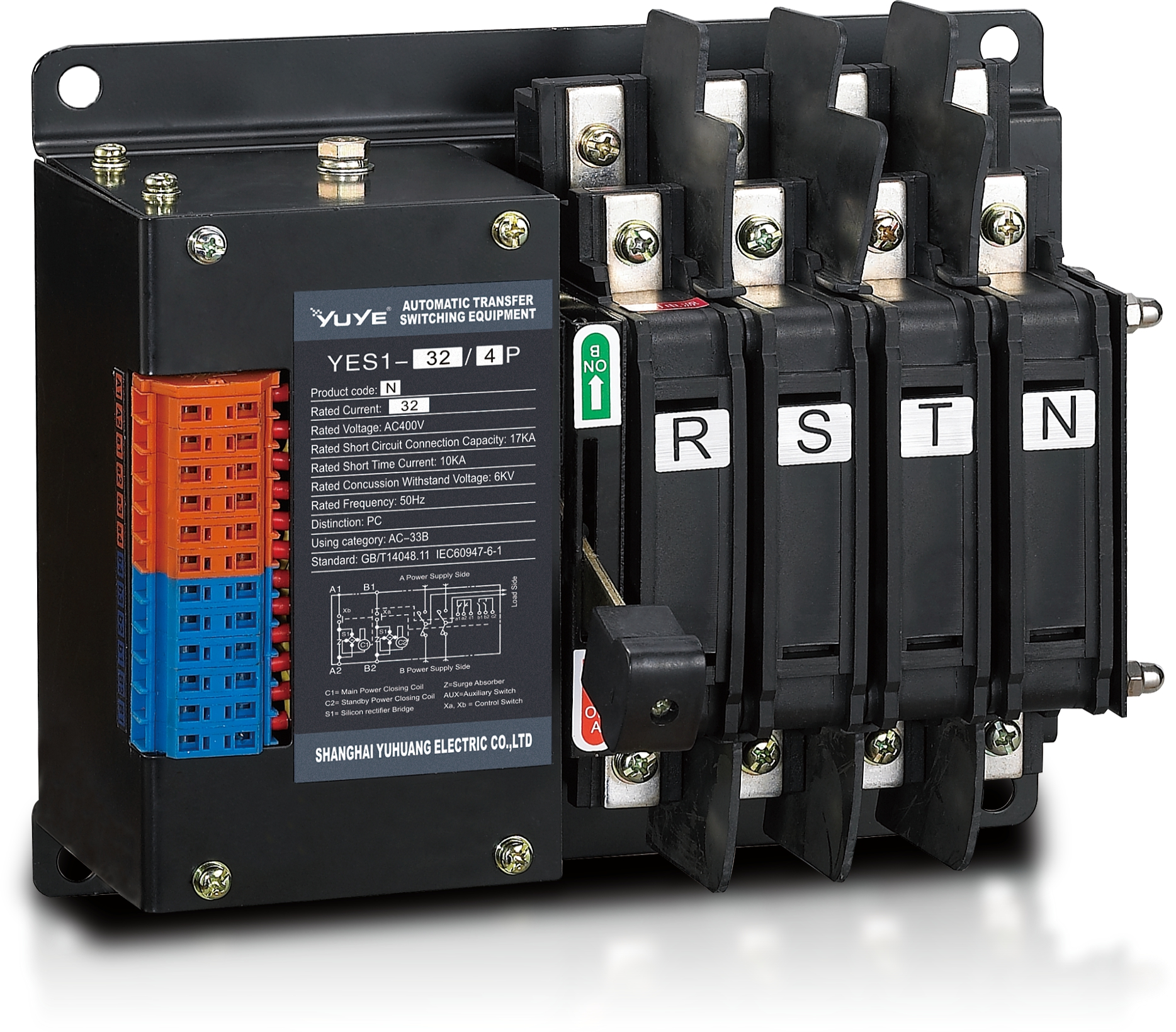 Solenoid-type ATS YES1-32~125N
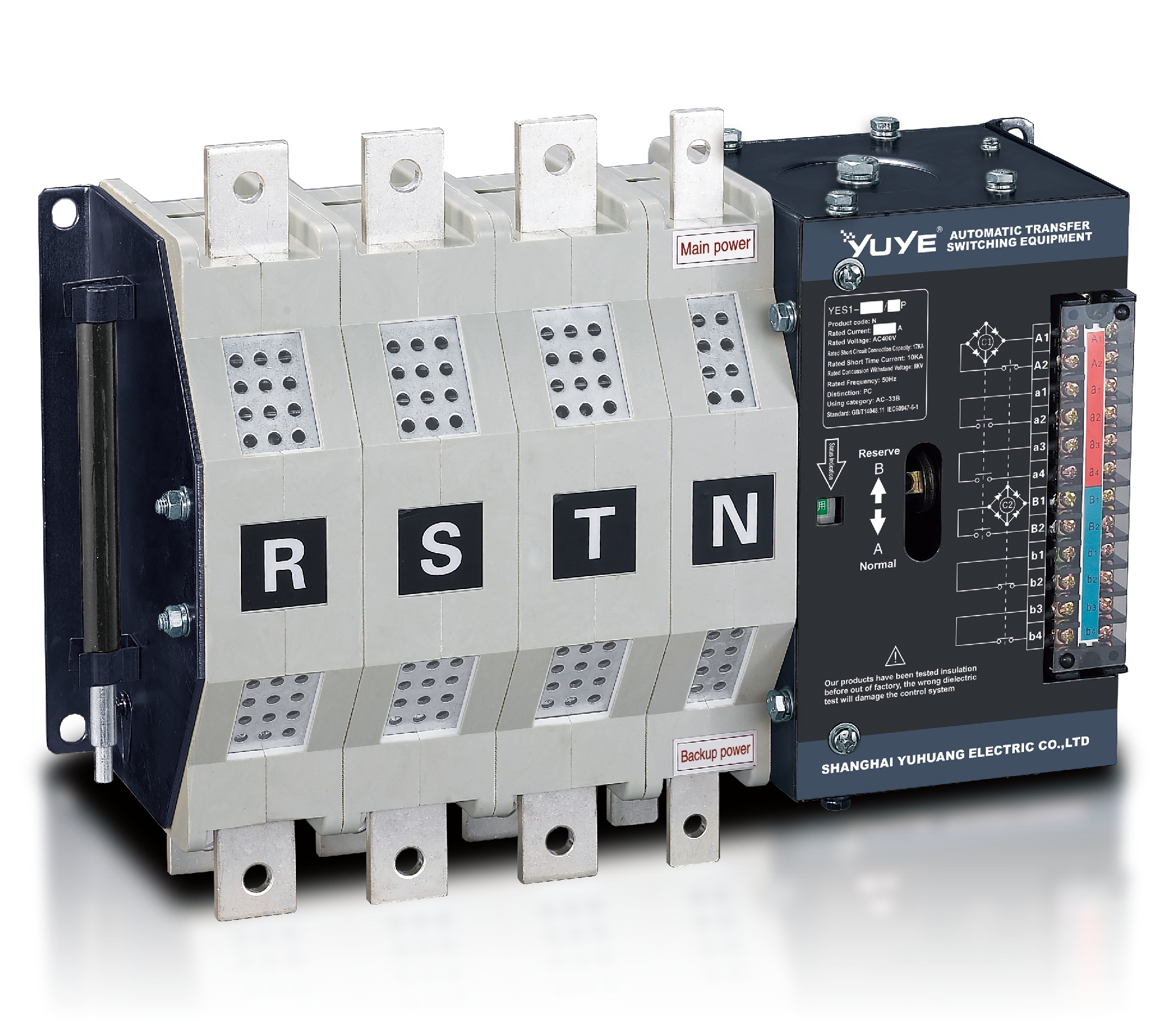 Solenoid-type ATS YES1-250~630N/NT
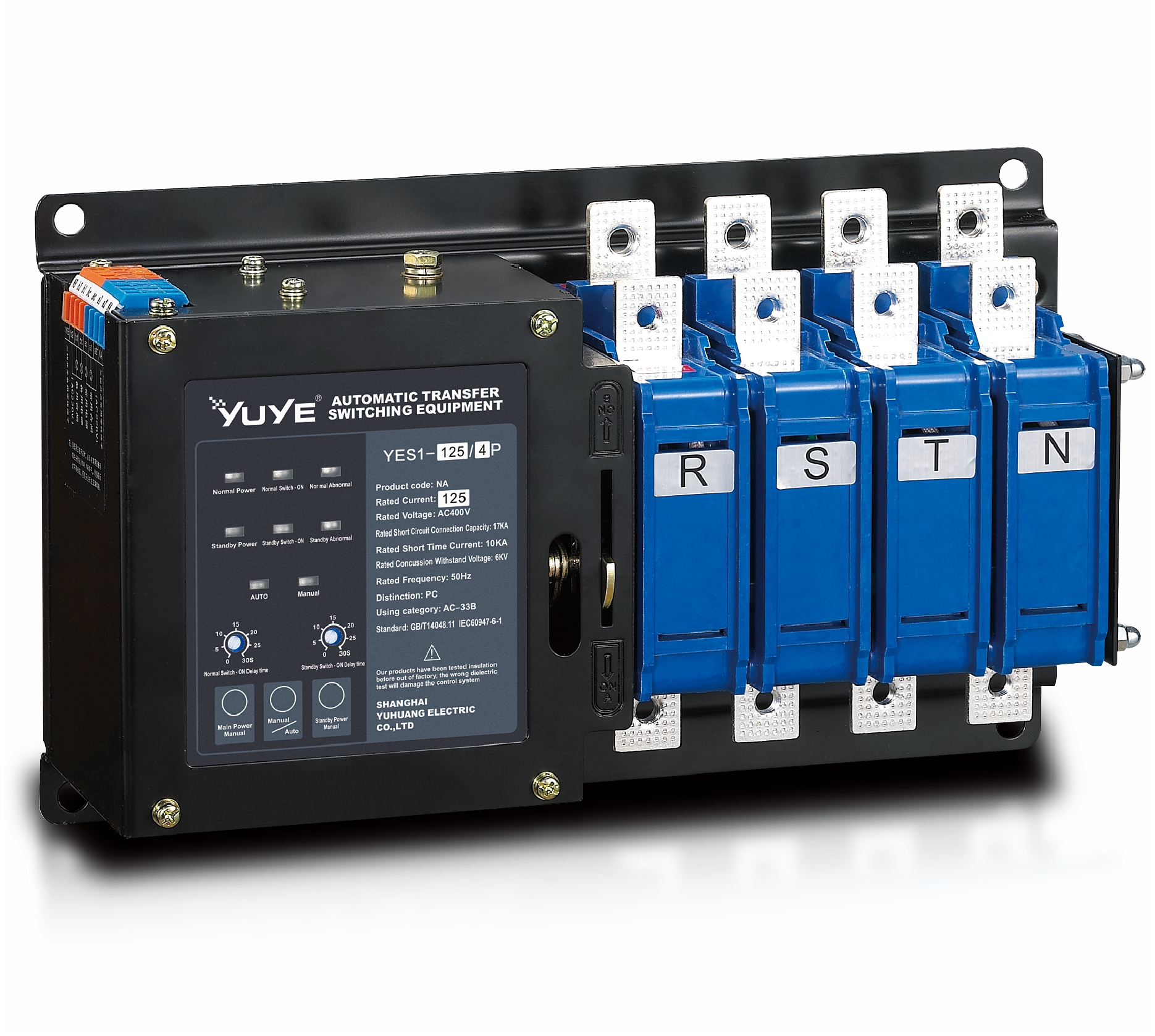 Solenoid-type ATS YES1-32~125NA
 Solenoid-type ATS YES1-63~630SN
 Solenoid-type ATS YES1-1250~4000SN
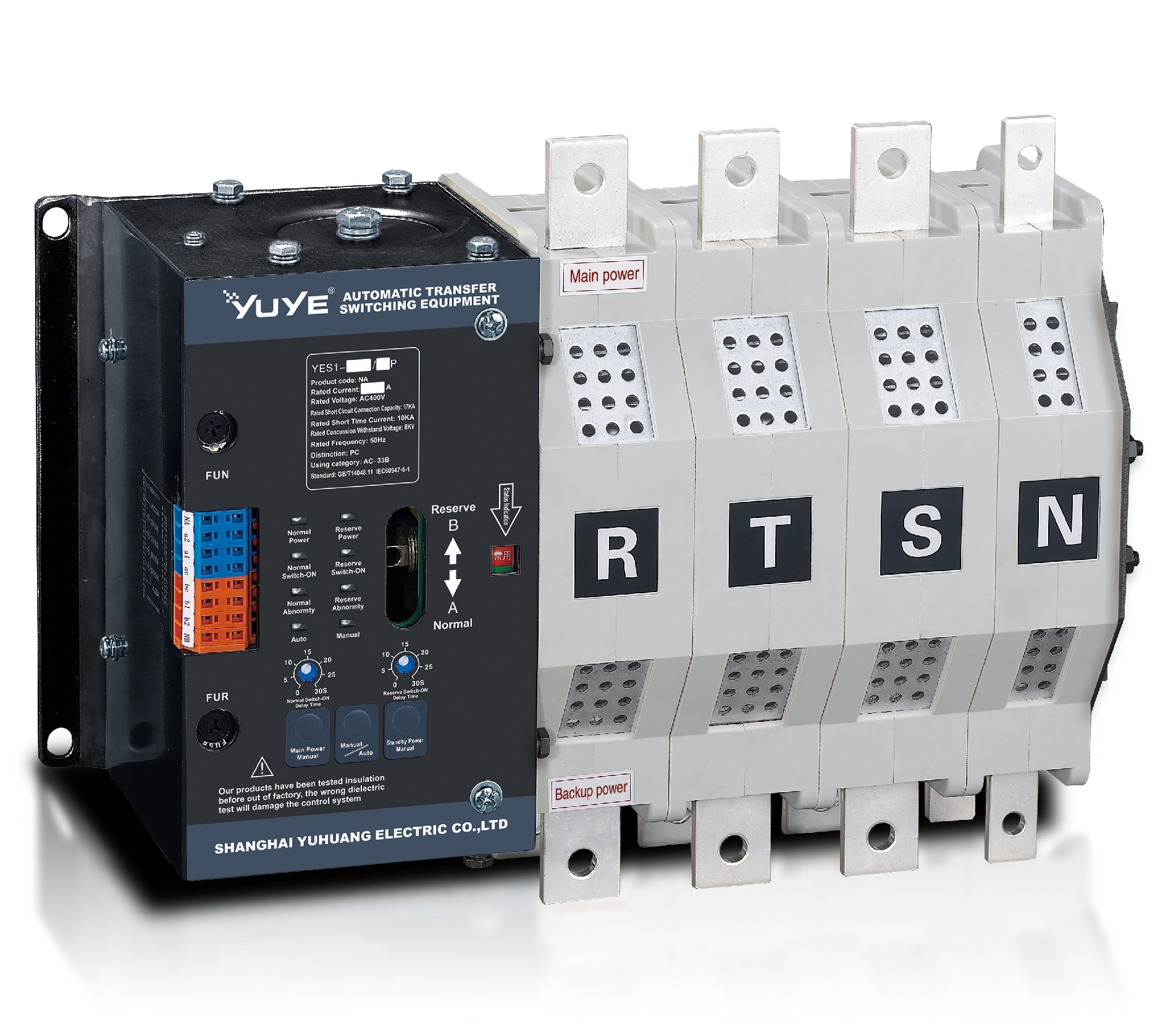 Solenoid-type ATS YES1-250~630NA/NAT
 Solenoid-type ATS YES1-63NJT
 PC ATS YES1-100~1600GN1/GN/GNF
 PC ATS YES1-2000~3200GN/GNF
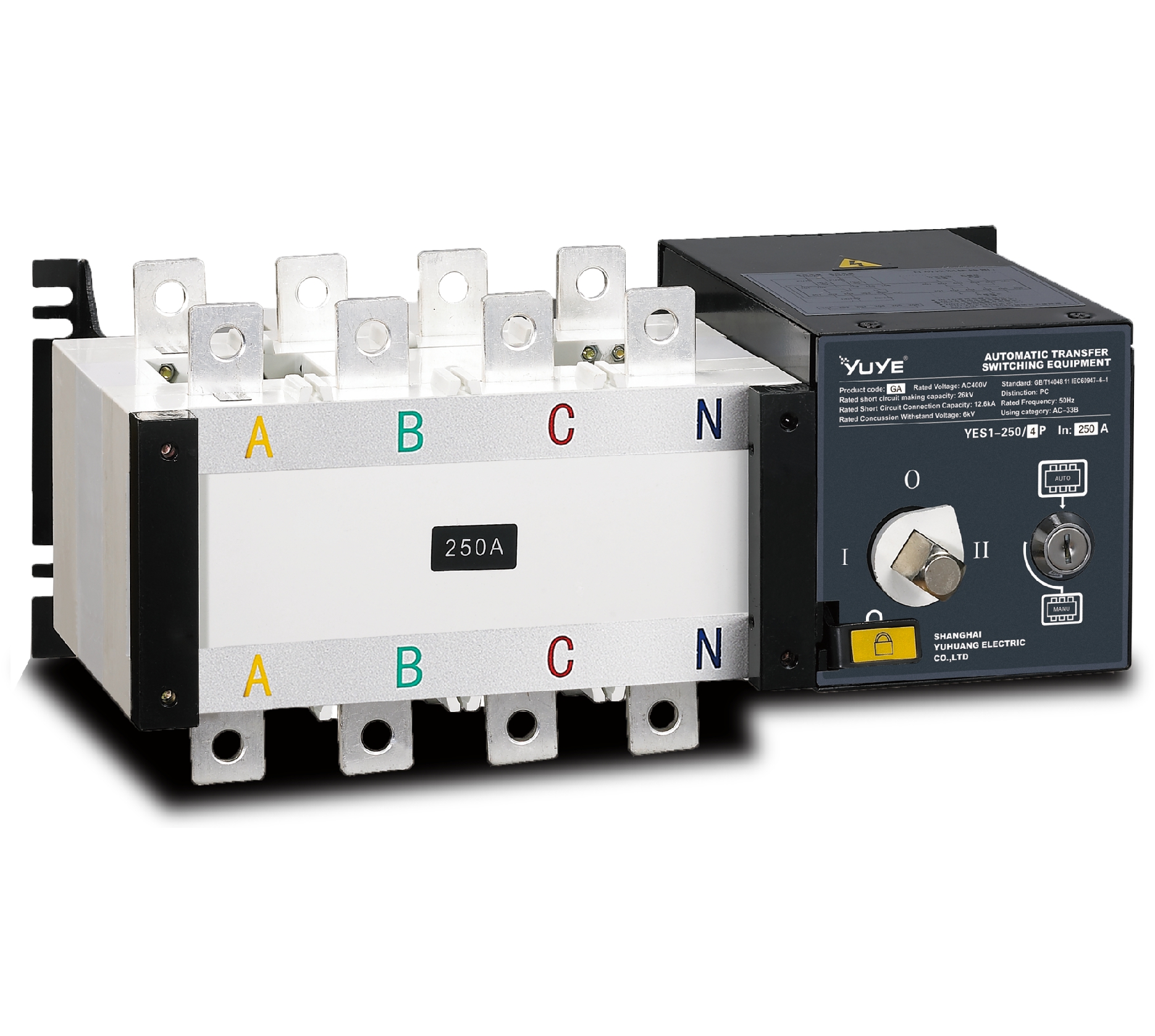 PC ATS YES1-100~3200GA1/GA
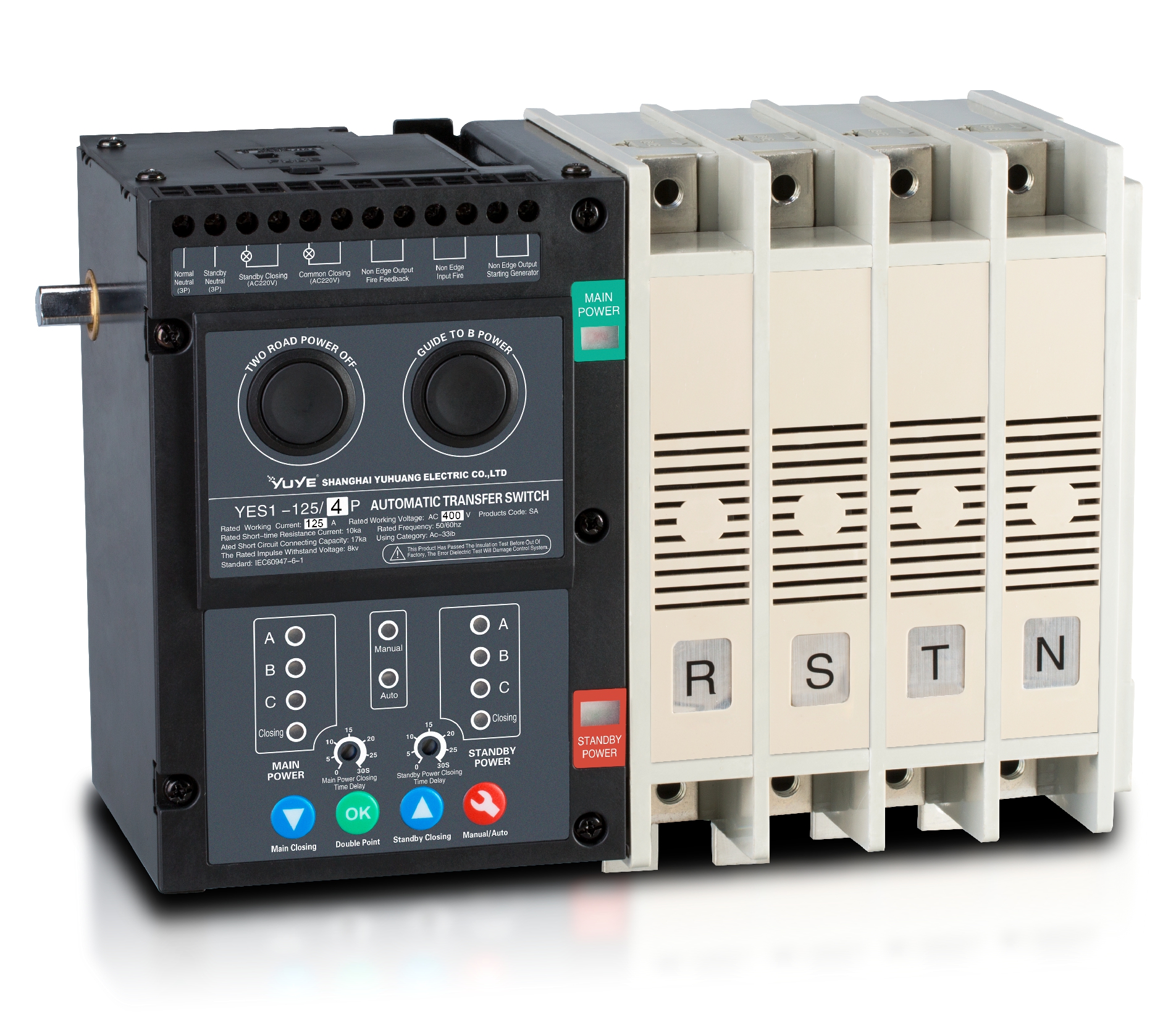 Solenoid-type ATS YES1-63~630SA
 Solenoid-type ATS YES1-63~630L/LA
 Solenoid-type ATS YES1-63~630LA3
 Solenoid-type ATS YES1-63MA
 PC ATS YES1-630~1600M
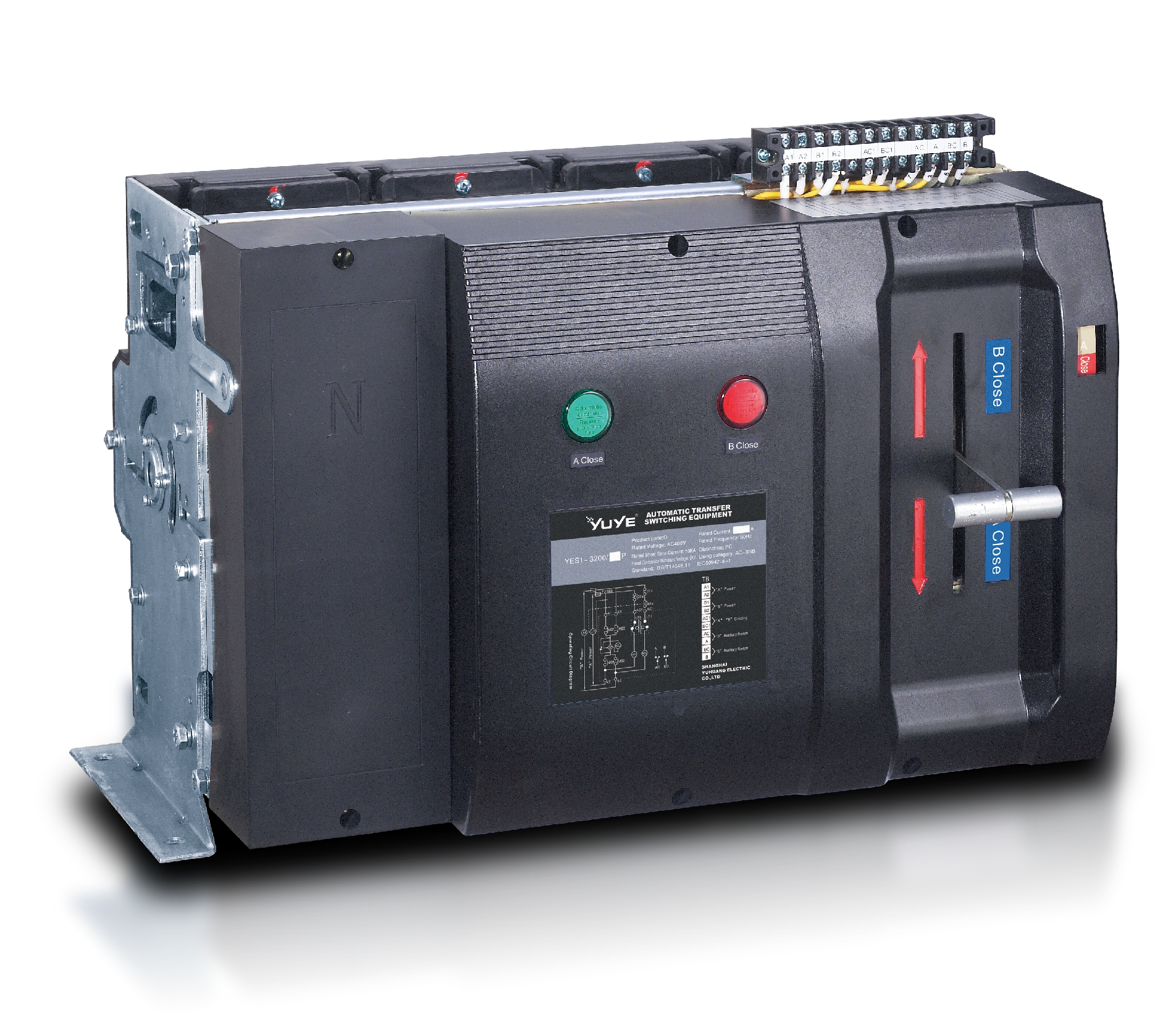 PC ATS YES1-3200Q
 Solenoid-type ATS YES1-4000~6300Q
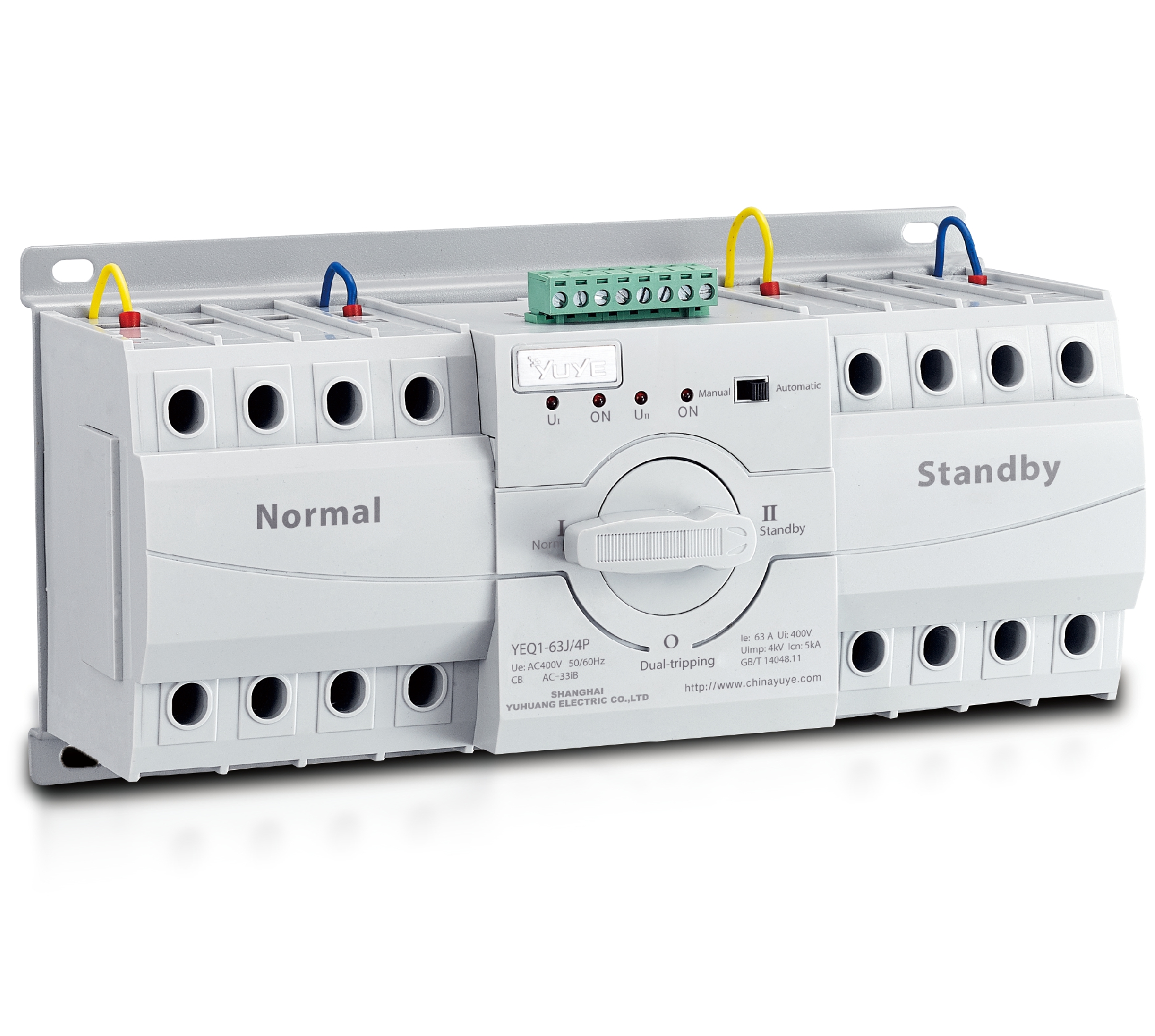 CB ATS YEQ1-63J
 CB ATS YEQ2Y-63
 CB ATS YEQ3-63W1
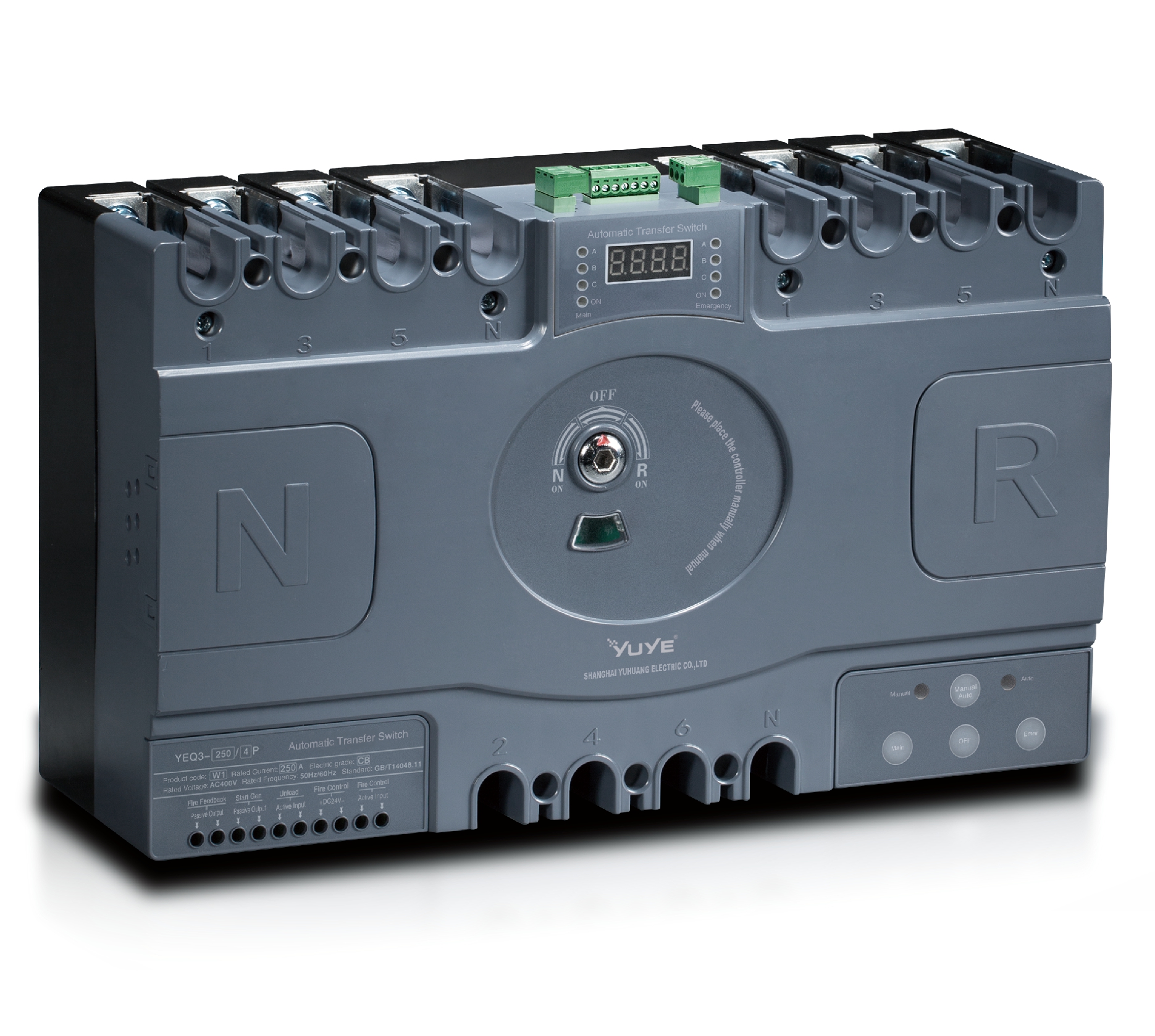 CB ATS YEQ3-125~630W1
 ATS controller Y-700
 ATS Controller Y-700N
 ATS Controller Y-701B
 ATS Controller Y-703N
 ATS Controller Y-800
 ATS Controller W2/W3 Series
 ATS switch Cabinet floor-to-ceiling
 ATS switch cabinet
 JXF-225A power Cbinet
 JXF-800A power Cbinet
 YEM3-125~800 Plastic Shell Type MCCB
 YEM3L-125~630 Leakage Type MCCB
 YEM3Z-125~800 Adjustable Type MCCB
 YEM1-63~1250 Plastic Shell Type MCCB
 YEM1E-100~800 Electronic Type MCCB
 YEM1L-100~630 Leakage Type MCCB
 Air Circuit Breaker YEW1-2000~6300
 Air Circuit Breaker YEW3-1600
 Miniature circuit breaker YEMA2-6~100
 Miniature circuit breaker YEB1-3~63
 Miniature circuit breaker YEB1LE-3~63
 Miniature circuit breaker YEPN-3~32
 Miniature circuit breaker YEPNLE-3~32
 Miniature circuit breaker YENC-63~125
 Load isolation switch YGL-63~3150
 Load Isolation Switch YGL2-63~3150
 DC relay YDC-P20
 DC relay YDC-P250
 DC relay YDC-P400
 DC relay MDC-300M
 DC relay YDC-M400
 DC Isolation Switch YEGL3D-630
 YECPS2-45~125 LCD
 YECPS-45~125 Digital
 CNC Milling/Turning-OEM


